

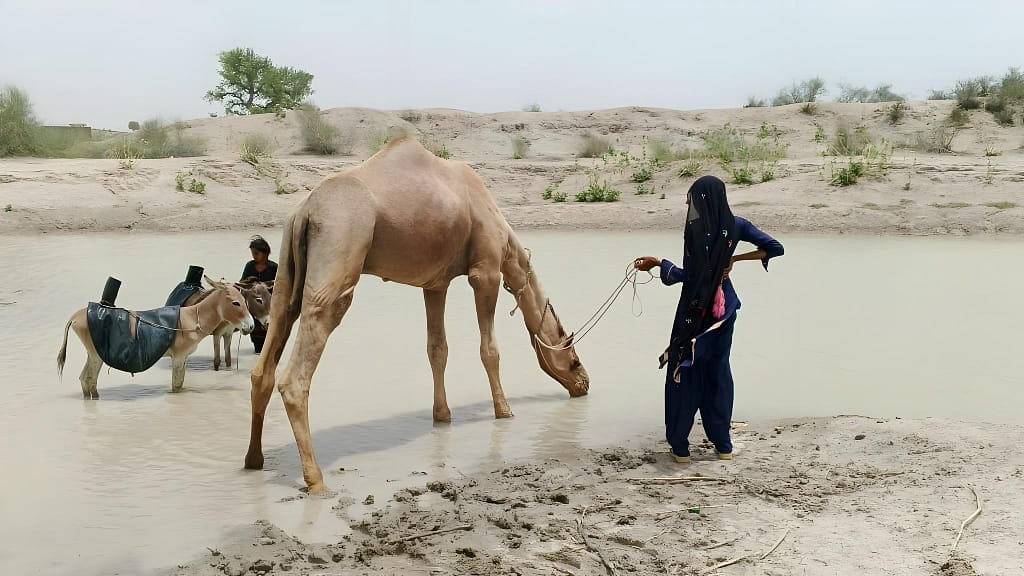
In Tharparkar, one of Pakistan’s driest districts, water scarcity is a fact of life. A woman in the village of Islamkot sums it up in four words. “Pani wado maslo aahe” — water is a major problem.
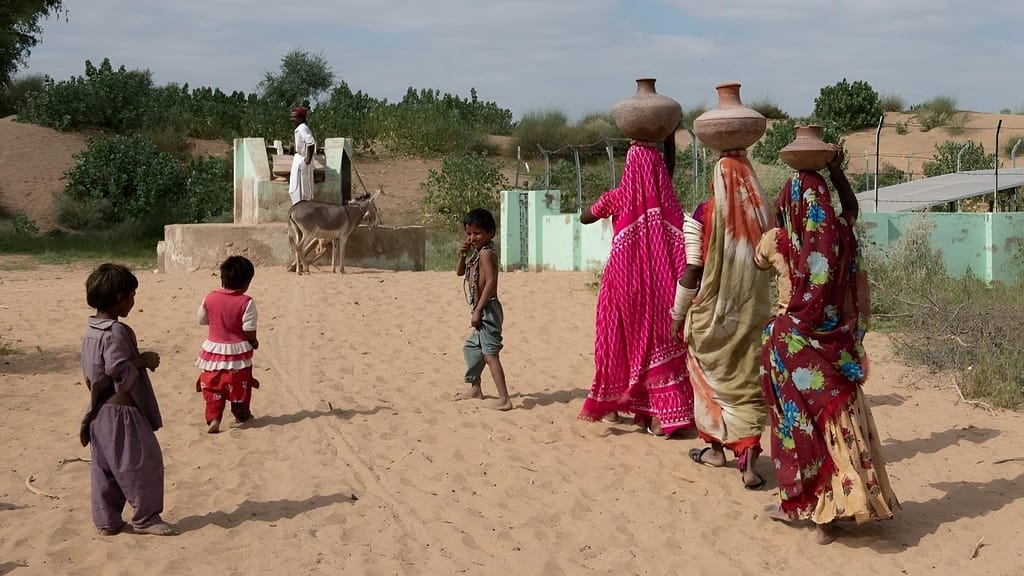
Often, the day begins before sunrise, with women walking three kilometers, or more, to collect water. A single trip can take up to two hours. This routine has limited the time women and girls spend on education, rest and other income-generating activities. Across the district, climate change is experienced through these everyday constraints, with impact disproportionately distributed across households.
Spanning over 19,000 square kilometers and home to nearly 1.8 million people, Tharparkar faces low, highly variable rainfall and recurring droughts. Between 2011 and 2025, repeated droughts disrupted livelihoods, damaged crops and increased poverty.
A drought validation study by the International Water Management Institute (IWMI), across seven administrative divisions, highlights how these environmental stresses intersect with social inequalities. Drawing on household surveys and focus group discussions, the study identified gender as a key dimension of inequality that is disproportionately impacted.
Unequal responsibilities of water collection
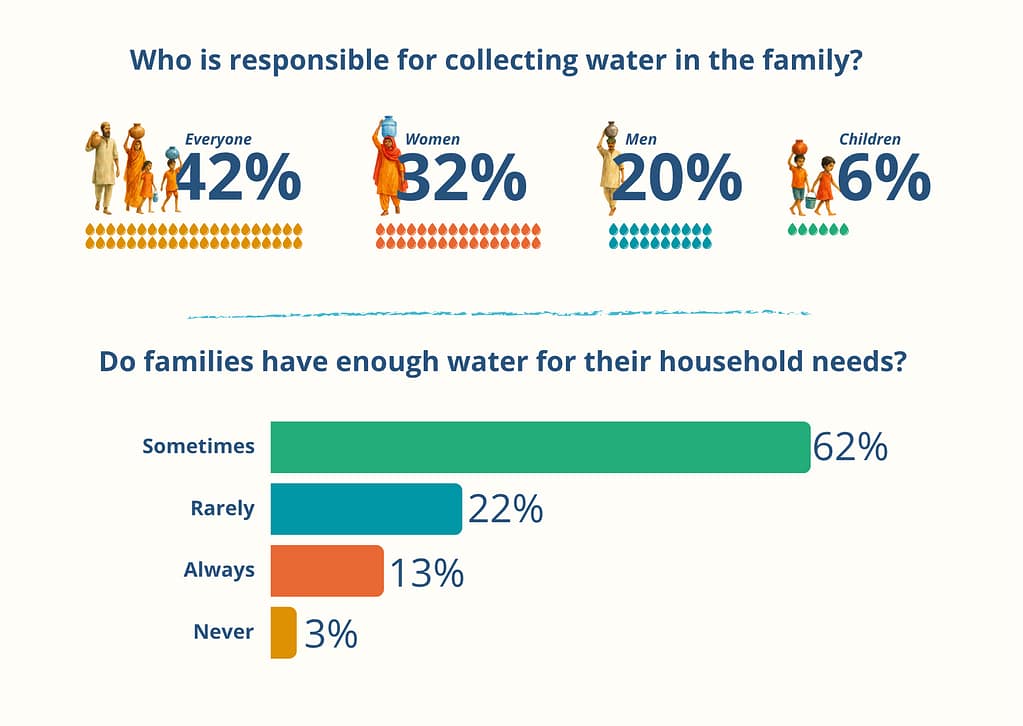
The IWMI study found that responsibility for water collection in Tharparkar varies across households. In approximately one-third of homes women are solely responsible for collecting water, while men are responsible in about one fifth. In 42% of homes the responsibility of water collection is shared among family members, including children and other adults. However, focused group discussions suggest that even in these shared arrangements, the physical burden falls largely on women and girls.
Water collection often required walking one to three kilometers and making multiple trips, depending on household needs. A single round trip can take up to two hours, shaping how time is allocated across domestic responsibilities, education and income-generating activities.
“We leave early in the morning to fetch water, around six. It takes us about an hour to reach the well and another hour to come back. We go again in the afternoon, and then once more later in the day. For a large family, the water is never enough. We store what we can, and when it rains, we collect rainwater too. Every drop is used carefully,” said a woman from Mataro Sandh village in Islamkot describing her daily routine.
Households store water in plastic containers and traditional tankas, which are underground storage units built within or near a home. Even when storage is at capacity, often 15 to 20 containers, it typically lasts no more than two to three weeks, depending on household size and usage. Limited access to functional wells adds to the challenge.
The study found that that just over one in ten households were able to consistently meet their water needs. This means most families live with persistent shortages.
The gendered labor burden
Drought conditions often reshape household roles. Seasonal migration of men to urban areas in search of work can increase women’s responsibilities, requiring them to manage water collection, childcare, livestock and agricultural activities. However, while women’s workloads expand, their control over resources or decision-making does not.
To cope with reduced household income, many women engage in home-based work such as embroidery, stitching and handicrafts. These activities help families survive the drought season. However, limited access to markets and mobility constraints often mean that products are sold through intermediaries, reducing potential earnings. As a result, women’s economic contributions remain significant, yet undervalued, within the home and wider market.
Health risks from unsafe water
During droughts, shortages of safe drinking water becomes more acute for both people and livestock, with grave health implications. During the study, community members reported a range of water-related health issues, including gastrointestinal illnesses, skin issues and eye infections. Women participating in focus group discussions also associated the long-term use of saline water and poor nutrition with more severe health outcomes. While men often migrate to cities with better quality water and food access, women typically remain in villages and are more directly exposed to local water and nutrition challenges.
“She was fine before, but then she became paralyzed and is now unable to walk. People in the village believe it is linked to the water we drink,” said a woman from the village of Karangri describing the health issues faced by a neighbor. While such accounts reflect local perceptions of water impacting people’s health, further medical evidence is needed to establish clear causal links between water quality, nutrition and specific health conditions.
Gaps in institutional support
Institutional support before and during a drought remains inadequate in their reach and effectiveness. While early warning systems and climate information services exist, they do not reach households, particularly women. The study found that in many cases, access to mobile phones and digital information channels are controlled by men, which restricts women’s ability to receive timely updates on weather and drought conditions.
Community feedback also points to limited engagement with government-led drought preparedness efforts. As a result, families often rely on intermittent support from non-governmental organizations rather than consistent, system-wide services.
Recommendations for reducing women’s water burden during droughts
These findings highlight a gap between policies and on-the-ground realities. National and provincial frameworks increasingly recognize gender in water management, yet implementation often fails to reflect these commitments. Women, who play a central role in managing household water needs, are rarely represented in formal decision-making or local water governance structures, limiting their influence on solutions that directly affect their lives.
Addressing drought in Tharparkar requires more than technical fixes, it calls for inclusive, gender-responsive approaches. Expanding and maintaining rainwater harvesting systems, rehabilitating existing wells and introducing context-appropriate solar-powered pumps can reduce reliance on distant or unsafe water sources. Equally important is strengthening women’s participation in local water governance and decision-making bodies. Women also need skills training and improved market access for home-based businesses that support their livelihoods.
In Tharparkar every journey a woman takes to collect water reflects both the gaps in infrastructure and policy, and the ingenuity she brings to household and community survival. Building sustainable and inclusive water systems requires placing women at the center: their local knowledge, labor and lived experiences must shape solutions.


