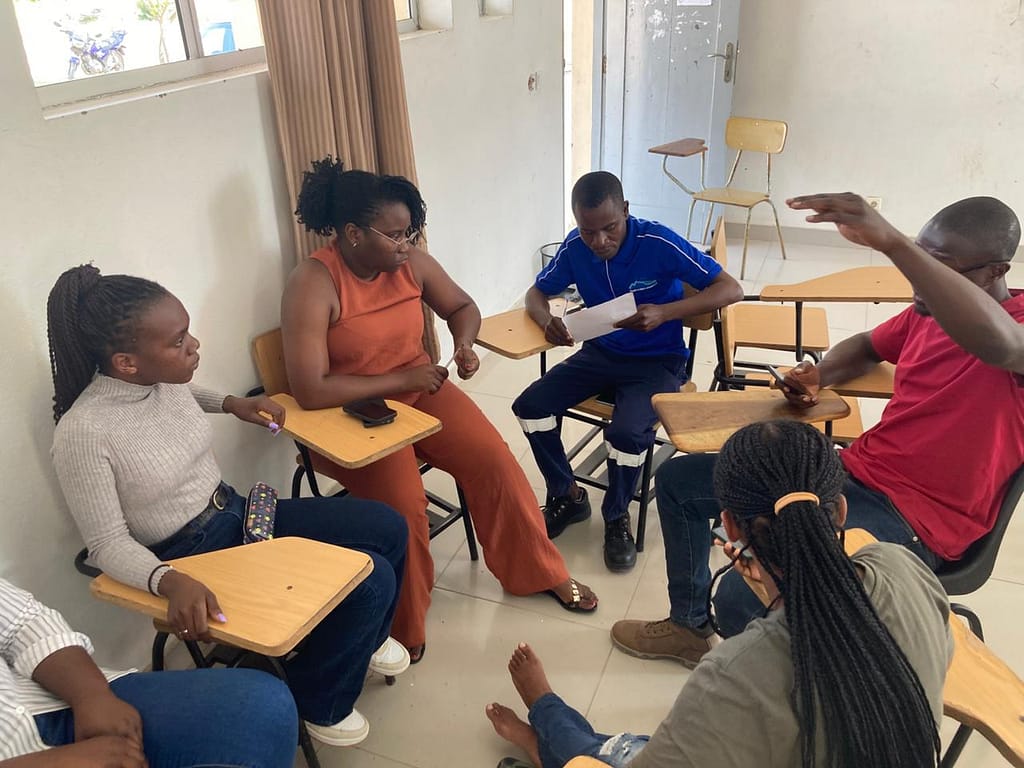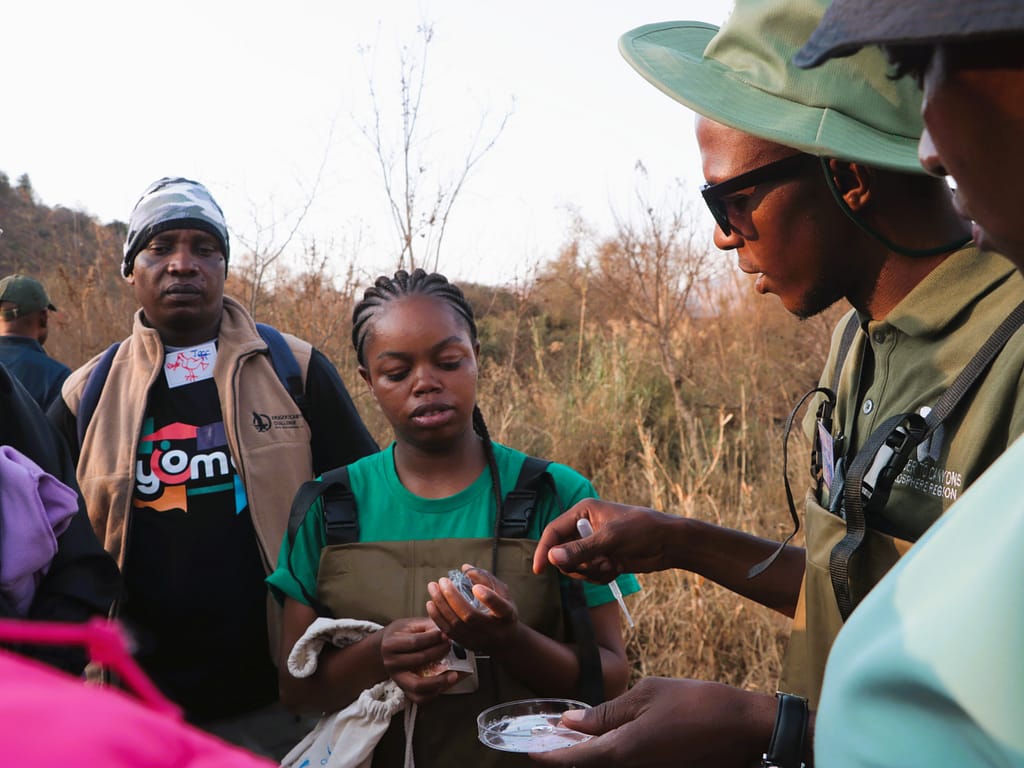
What motivates an ordinary citizen to wake up early, walk to a riverbank and collect water quality data for no salary? Across the Limpopo River Basin in Southern Africa community members are doing exactly this — not as passive data collectors, but as active stewards of their shared water resources.
But passion for the environment only goes so far. For citizen science to endure, programs must grapple with a fundamental question: what does it actually take for people to show up, contribute quality data and stay involved?
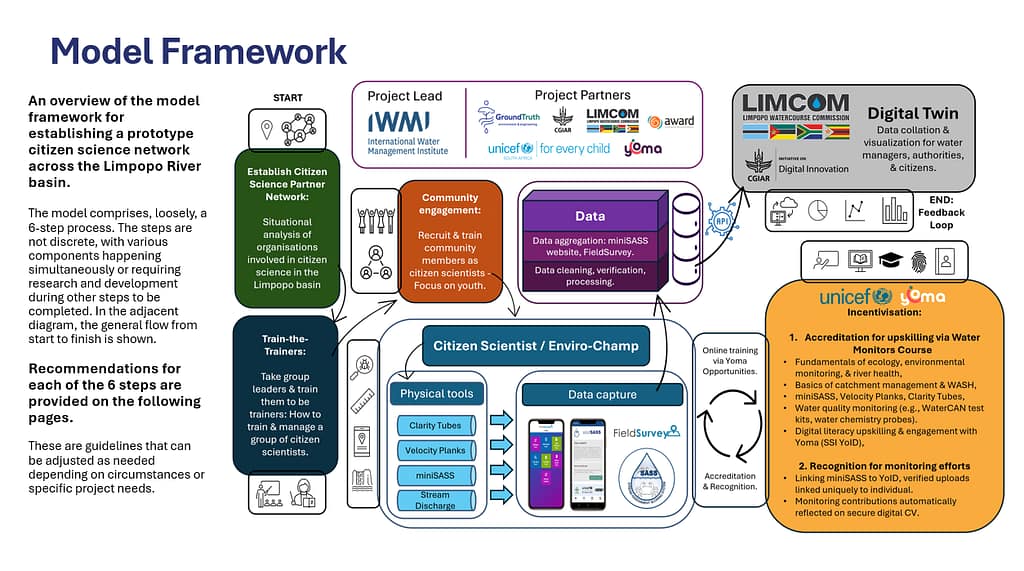
A new initiative in the Limpopo River Basin is trying to find the answers. In partnership with Enabel, the Belgian agency for international cooperation, the Limpopo Watercourse Commission (LIMCOM) and the International Water Management Institute (IWMI), community members are being incentivized to take an active role in water science. IWMI, GroundTruth, Association for Water and Rural Development (AWARD), LIMCOM and UNICEF’s Youth Agency Marketplace (Yoma) are leading the effort on the ground. Together, they train citizen scientists to monitor water using physical tools like clarity tubes, velocity planks, and digital platforms like miniSASS and the Yoma platform to upskill, capture, share data and get rewarded in the process.
While the project brings communities into the process, for it to be sustainable, two conditions must be met. Citizen scientists must be provided with incentives that motivate them to collect data, and the barriers that prevent motivated participants from doing the work must be removed.
What motivates a young urban resident may have little in common with what engages a rural farmer. In order to motivate everyday citizens to collect water quality data, IWMI researchers had to first understand what their needs were. Incentives had to be tailored to specific community contexts. Without understanding these nuances, programs risked excluding the very communities they aim to serve.
Understanding what motivates citizen scientists
IWMI surveyed over 60 citizens across Botswana, Mozambique, South Africa and Zimbabwe to gather data on community expectations from citizen science programs. Survey respondents were from a diverse group, including 56% youth and 42% women. They all lived near the Limpopo River or its tributaries and relied on river water for their livelihoods. The findings challenged assumptions about what drives community engagement and offered critical lessons on how to design citizen science programs that can endure.
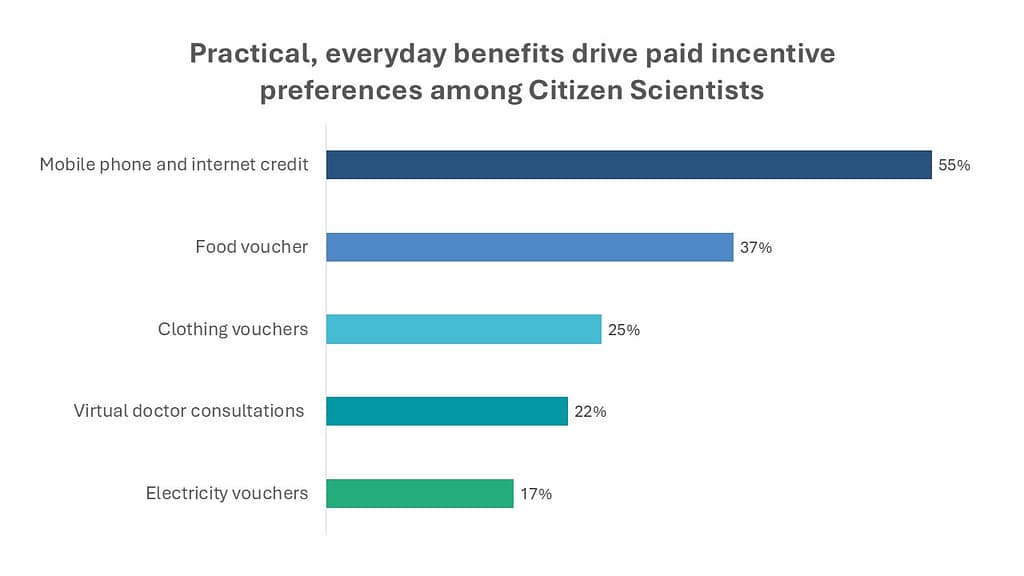
A key insight from the survey was that incentives and digital inclusivity are deeply interconnected. When it came to incentivization preferences, seven out of every 10 respondents said they prefer receiving paid compensation for contributing data. Across the types of paid compensation, mobile phone and internet credit ranked highest (55% of respondents), followed by food vouchers (37%), clothing vouchers (25%), virtual doctor consultations (22%) and electricity vouchers (17%).
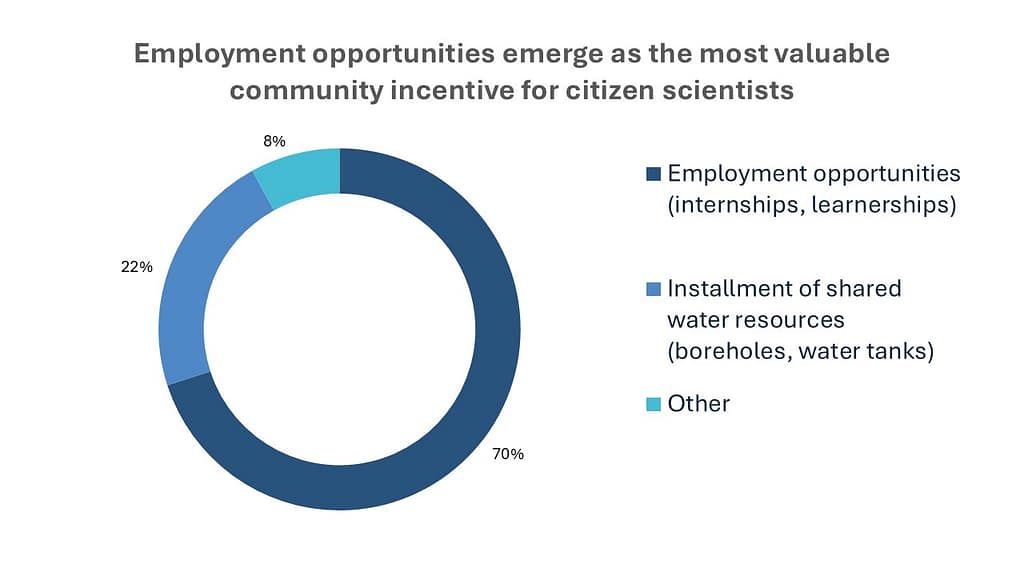
Employment opportunities like internships and learnerships were recognized as the most valuable form of community incentive (70% of respondents), while others linked citizen science to tangible community infrastructure benefits, particularly boreholes and irrigation systems.
Yet motivation extends beyond economics. Certificates that formally acknowledge citizen science efforts foster a sense of pride and ownership that can then encourage participants to remain engaged beyond material rewards. Public acknowledgment of citizen scientists, including featuring them in reports, was seen as a way to strengthen commitment and elevate community members from data collectors to environmental champions. “They take pride in the community, knowing they participated. It doesn’t have to be financial, but it must make them stand out,” shared a community member.
Incentivized engagement in practice in Limpopo
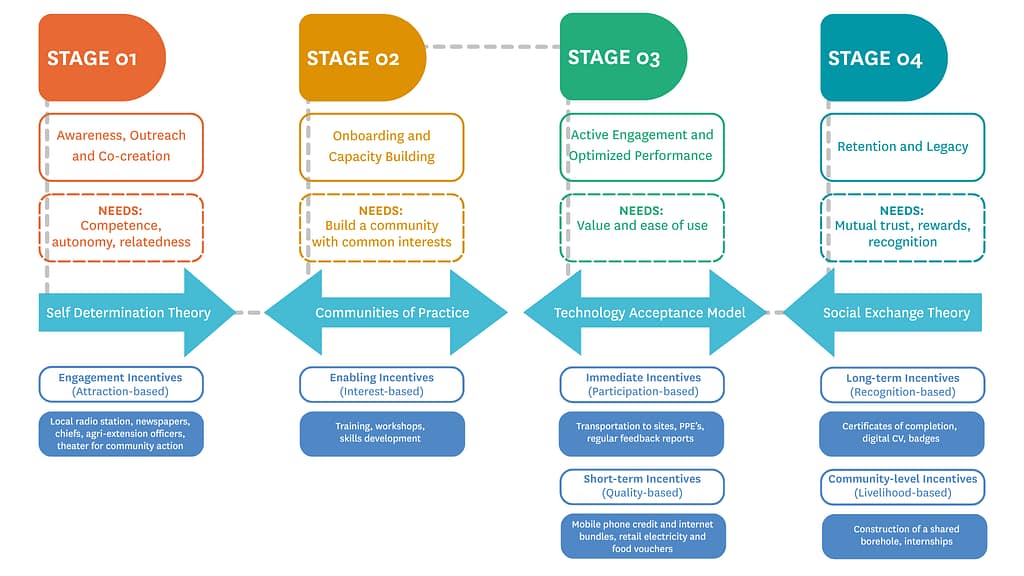
Building on insights from the survey, the project developed a layered incentive mechanism spanning four stages of engagement: awareness, onboarding, active engagement and retention.
In the Limpopo project, participants receive mobile data through Yoma to offset connectivity costs, enabling communication via WhatsApp and data uploads without financial barriers. After submitting verified observations using the miniSASS app, citizen scientists earn digital points (Zlto tokens) redeemable for additional mobile data as well as groceries or electricity — making volunteer work economically viable. Higher-quality verified data earned greater rewards, directly incentivizing rigorous monitoring. Simultaneously, each contribution builds the citizen scientist’s Yoma Digital Passport — a digital marketplace that upskills and connects young people to opportunities — creating a blockchain-based skills record that can enhance their employability.
At the community level, groups meeting collective targets receive water testing kits or infrastructure funding. These incentives are shaped through direct community engagement, ensuring they reflect local realities rather than external assumptions.
An important aspect of creating this framework is setting up realistic expectations with communities from the outset. For example, acknowledging that while incentive programs can help develop valuable skills and provide digital credentials, they are not a direct pathway to employment. Messaging must reinforce the holistic benefits of participation — including community impact, personal development and environmental contribution — rather than overpromising economic outcomes.
Increasing access for motivated citizens
“We are seeking to democratize data collection,” explains IWMI’s Regional Representative for Southern Africa and Country Representative for South Africa, Zambia and Zimbabwe Henry Roman. “But this democratization requires addressing barriers such as digital literacy, infrastructure constraints and language differences.”
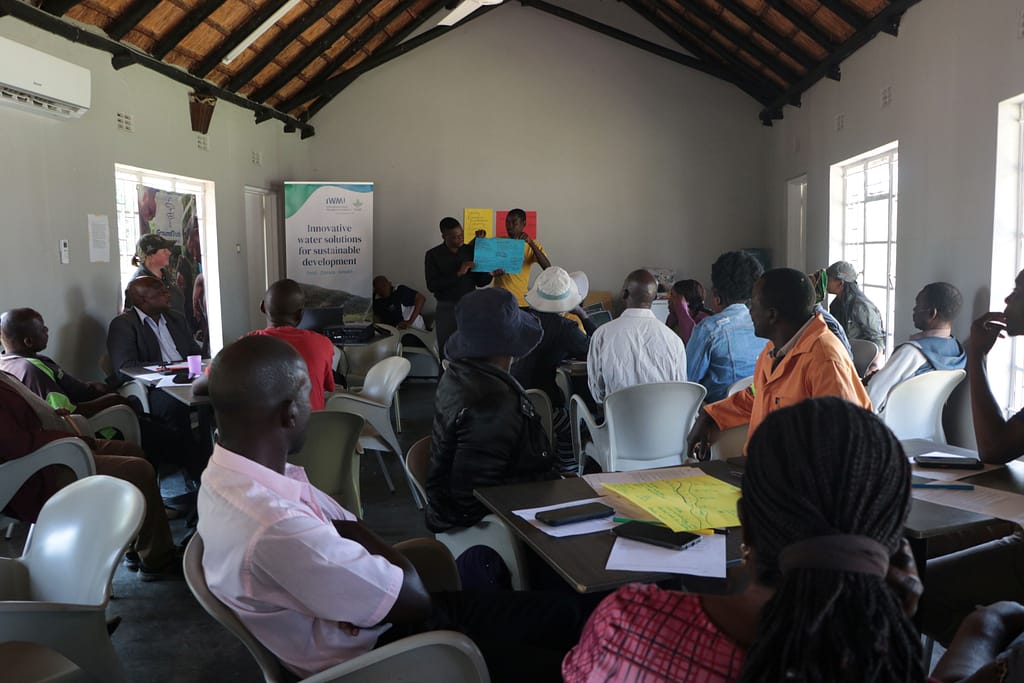
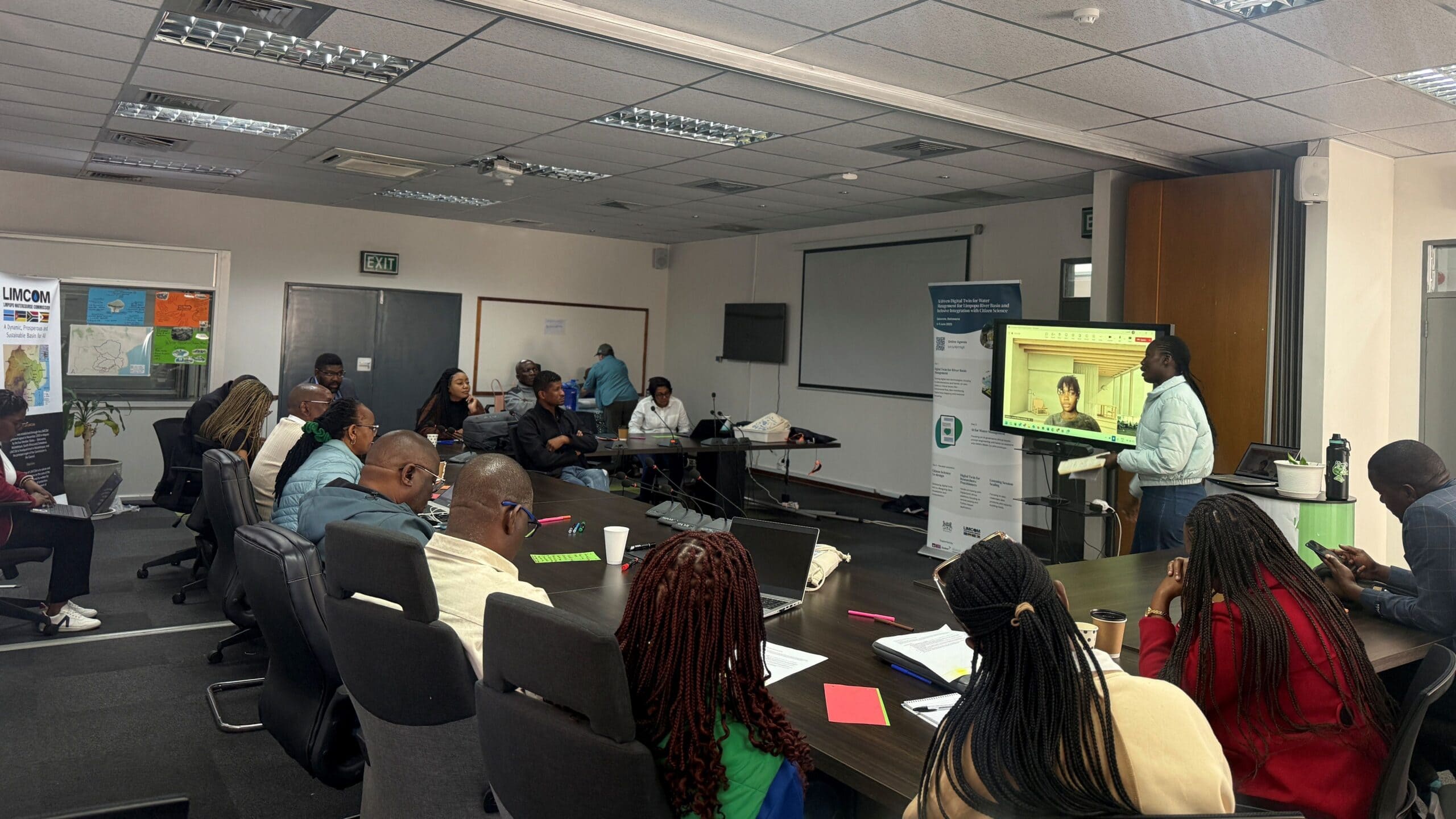
The next step is removing barriers that prevent motivated citizen scientists’ entry to the field. The Limpopo project includes built-in capacity training workshops, offers materials in multiple languages to reach a wider range of participants and uses WhatsApp — the primary digital communication method for most citizen scientists in the Limpopo River Basin — to share experiences, ask questions and receive feedback on how their data is being used.
For many community members facing high unemployment and limited digital access, physical resources are essential enablers of participation.
“Many youth don’t have phone data and airtime, so if they get airtime and data, they will be able to collect the data from the river and submit it,” explained a citizen scientist from South Africa.
In Botswana, citizen scientists echoed this view. They emphasized that tangible support, including financial assistance, transport and training opportunities, is critical for ensuring fairness and inclusion.
“We need tangible compensation — not just certificates,” said a citizen scientist from Gaborone, sharing a common sentiment that compensation must match effort.
As climate pressures intensify and water becomes an increasingly contested resource, approaches that combine cutting-edge digital tools with genuine community partnership will be essential. In the Limpopo River Basin, that partnership is already taking root — one data point, one incentive and one motivated citizen scientist at a time.