

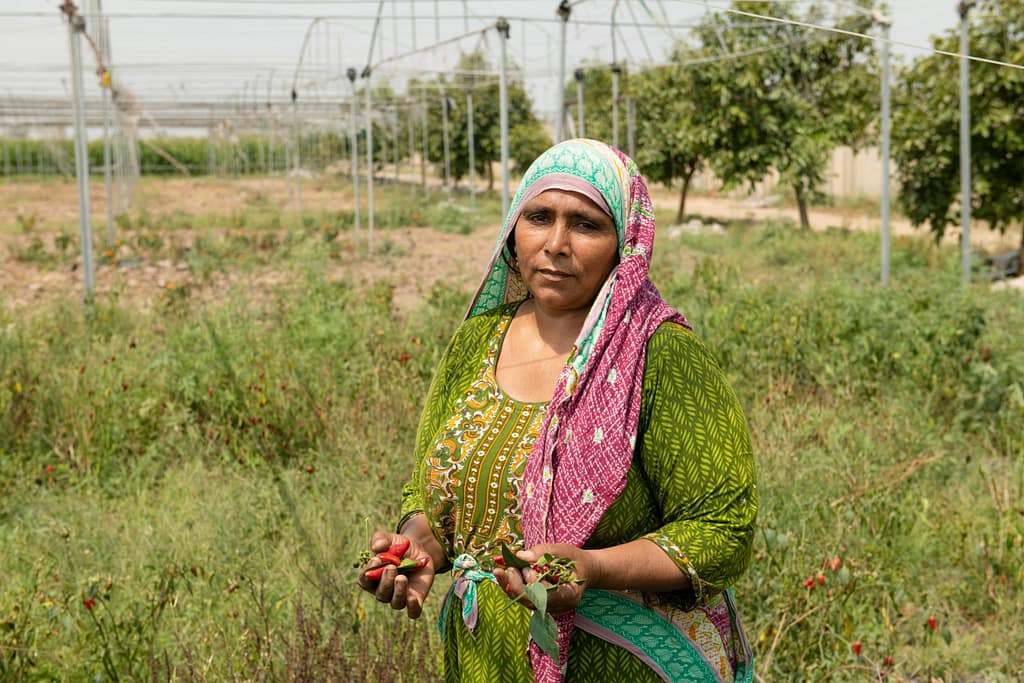
Across South Asia, women are the backbone of agriculture. Especially in Pakistan, where around 74% of women in the labor force are engaged in farming, contributing directly to household income and national food security. Furthermore, 60% to 70% of the agricultural workforce is female. Most working as unpaid family laborers in crop production, livestock management, harvesting and post-harvest activities.
Despite their indispensable contributions, less than 5% of women legally own the land they cultivate, leaving their labor unrecognized and their control over productive resources minimal. Rural women often spend 12–15 hours a day balancing agricultural work and household responsibilities. In comparison, their participation in agricultural decision-making forums is rare, even though women are the major workforce in many regions.
This leads to a critical question: How can empowerment exist without agency, without rights, without justice and without having power to make decisions?
This March, as the world marks International Women’s Day 2026 under the theme “Rights. Justice. Action. For ALL Women and Girls,” it is important to recognize that women’s empowerment without having the right to decision-making is incomplete and unjust.
The power to take action
To advance women’s empowerment in agriculture, IWMI is taking decisive action in Pakistan through innovative research that goes beyond simply identifying who makes decisions to unpacking the underlying social and cultural power dynamics shaping those decisions.
A study was conducted in the Punjab province to examine decision-making among rural couples and its impact on women’s social and economic empowerment. The study covered 369 households across three tehsils or administrative divisions. The goal was to capture the nuances of decision-making, the distribution of influence, and the exercise of power and agency within households.
The findings show that farming roles are typically divided by gender. Husbands overwhelmingly own agricultural machinery in all three tehsils, with wives’ ownership peaking at only 4.1%. Men manage land preparation, sowing, fertigation, pest control, and irrigation, while women help mostly with crop planting, harvesting and storage.
Men dominate agricultural decision-making and training at 90% with women’s involvement minimal, ranging from none to 11%. This exclusion from knowledge and decision circles is reinforced by cultural norms, resulting in 56% of households being managed financially by husbands. In comparison, only 6% of women had power over their household finances. Deeper investigation revealed that women often accept their lack of influence as normal, sometimes believing it is the expected way.
An important dynamic highlighted in the study was that mothers-in-law exert considerable authority in some households. Forty percent of the study participants noted their influence over income management and decisions on agriculture and livestock. These dynamics reveal that household power is not only deeply gendered but also structured by generational hierarchies, further limiting younger women’s agency and voice. The findings echo the Pakistan National Climate Change Policy 2021 and National Food Security Policy 2018, which recognized that women’s vulnerabilities are often overlooked.
Bridging structural inequalities to build justice
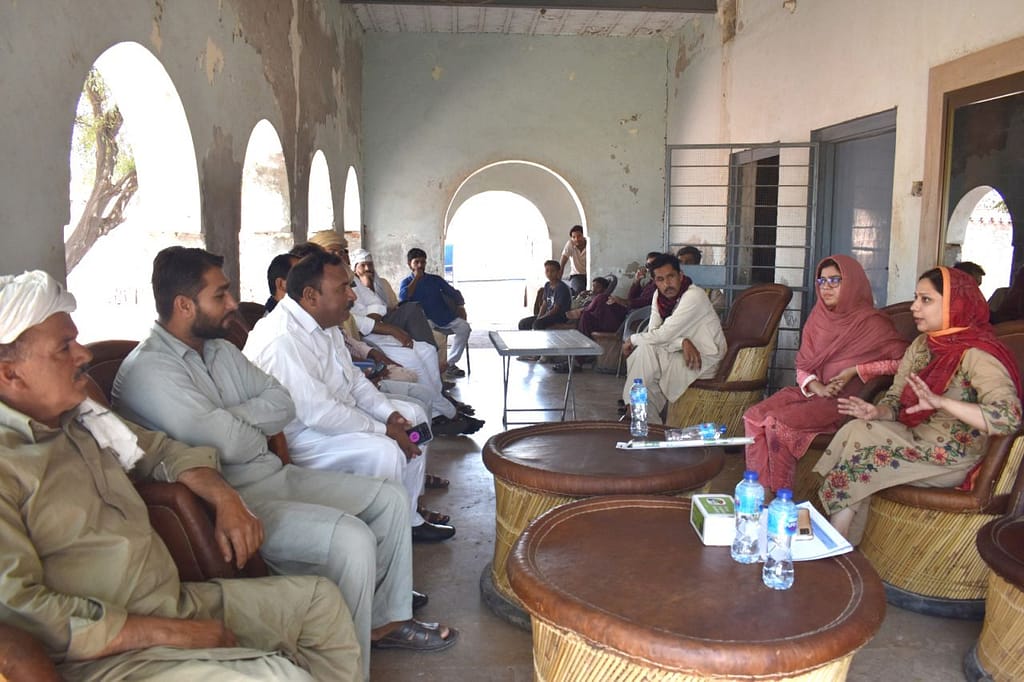
Justice requires women to be central to agricultural governance and climate adaptation. In Pakistan’s Sindh province, a landmark amendment now mandates women’s representation in tens of thousands of water-course associations and farmer organizations. Opening doors for women’s voices in water governance decisions long dominated by men.
Across regions like Sindh and Southern Punjab, women are innovating with water-saving techniques such as raised-bed cultivation, drip irrigation and modified crop cycles in response to drought and erratic rainfall. However, these achievements are constrained when women lack power over key decisions about resource allocation, crop choice and investment. A critical barrier to women’s empowerment is the lack of sex-disaggregated data. Without detailed information on women’s participation, contributions and decision-making roles, policies often remain gender-blind — failing to address the real challenges faced by women farmers.
The right to empowerment grounded in choice and agency
Empowerment is more than recognition of efforts: it is the ability to make choices, exercise agency and claim one’s rights.
Rights are the foundation of empowerment: without them, women’s contributions remain invisible, their voices unheard and their potential untapped.
In agriculture, exercising rights means women must have authority over what crops to plant, how resources are allocated, how income is spent and how innovations are adopted. It also means having a voice in farmer committees, cooperative societies and policy forums, where decisions affecting their work and livelihoods are made.
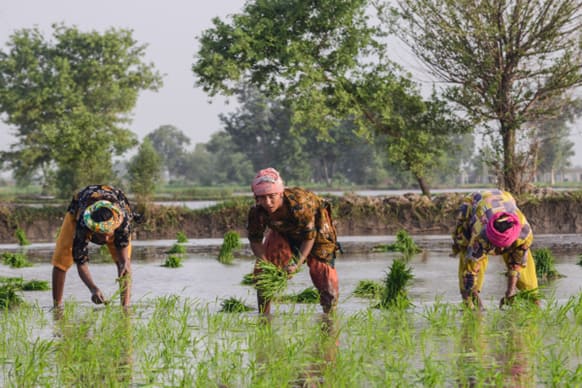
The pillars of empowerment — economic, educational, social, political, psychological and health-related — are deeply interlinked. Each strengthens a woman’s capacity to decide, act and lead. Without these foundations, empowerment remains symbolic, insignificant and unrealized.
The message is clear: gender equality in agriculture cannot be achieved through symbolic participation. Real empowerment requires challenging structural inequalities in asset ownership, access to power, and social norms — and deliberately redistributing power, roles and responsibilities. To ensure rights and justice for women, they need a seat at the decision-making table.


