


IWMI supports climate-smart agriculture in Ethiopia
Solar-powered irrigation is contributing to improved food security and incomes for farmers in the Oromia and Central Ethiopia regions.
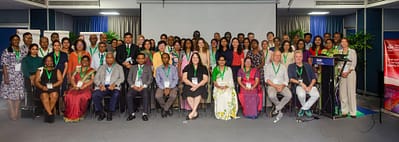
Pathways for promoting sustainable fruit & vegetable systems in Sri Lanka
Experts explored the challenges to and opportunities for healthier diets by strengthening fruit and vegetable value chains.

Data science helps to boost equitable access to water and sanitation
IWMI's work in two districts of Nepal assessed climate change vulnerability and risk to water and sanitation systems.

IWMI research offers a path to better river discharge estimation in Africa
The continent's ability to adapt to climate change depends, in part, on accurate river discharge estimation.

IWMI introduces sustainable water management to farming community in Pakistan
Women and girls are learning to conserve water and boost productivity while reducing water stress in Okara, Punjab.

Reflections on water in the hottest year (so far)
The NEXUS Gains Talks series concluded by examining critical connections between global heating and water.

New tools for transboundary water challenges in Central Asia
The Chirchik River Pywr model tracks current water management decisions, their impacts and benefits to evaluate future interventions.

Sustainable water and soil management in Zambia & Malawi
Collective action is at the forefront of IWMI's work to strengthen climate-resilient agricultural practices in rainfed systems.

Reflecting on NEXUS Gains’ outcomes in South Asia: Groundwater rises again
Over three years, NEXUS Gains has worked across South Asia, applying diverse approaches to help address groundwater depletion.

“I shall ‘sew’ the land together before I die.”
The story of one family's successful gully restoration in Halaba, Ethiopia.
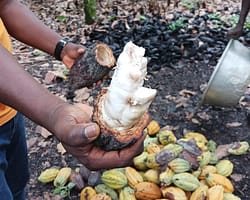
November-December 2024 Research Journal Roundup
Roundup of research, journal and other academic articles from November and December 2024.

IWMI research supports equal access to water
Evidence-based research on solar-powered groundwater irrigation has the potential to provide water security for agrarian communities in Lao People’s Democratic

Lessons from flood anticipatory action in Zambia
Embedding anticipatory action in national systems, among other actions, can better protect vulnerable populations from predictable shocks.

Editor’s picks: Our favorite stories of 2024
In 2024, we published over 150 stories on topics including digital twins, drought, and urban wetlands. Here are our favorites.

Small streams, big possibilities for Central Asia
IWMI is a partner in Hydro4U which focuses on small-scale hydropower in Central Asia to address issues including water scarcity.
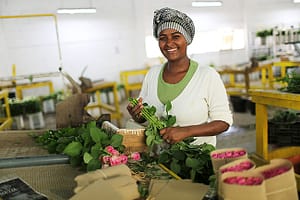
September-October 2024 Research Journal Roundup
Roundup of research, journal and other academic articles from September and October 2024.

Transferring flood waters underground builds community climate resilience in India
IWMI began piloting underground transfer of floods for irrigation (UTFI) in a village in the Ganges Basin in 2015.

Pitching for impact: The journey of agri-tech innovators in Kenya
The Agritech4Kenya Challenge is supporting science-based agri-tech innovations that are localized and demand driven.
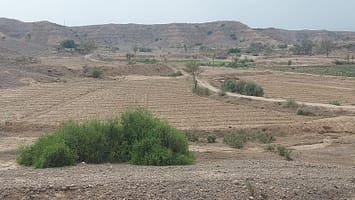
Rising above the torrents
The gender dynamics, community strategies, and vulnerabilities in South Punjab’s hill torrent floods.
Freshwater canal grabs in Bangladesh are harming local communities
IWMI's Paul Schulze and Deepa Joshi on how freshwater canals are being appropriated by leaseholders for personal gain.

IWMI welcomes new leadership to drive strategy 2024-2030
Each of the new members will play a key role in guiding IWMI’s growth and development as it takes forward
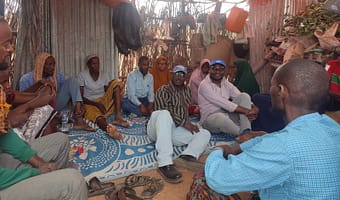
Research, partnerships, and community action build resilience in Ethiopia
IWMI and partners strengthen investment in anticipatory action and disaster preparedness following 2023 floods.
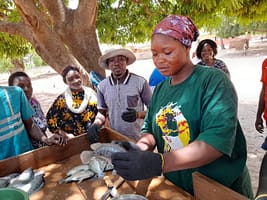
Quick gains or long-term futures?
Context matters for how young people in Ghana view aquaculture.

Landscape rehabilitation outreach in Halaba, Ethiopia
IWMI and partners demonstrate the power of community-driven land restoration in fostering awareness and encouraging initiative.
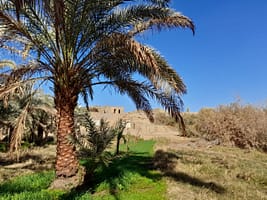
A roadmap to normalizing and formalizing nature-based solutions in the Middle East and North Africa
Despite their growing popularity in policy and development circles, scaling nature-based solutions faces significant obstacles.

IWMI is cultivating a new generation of water experts in Africa
IWMI has expanded DIWASA's scope to emphasize capacity building, stakeholder collaboration, and mentorship.
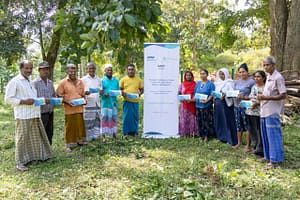
First-ever community-level anticipatory action simulation for drought mitigation in Sri Lanka
IWMI researchers are pioneering a proactive community-led approach to climate resilience.
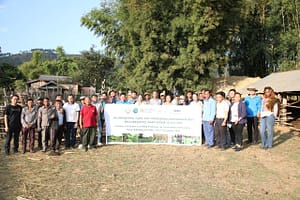
From field to field
How Southern and Northern farmers’ peer learning exchange visits are changing farming in Lao PDR.
Solar-powered irrigation: Empowering Bangladesh’s women farmers?
IWMI's Tanmoy Bhaduri discusses the sociocultural barriers which hinder women farmers' access to diesel power alternatives.
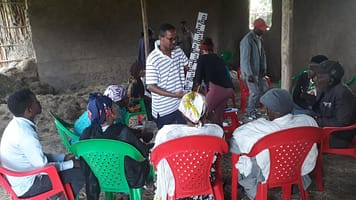
Citizen science programs for effective watershed management in Ethiopia
IWMI's citizen science program goes beyond data collection and involves community-based mapping of watershed characteristics.
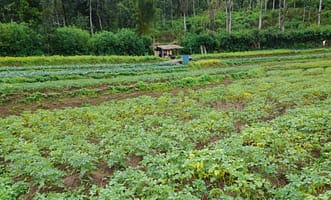
Sustainable vegetable cultivation
Research-based agronomic practices promise safer, more efficient crop production.
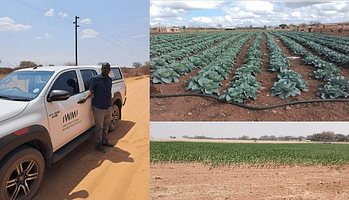
From remote sensing to the field
IWMI researchers are using machine learning to map irrigated areas in the Limpopo River Basin.

SWAT+ hydrological modelling to feature in Nepal’s national curriculum
IWMI’s capacity building on the SWAT+ hydrological model will help integrate it into the Masters of Hydrology and Meteorology curriculum.
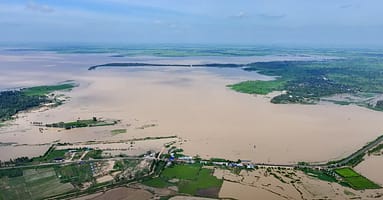
Working together for more equitable water sharing solutions
Piloting the establishment of a District Technical Working Group for integrated management of water resources of Beung Sneh Lake, Cambodia.
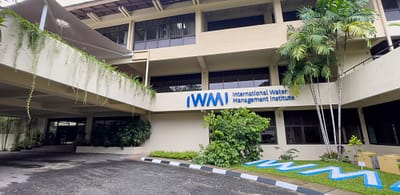
IWMI welcomes new Board members
Appointees joining the Board of Governors will guide direction and growth of global Institute.
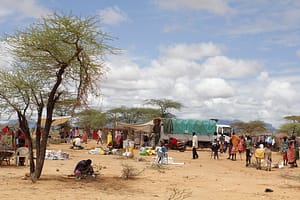
CGIAR launches Drought Action Catalyst to strengthen global resilience
New platform focuses on connecting communities with scalable solutions to build resilience and manage drought risks.

The hidden costs of gender-blind investments in agriculture
Embedding a strong gender perspective in project planning and design is imperative to achieve substantive gender equality.
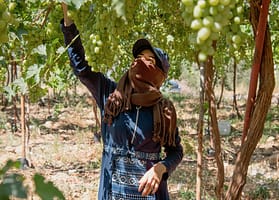
Gender-based violence prevention as a climate adaptation imperative
IWMI aims to address entrenched social and gender norms that limit women’s agency while promoting education and leadership in the

Scorecard will help governments meet nationally determined contributions to cut carbon emissions
Henry Roman discusses the importance of measuring a country’s capacity to achieve its carbon emission targets to manage and sustain

Rethinking responses to the world’s water crises
IWMI's Rachael McDonnell contributes to reframing the responses to mitigating the world’s water crises using a ‘beyond growth’ framing.
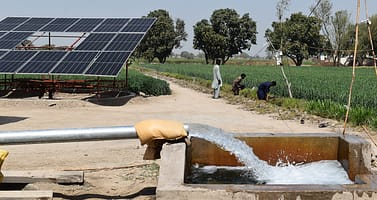
Business and finance models for increased sustainability and equity of solar-powered irrigation in Pakistan
Combining innovative business and finance models could break the trend of increased inequities and risk of groundwater over-exploitation.
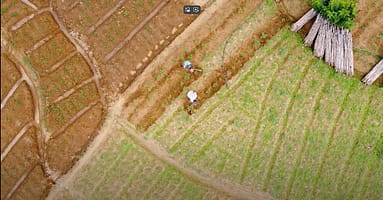
Seed treatment for pole bean cultivation
Providing guidance and educating farmers on the importance of chemical seed treatment in pole bean cultivation.
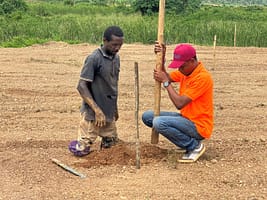
The environmental fallout of illegal mining in Southern Ghana
The environmental toll of illegal mining is undeniable, but forward-thinking initiatives are forging a path to recovery.
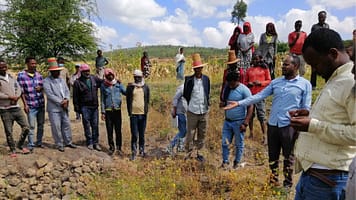
Land degradation in Ethiopia calls for community-led soil interventions
IWMI and partners collaborated with farmers across the country to develop accessible solutions to combat soil quality issues.
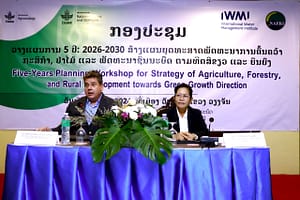
IWMI drives evidence-based, collective action on water
IWMI’s work on food, land and water in Lao PDR aims to improve the agriculture sector and rural development as
Odisha’s integrated approach to food, land and water
The new report by IWMI and the Council on Energy, Environment and Water highlights the strengthening of policy coherence.
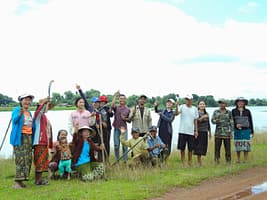
Collective action for healthy rivers
IWMI and partners cleaned up rivers and raised awareness on the vital importance of river ecosystems.
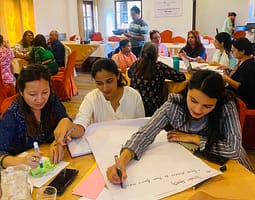
Women defining water, energy, food and ecosystems leadership in Nepal
While there is ample evidence of women’s roles and expertise in the management of resources, the literature is often silent
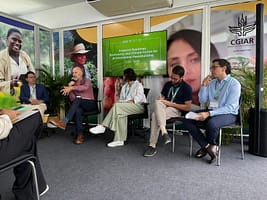
COP16 underscored need for increased global collaboration on biodiversity targets
IWMI participated in discussions on competing demands on water and their impact on ecosystems at the 2024 UN Convention on

Stories from the Indian Sundarbans about loss and damage
The findings aim to contribute to a context-relevant Assessment Framework for Loss and Damage.
