The International Water Management Institute (IWMI) launched the Circular Bioeconomy Innovation Challenge 2026 on August 11, in Delhi, India. The initiative invites startups, entrepreneurs and community-based innovators across India to put forward scalable solutions that convert organic waste and other underused resources into value.
India generates vast volumes of food waste, wastewater, agricultural residues and municipal solid waste — resources that remain largely locked in linear systems of production and consumption. Left unaddressed, this represents a missed opportunity, with consequences for soil health, water quality, livelihoods and long-term resource security.
The challenge was launched in partnership with the CGIAR Multifunctional Landscapes Program, BAIF Development Research Foundation (BAIF), IARI-Pusa Krishi and Circular Bioeconomy Innovation Hub. Speaking at the launch, Gopal Kumar, IWMI’s interim country representative for India and Bangladesh, described the circular bioeconomy as central to India’s long-term development goals. “India’s circular bioeconomy is a core engine for achieving Viksit Bharat (Developed India) @ 2047,” he said, pointing to the potential to convert organic waste, agricultural residues and carbon emissions into clean energy, bioplastics and bio-based chemicals. He also highlighted the promise of a “waste-to-wealth” model — turning municipal solid waste and crop residues into biofuels and organic fertilizers — as a way to boost resource efficiency while opening new avenues for rural livelihoods and enterprise.
A challenge that has grown with its innovators
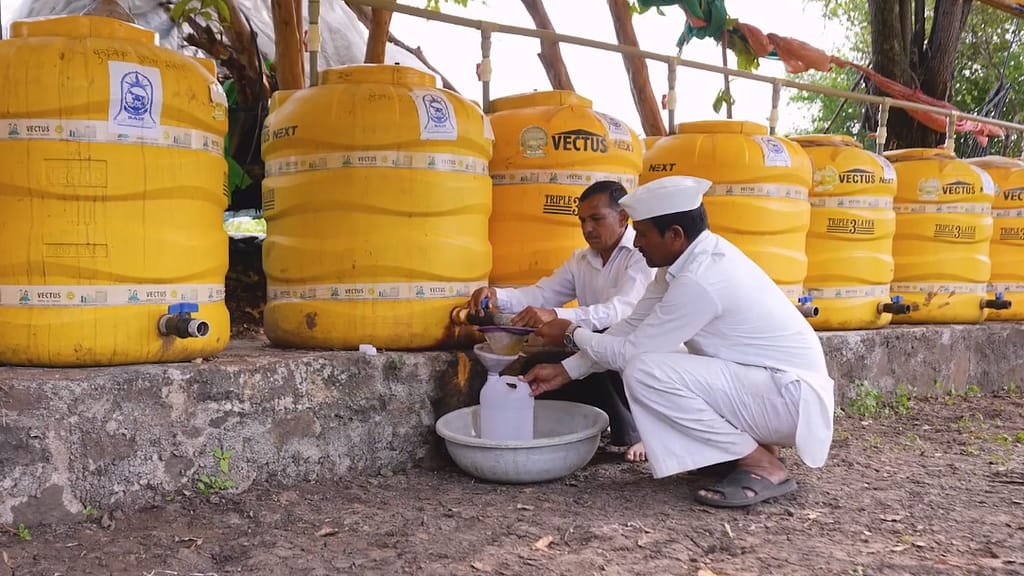
Now in its third year, the Circular Bioeconomy Innovation Challenge has evolved alongside India’s circular bioeconomy innovation landscape. The inaugural 2024 edition focused on students and early-career innovators, drawing more than 40 registrations, 15 shortlisted entries and five finalists who took part in a two-day boot camp at BAIF’s Pune campus. Ideas ranged from algae-based approaches to boosting biogas production to biodegradable materials made from agricultural waste and digital tools for food waste management.
By 2025, the focus had shifted to early-stage startups with working prototypes or minimum viable products. Nine startups reached the jury stage, and four finalists completed a structured boot camp on financial planning, investor pitching and technical mentoring. The winning innovation, from AlaCorp, used an automated microalgae system to treat saline industrial wastewater while generating biomass for biofuel, bioplastics and other high-value products. Other finalists worked on Black Soldier Fly-based waste processing, decentralized bio-resource centers and energy-efficient composting — evidence of solutions increasingly ready to move beyond the lab.
From innovation to investment
The 2026 edition builds on that momentum by connecting the challenge to an international stage. For the first time, top finalists will pitch at World Circular Economy Forum 2026 (WCEF2026) in New Delhi, taking part in an accelerator session with innovators, experts and potential investors.
Applications are invited under two categories: Community-Led Rural Innovations, and Youth and/or Women-Led Startups and Enterprises. Eligible applicants are startups and small rural enterprises established within the past 10 years, working anywhere in India, with at least a minimum viable product addressing waste-to-value, resource recovery and reuse, bio-based materials, organic waste management, renewable bioresources or other nature-positive approaches. Community-based enterprises in rural areas, and women and youth entrepreneurs from Tier I and Tier II cities in India, are especially encouraged to apply.
Beyond the final pitch, finalists will gain scaling support to refine their innovations, explore new markets and address intellectual property and commercialization needs. The top four will also gain international visibility through the Global South Circular Bioeconomy Innovation Catalogue, alongside access to incubation support through IARI-Pusa Krishi and BAIF Council for Advancement in Rural Entrepreneurship and Sustainability (CARES), and mentorship through the Circular Bioeconomy Innovation Hub.
How to apply
Startups, enterprises and community-based innovators can submit applications for the Circular Bioeconomy Innovation Challenge 2026 by September 10.