

Across the lowland floodplains of the Lower Mekong River Basin, the convergence of erratic rainfall patterns and rising temperatures is making traditional rainfed agriculture increasingly difficult. In Cambodia and Lao PDR, this has led to an accelerated deployment of decentralized irrigation — meaning localized, off–the-grid systems such as solar pumps — to secure productivity and build household climate resilience. Though solar-powered irrigation projects are being installed at a rapid pace, not all projects are thriving.
As part of the ASEAN-CGIAR agri-food systems regional program, the International Water Management Institute (IWMI) is driving efforts on sustainable farmer-led irrigation. In collaboration with the National Agriculture and Forestry Research Institute (NAFRI) in Lao PDR and the Royal University of Agriculture (RUA) and International Rice Research Institute (IRRI) in Cambodia, IWMI conducted surveys to collect detailed data on the state of solar irrigation in both countries.
An outcome of the data collection was contrasting case studies from Cambodia and Lao PDR, one from 2024 and one from 2026, examining the successes and failures of three solar irrigation projects. The three cases demonstrate that the outcomes of solar irrigation depend far less on the hardware itself and far more on whether water governance issues are adequately addressed.
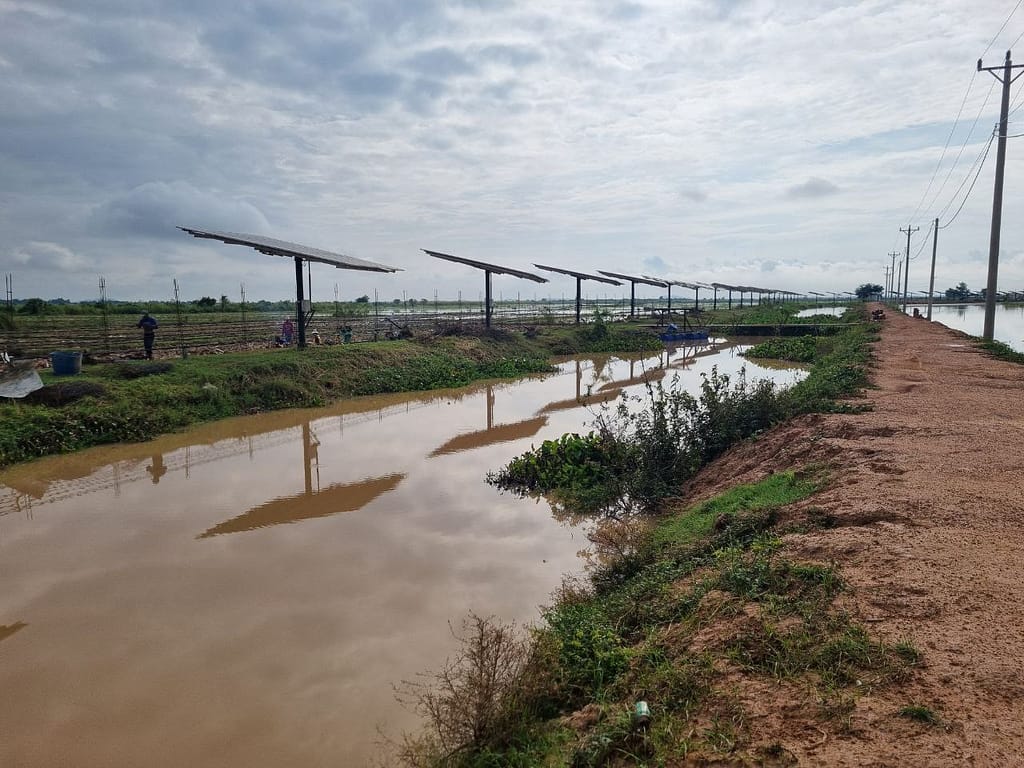
Three systems, three scales
The cases cover two small, community-managed groundwater systems serving fewer than 10 households and one large-scale, fee-based irrigation service supplying surface water to nearly 500 rice farmers. Despite differences in ownership structure, crop type, water source and installed capacity, the design and management challenges they face are remarkably similar.
| Attapeu, Lao PDR | Takeo, Cambodia | Kampong Cham, Cambodia | |
| Governance model | Community-managed | Community-managed | Irrigation service provider |
| Number of farmers | 7 | 10 | 470 |
| Crops grown | Vegetables | Vegetables | Rice |
| Irrigated area | 0.1 ha | 0.5 ha | 1,300 ha |
| Pump capacity | 0.6 kW | 1.5 kW | 390 kW |
| Water source | Groundwater | Groundwater | River |
Water supply must match real rather than assumed demand
Each system faced some form of mismatch between the water supply delivered and the actual irrigation demand.
In Attapeu, groundwater levels declined in the late dry season, reducing the solar pump’s discharge by roughly 30% compared to earlier months. The 30-meter deep well proved too shallow for reliable year-round supply, and farmers would have to negotiate water allocation. There was not always enough for everyone in the dry months.
In Takeo, groundwater availability was better, but the system was undersized relative to the intended command area. Initial estimates suggested a capacity to irrigate 3.5 hectares; in practice, only about 0.5 hectares could be effectively irrigated at a time. Farmers adapted through rotational pond filling and irrigation scheduling. Though the solar pump worked well, the farmers had to schedule carefully, and only during daylight hours.
In Kampong Cham, demand expanded faster than planned. The scheme was designed for 1,000 hectares but expanded to 1,300 hectares within two years. The scheme operators responded by supplementing daytime solar pumping with grid electricity at night — reintroducing reliance on fossil fuels.
Across all cases, a key lesson emerged: robust water balance assessments that account for adequate groundwater access, seasonal changes in water availability, crop water requirements and realistic farmer participation are all critical. Undersized systems and underestimated demand constrain benefits and create tensions amongst users that are largely avoidable.
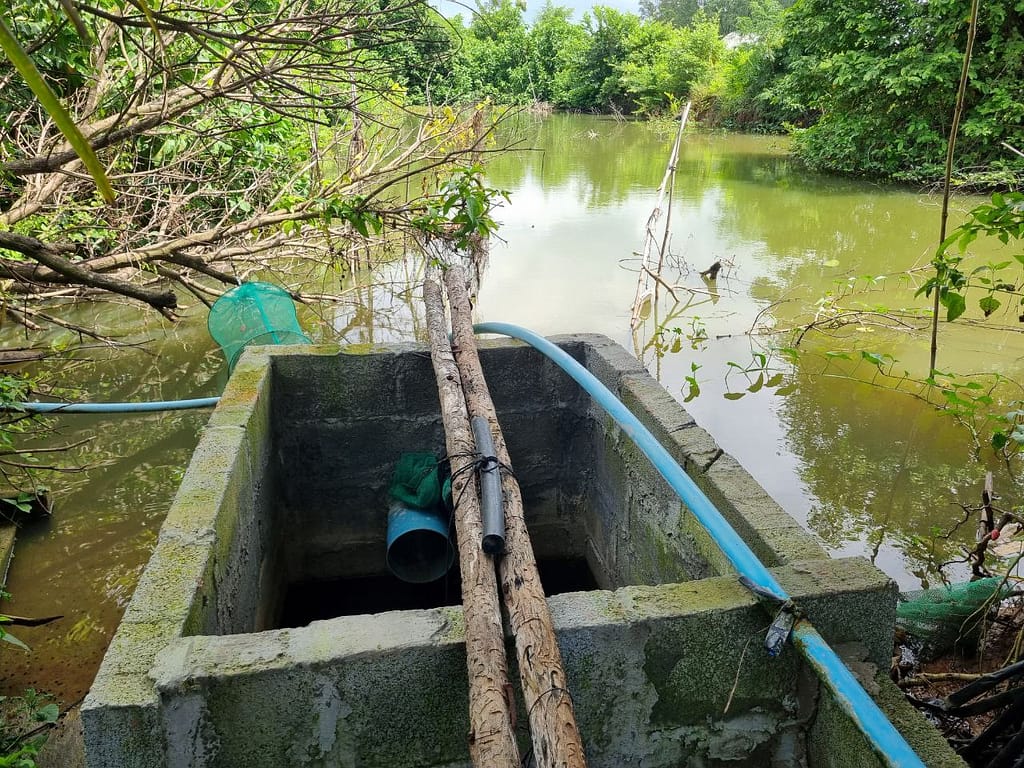
Governance determines success despite water scarcity
Across all three cases, governance proved to be as important as water supply in determining outcomes.
In Attapeu, no formal irrigation schedule was established. Operation depended too heavily on a single water user group (WUG) leader, and during periods of shortage, perceptions of unequal access led to social tension. Farmers ceased working collectively, making it impossible for the WUG to take shared responsibility in operating and maintaining the system.
In Takeo, farmers developed a weekly rotational pond-filling system. Although supply limitations remained, the system set out allocation rules that were collectively understood and adjusted when necessary, helping avoid disputes.
In Kampong Cham, irrigation delivery was underpinned by formal contracts and defined service conditions. Farmers receive compensation if supply failures cause crop losses, and canal improvements enable gravity-fed delivery for many households, reducing daily irrigation labour from roughly seven hours to just over three.
These contrasts highlight a valuable point: physical water scarcity does not necessarily undermine a system, but unclear allocation rules do. Solar irrigation requires not just dependable pumping, but clear rules that allow farmers to plan and operate within known limits.
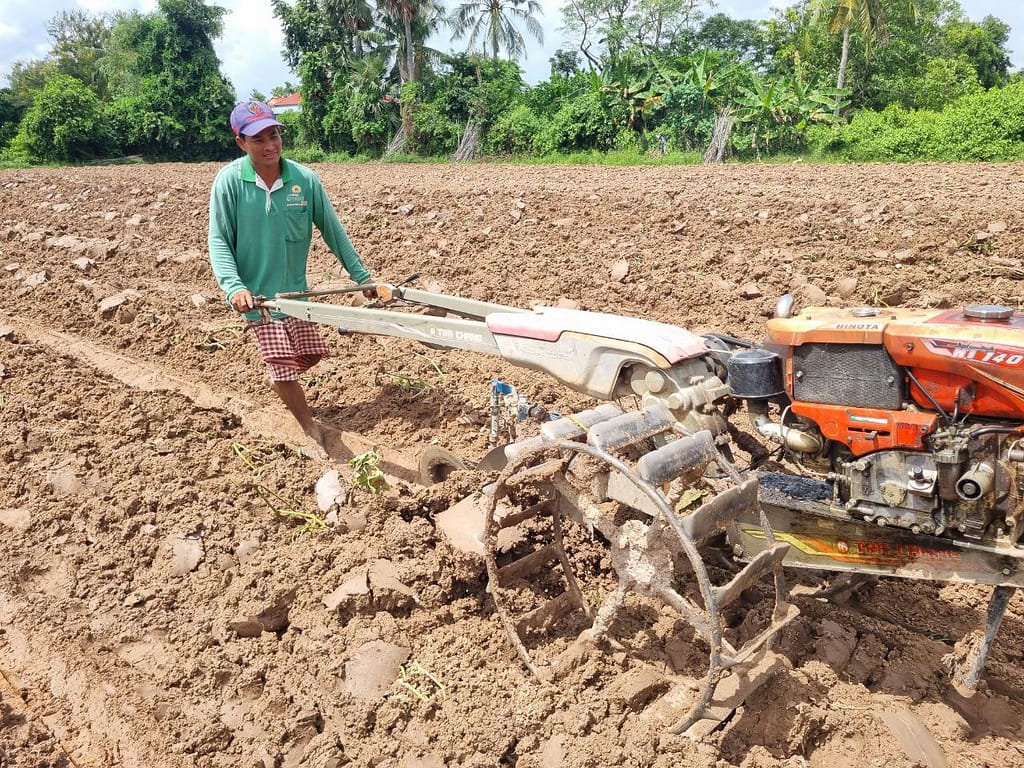
Economic incentives shape sustained use
Solar irrigation only delivers if farming itself remains economically worthwhile. Where off-farm incomes are rising or plot sizes are too small to be worthwhile, even a well-functioning system won’t keep farmers committed to irrigated production.
In Attapeu, rising prices of cash crops like cassava reduced interest in vegetable cultivation. In Takeo, four out of ten households shifted to factory employment, citing limited profitability given small plot sizes and water constraints. On the other hand, in Kampong Cham, reliable irrigation enabled some rice farmers to increase cropping intensity from two to three cycles per year, and improved scheduling and reliability increased annual incomes.
The implication here is that solar irrigation cannot fully compensate for unprofitable farming. It can, however, help strengthen viable operations when paired with profitable cropping and manageable labor requirements. At scale, expansion depends on workable business models, access to finance and, where justified, carefully targeted development support.
Environmental gains can be realized
The environmental benefits of solar pumps are most significant when they replace diesel at scale. In Kampong Cham, a conventional diesel-based system for 1,300 hectares would consume roughly 78,000 litres of fuel and generate over 200 tons of CO₂-equivalent emissions per crop cycle. Switching to solar, even with partial grid support, cut emissions by as much as 95%.
In Takeo, Kan Kimlong, a WUG member noted that the solar water pumping system “reduces my dependency on diesel while allowing me to maintain vegetable productivity and consistent planting cycles. Previously, I struggled to find water for my crops during the dry season, but now I feel relieved.”
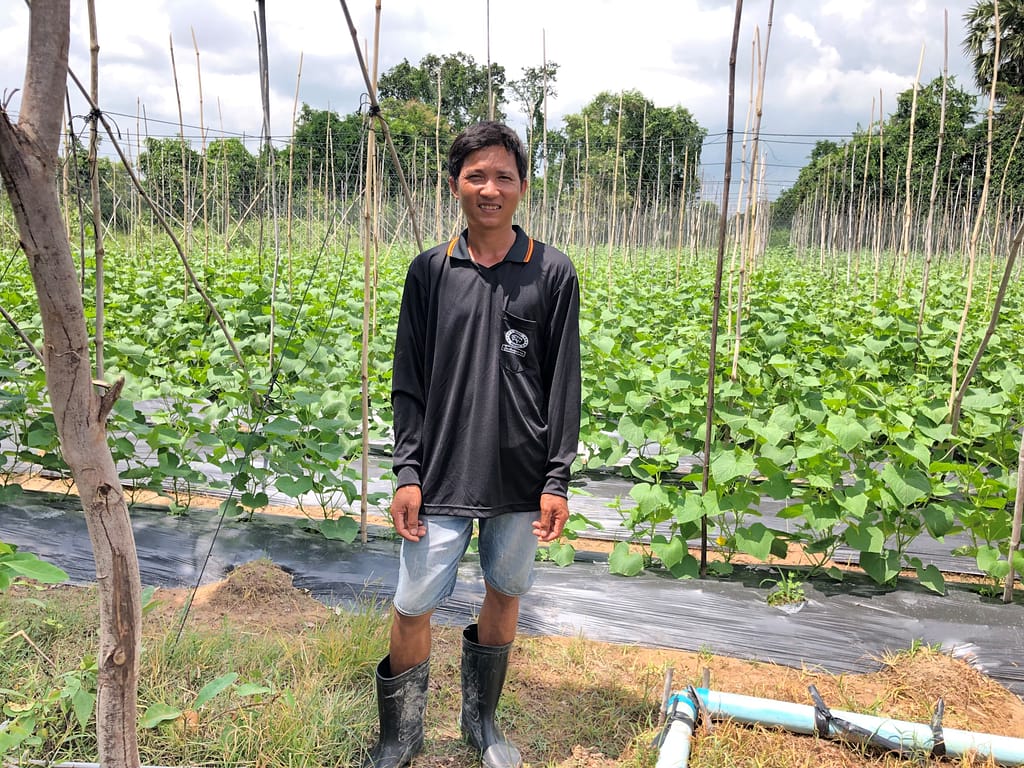
Individual small-scale systems like in Attapeu and Takeo offer more modest gains. Particularly where secondary non-solar pumping is still required, their primary value lies in decoupling farming from fuel market instability. If replicated widely, the combined impact of small-scale systems can be considerable.
The environmental value of solar irrigation is determined by the total area covered and adoption rates as much as the size of any single project.
Operation and maintenance remain critical
While solar irrigation reduces fuel costs, it does not eliminate the need for financial planning, technical capacity and routine maintenance.
In Attapeu, no maintenance fund was established, and operational knowledge was concentrated in a single individual, thereby creating an obvious point of possible failure. In Takeo, monthly fee collection from farmers in the water user group ceased after six months due to weak enforcement mechanisms, leaving uncertainty about how future repairs would be financed. Even the large-scale private scheme required operational adjustments as participation expanded beyond original projections.
Across all three cases, long-term performance depended on clearly assigned responsibilities, predictable financing for repair and replacement, access to spare parts and continued technical support. Though more decentralized, solar irrigation does not remove the need for strong institutions and reliable maintenance.
Keys to system performance
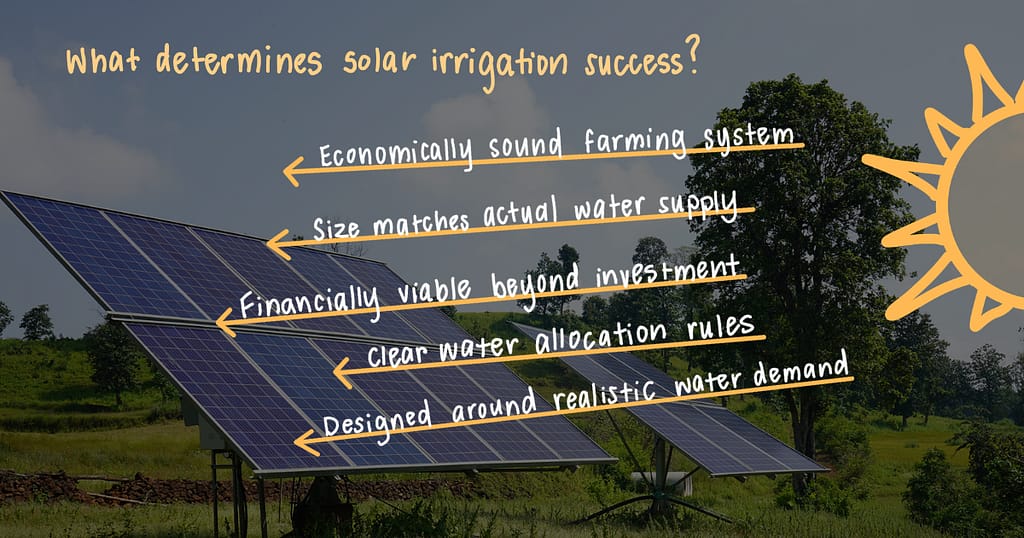
Irrespective of the major differences in scale, ownership, crops and water sources, the cases point to largely the same underlying drivers of success. Solar irrigation systems perform well when they are:
- Sized to match actual water supply
- Designed around realistic water demand
- Managed under clear water allocation rules supported by community-agreed oversight
- Financially viable beyond the initial investment
- Applied to farming systems that are economically sound
What ultimately determines success is whether the technology, water resource, governance arrangements and economics of farm production are designed to work as a whole.
As solar irrigation continues to expand across Southeast Asia, the priority must shift from establishing as many solar installations as possible to ensuring they can be sustained. Drawing on these lessons, IWMI continues to support solar irrigation projects in Attapeu. The evidence from Lao PDR and Cambodia shows that solar irrigation technologies are only as good as the social and institutional systems built around them.
Paul Pavelic is a senior researcher in hydrogeology at the International Water Management Institute, Lao PDR; Hin Lyhour is a senior researcher and lecturer in agricultural biosystems engineering. at the Royal University of Agriculture, Cambodia; Buntong Borarin is the director of the Division of Research and Innovation at the Royal University of Agriculture, Cambodia; Rica Joy Flor is a scientist in innovation systems at the International Rice Research Institute, Cambodia; Phonevilay Sinavong is the Deputy Director of the Agricultural Economy and Rural Development Policy Research Center at theNational Agriculture and Forestry Research Institute, Lao PDR; and Saetmany Phompackdee is the Deputy Director of the Center for Agriculture and Forestry Knowledge and Innovation Transfer at the National Agriculture and Forestry Research Institute, Lao PDR.
To learn more about the specific case studies, read the full reports here:
Private Sector-initiated Solar Irrigation Scheme for Rice Cultivation: Case Study from Banteay Commune, Kampong Cham Province, Cambodia

Key Lessons from an Assessment of a Community-Based Solar Water Pumping System in Bati, Southeastern Cambodia
Key insights from a community-based solar water pumping system in southern Laos. [In Lao]
Key insights from a community-based solar water pumping system in southern Laos


