Inclusion

IWMI is dedicated to promoting inclusion across its innovations, management strategies and research. We focus on adapting and implementing business and financial models that encourage inclusion and equality. Our approach places the needs and rights of marginalised groups, particularly women and disadvantaged communities, at the heart of solutions for water and food security.

To ensure that these initiatives are equitable and effective, IWMI uses impact assessments to evaluate potential trade-offs, risks and unintended consequences. Our work consistently integrates principles of equality and inclusion into both research and practical applications relating to water and food security, carefully examining how equitable access to water resources, innovative technologies and robust risk management strategies can deliver development gains for all.

Contacts

Karen Nortje

Karen Nortje

Research Group Leader – Gender Equality and Social Inclusion (GESI)

Projects on this topic

Latest news on this topic

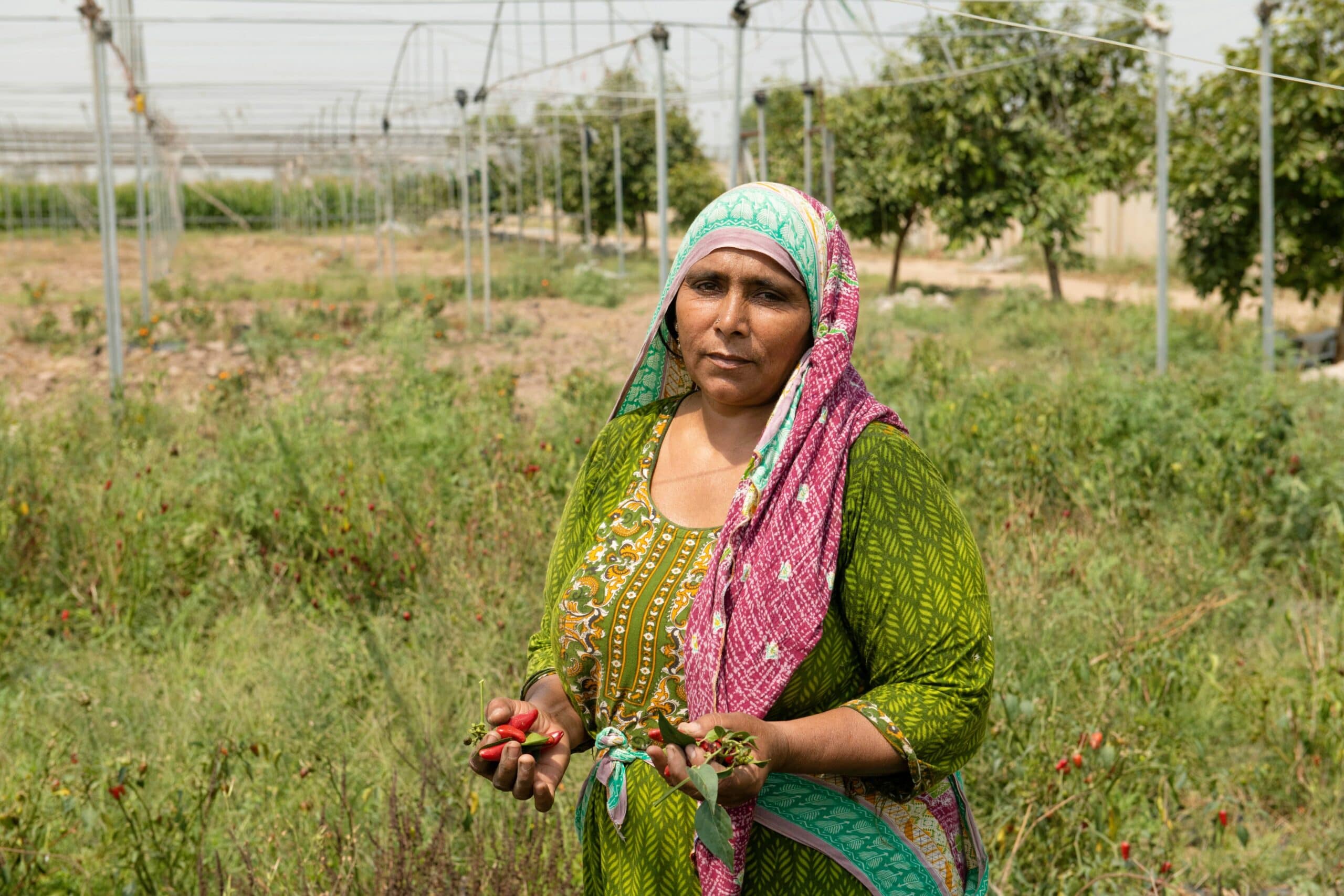
A farmer from Punjab Province, Pakistan, stands holding a fresh harvest of chilies. Photo: Amjad Jamal/IWMI

Rights. Justice. Action.

Why women’s empowerment in agriculture begins with decision-making powers …
Stakeholders visit the River Level Station on the Lower Sabie River, Kruger National Park, South Africa. Photo: Ryan Nehring/IFPRI

Why water security in Africa depends on listening to young people

Water security in Africa requires a paradigm shift that centers women and young people as architects of solutions, says IWMI researcher Seipati Mokhema …
Community members interacting at an Accelerating Impacts of CGIAR Climate Research for Africa (AICCRA), training program in Zambia. Photo: Agricomm

In Zambia, women build independence through climate-smart agricultural practices

Through finance, climate-smart farming training and community programs that engage men, IWMI is helping survivors of violence rebuild their livelihoods …
Meron photo

Women, science and the future of water and climate action

On this International Day for Women and Girls in Science, bridging the gender gap in STEM can lead to more effective water solutions, explains IWMI researcher Meron Teferi Taye …

Latest publications on this topic

Thumbnail
Report

From Design to Impact: Insights from WMfEP’s Gender-Responsive Initiatives for Women and Youth in Tank and D.I. Khan Districts, Pakistan
International Water Management Institute | March 26th, 2026
Begum, Khadija; Ilyas, Nouman; Hussain, Kashif
Open Access
Thumbnail
Report

Innovative Financing Solutions for Water-Agriculture Innovations in Nepal

International Water Management Institute | March 18th, 2026
Fanaian, Safa; Shrestha, Shisher; Adhikari, Aashika; Magar, K. T.; Rana, O.; Pokharel, S.; Sapkota, H. S.
Open Access
Thumbnail
Brief

How to Scale a Project to a Program: The Expansion of Al Murunah

International Water Management Institute | March 16th, 2026
Reddy, Tanisha; Samarasekara, Vidhisha; Fragaszy, Stephen
Open Access

Events on this topic

MANAGE Dialogue 2026
MANAGE Dialogue 2026

This workshop will focus on innovative and context-specific approaches to enhance the effectiveness and sustainability of extension services …
AI Impact Summit 2026

AI Impact Summit 2026

This is one of the biggest AI summits in the global South and marks a defining point – transitioning from dialogue to demonstrable impact …
International Women's Day 2026 logo

International Women’s Day 2026

International Women’s Day (IWD) shines a light on work that champions gender equality, fostering diverse perspectives, enhancing innovation and ensuring fair opportunities for everyone to thrive …
FLEX 5

FLEX webinar 5 – Youth and women led innovation: Transforming fragile contexts through circular solutions

This webinar will spotlight the potential of youth- and women-led, circular bioeconomy solutions to build resilience in fragile, underserved and displacement-affected settings …

Latest data resources

Climate Change and Gender Vulnerability Hotspot Mapping in Ghana

Climate Change and Gender Vulnerability Hotspot Mapping in Ghana

The Gender and Climate Vulnerability Hotspot Mapping in Ghana tool supports the identification of climate vulnerable areas to inform policymakers about the specific needs of diverse social groups. By mapping vulnerabilities, this …