

Climate Change and Gender Vulnerability Hotspot Mapping in Ghana
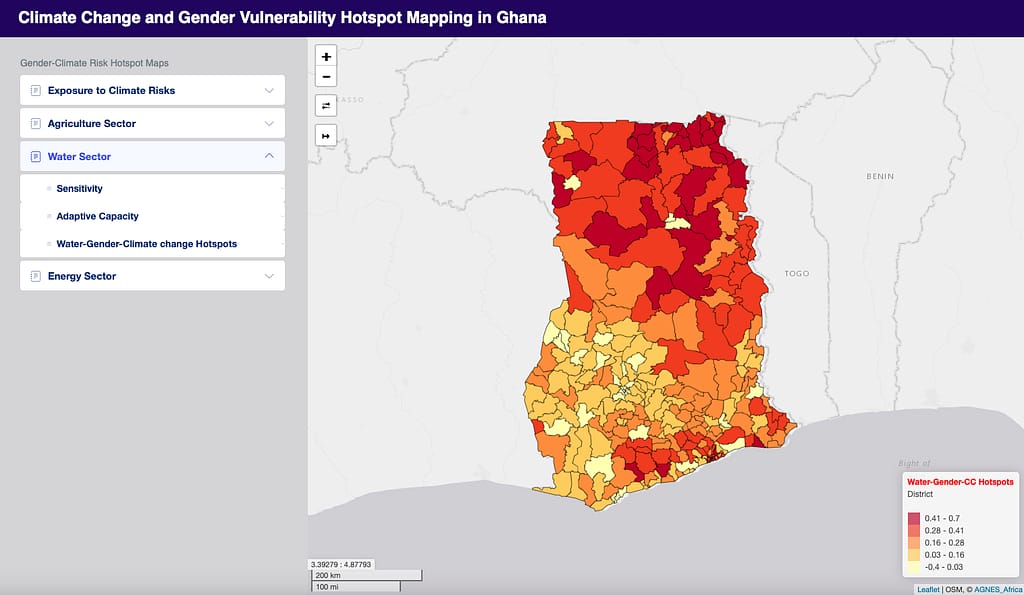
The Gender and Climate Vulnerability Hotspot Mapping in Ghana tool supports the identification of climate vulnerable areas to inform policymakers about the specific needs of diverse social groups. By mapping vulnerabilities, this tool supports climate resilience and gender-transformative climate action.
Hotspot maps help with development planning, as they highlight the most vulnerable areas and the groups most at risk, such as resource-poor farmers, women and girls. By pinpointing these areas, the maps help ensure that interventions reach those who need them most.
In Ghana, many communities rely heavily on rain-fed agriculture and natural resources such as non-timber forest products for their livelihoods. These communities are increasingly faced with unpredictable rainfall patterns posing a constant threat to their livelihoods, particularly for the most climate-vulnerable persons. Climate change impacts different social groups differently, and their adaptation strategies also differ significantly. However, these differences in climate vulnerability are usually overlooked in the formulation and implementation of interventions for communities.
February 4, 2025
Open Access
Charity Osei-Amponsah, William Quarmine
Climate, Gender, Inclusion, Resilience, Risks
European Union (EU) > European Commission
