

The alarm pulls you out of sleep before the sun has fully risen over the fields of Punjab, Pakistan. You have a long day ahead. You shuffle to the sink to wash your face and reach for a glass of water, but what comes out of the tap slows to a weak trickle, then stops altogether. You head to the well instead, hauling up a tub for cooking and laundry. Your neighbor appears at the edge of your yard, asking if she can take some too. The distribution system has been unreliable for weeks, and some families are running dangerously low.
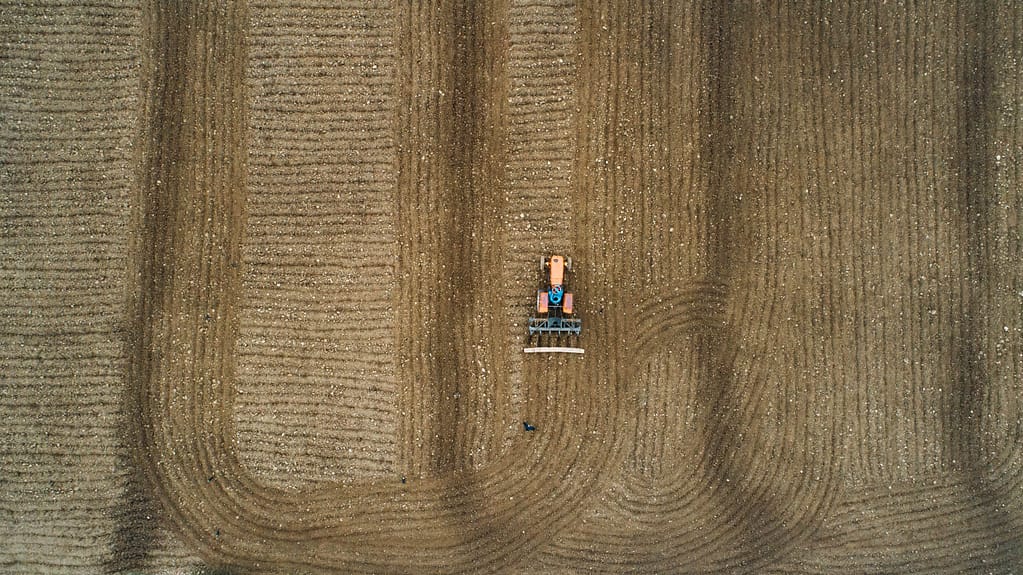
The day does not improve. Out in your wheat fields, the crop is shriveling row by row. The rains have not come, and the irrigation channels that were supposed to take some of the pressure off sit dry and useless. A severe drought has desiccated even the deepest underground reserves, the groundwater stored in aquifers beneath Earth’s surface that farmers across the region have long depended on as a lifeline when surface water fails. By midday, nearly every task on your list has been slowed, complicated or stopped by the same invisible crisis playing out underground.
Your struggles are not unknown to policymakers. National and provincial governments have acknowledged the strain that groundwater depletion is placing on farming communities across Pakistan. But acknowledgment has not translated into action, largely because the data needed to make good decisions is scattered across departments, and the institutions responsible for managing water resources are poorly coordinated. The result is a data and governance gap that leaves farmers like you exposed.
Making the data work
To bridge that gap, the International Water Management Institute (IWMI) co-developed the Groundwater Management Information System (GMIS) alongside government partners, under the United Kingdom’s Foreign, Commonwealth and Development Office (FCDO)-funded Water Resource Accountability in Pakistan project and with support from CGIAR Science Programs on Policy Innovations and Scaling for Impact.
The platform pulls together groundwater-related data from across the country into a single web-based tool designed for the Ministry of Water Resources to have better information on monitoring, regulation and planning. In a landscape where data is either siloed or missing, this consolidation is significant. But building a data tool is one thing. Having it be used is another.
The enabling environment required to get GMIS into the right hands

Successful implementation takes more than making a platform available and hoping people log on. It requires building the right institutional, social and technical conditions around it. To understand what those conditions needed to look like in Punjab specifically, Susanne Bodach, a Deutsche Gesellschaft für Internationale Zusammenarbeit (GIZ) Integrated Expert on Scaling, was brought in. The Integrated Expert arrangement, under the GIZ Program on Promoting International Cooperation in Agriculture and Food Security, places experts at CGIAR centers such as IWMI to support scaling, partnership building, and the translation of research into practice.
Using the CGIAR Innovation Packages and Scaling Readiness (IPSR) methodology, Susanne Bodach and the IWMI team convened 40 stakeholders from government, academia and civil society to map out what was standing in the way of wider uptake. The overall aim of this Scaling Readiness workshop was to examine collectively the ecosystem in which the GMIS platform would have to function. Together, stakeholders discussed questions about enabling the environment for scaling and began brainstorming solutions: What did existing capacity look like, and where were the gaps? How could gender equity and social inclusion be better embedded into the platform’s design and rollout? And where were the coordination failures between civil society and government that were undermining progress?
Through this process, the obstacles came into sharper focus. Data trapped inside government departments was difficult to find and even harder to access. Responsibility for maintaining the system after the project closed had never been clearly assigned, leaving stakeholders unwilling to fully commit. Crucially, the platform had not yet been built in a way that could actually be used by the farming communities it was meant to serve.
The participatory Scaling Readiness workshop turned these findings into a concrete roadmap, and the team co-developed a comprehensive scaling strategy with the Punjab Irrigation Department covering governance reform, capacity building, gender-inclusive outreach and long-term sustainability planning.
Institutional backing
Fortunately, that groundwork paid off. As Bodach put it, “the participatory approach was important in retrofitting the tool into pre-existing systems, rather than creating something entirely new and doubling the workload for already stretched institutions.”
Because GMIS was designed to align with the Punjab Water Act 2019 from the start, the roadmap reinforced existing regulatory mandates rather than cutting across them. This made adoption of the tool and the plans by the Punjab Irrigation Department straightforward, allowing it to support the Water Services Regulatory Authority in operationalizing hotspot analysis, data sharing and groundwater monitoring across its Water Resources Zone. The platform has since created productive feedback loops, where better monitoring informs provincial investment planning, which in turn drives progress on restoring groundwater availability through Nature-Based Solutions.
Reaching the farmer

All of that institutional work would mean little if it did not eventually reach the people drawing water from the well each morning. The most tangible outcome so far is a farmer awareness module launched in 2025 with support from the CGIAR Scaling for Impact Program.
The dashboard now extends beyond the ministry level to offer a farmer-facing interface that delivers location-specific groundwater alerts drawn from real-time sensor data across Punjab’s pilot districts. Information such as forecast rainfall, water availability and soil moisture levels give farmers what they need to make decisions in real time. For example, a farmer can look at the dashboard and feel comfortable with the level of moisture in the soil to wait two days for the rains instead of turning to groundwater to irrigate today.
The hope is that consistent access to reliable data will gradually shift how farming communities think about groundwater, moving from reactive use toward deliberate stewardship.
Outreach through WhatsApp, SMS, community workshops and video has extended that access well beyond those who can navigate a web dashboard. Inclusive strategies have been especially needed to ensure women farmers and marginalized groups are brought into the information loop, not left outside it.
Pakistan’s experience with GMIS is more than a national water management story. It is a case study in how digital tools can genuinely strengthen groundwater governance when they are institutionally anchored, socially inclusive and built around the people who need them most. As the platform continues to evolve, it offers a replicable model for other countries quietly contending with the same crisis happening beneath their feet.


