

When it comes to tackling the greatest challenges facing humanity, doing so using an integrated systems approach has long been an aspiration. The pitfalls of a siloed focus are clear; policies rolled out with the best intentions to solve one problem can inadvertently create another.
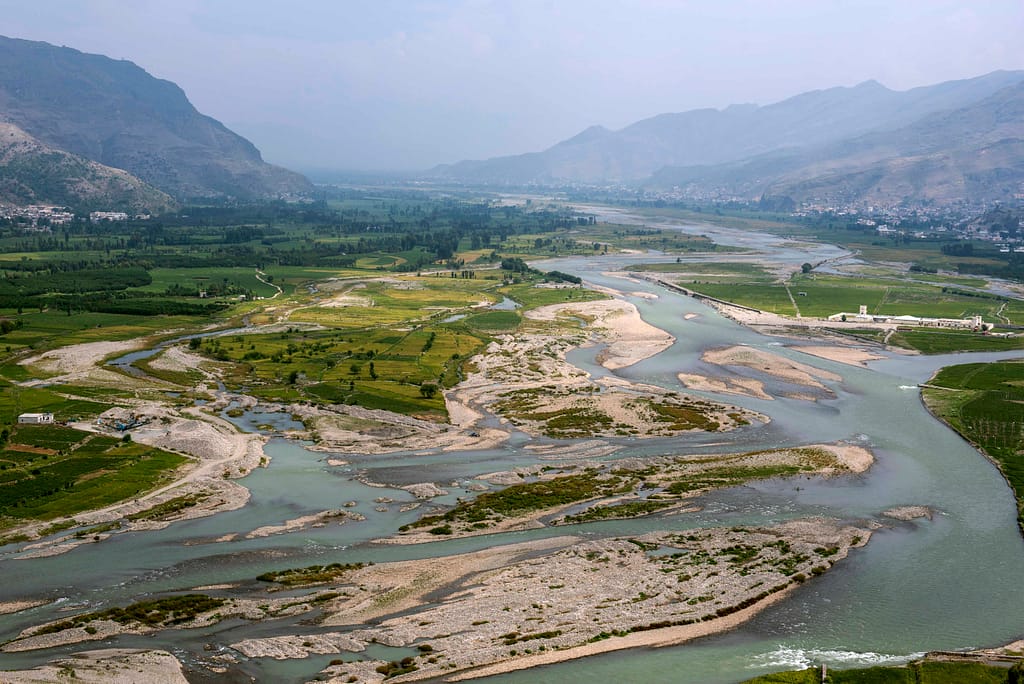
Anticipating these unintended consequences before they arise and designing integrated policies is challenging, but increasingly important, particularly in areas such as Pakistan’s Indus Basin. Here, deep inequalities, fragmented governance and a lack of integrated solutions undermine water and food security, intensify climate risks and threaten livelihoods.
Yet there is growing evidence that breakthroughs can come from a systems approach considering the interconnections between water, food security and climate change.
A region on the frontline
In recent years, the Indus Basin region has faced unprecedented climate shocks, from severe droughts to devastating floods, including the catastrophic flash floods and landslides in Khyber Pakhtunkhwa province in August 2025.
The agricultural sector is on the frontline of these impacts but also holds the potential to drive change. Estimates indicate that approximately 12 billion cubic meters of water in Pakistan are not optimally used. This mostly concerns water allocated to “thirsty” crops like rice and sugarcane, which often provide relatively low economic returns for the high volume of water they consume.
The opportunity lies in moving this water to “higher-value” uses such as less water-intensive, nutritious crops like fruits — or to different sectors entirely. But how do policymakers navigate the complex trade-offs involved in such a shift?
To move from guesswork to evidence, Pakistan is deploying advanced decision-support tools. At the recent Pakistan Water Week 2025, the International Water Management Institute (IWMI) and partners launched the Indus Pywr Water Allocation Tool and a Hydro-Economic Decision Support System. These tools act as digital compasses for the economy. They allow researchers to simulate policy changes and see the ripple effects across water, energy and food systems before a single rupee is spent. Research findings discussed in a webinar earlier this year revealed counter-intuitive insights that challenge conventional wisdom.

Modeling nexus scenarios in the Indus Basin shows compelling results
One simulation tested a seemingly straightforward policy: reducing the area planted with water-intensive crops like rice and sugarcane to save water. The model results confirmed that reducing rice cultivation would save a significant amount of water.
Counterintuitively, however, it found that reducing the sugarcane area would lead to a net increase in overall water use. The reason lies in the crop cycle. Sugarcane is a long-duration crop that occupies land for both main growing seasons. When it is removed, farmers often plant two separate, shorter-duration crops in its place.
The model showed that the combined water use of these two replacement crops was greater than the single sugarcane crop. Furthermore, when factoring in climate change and higher temperatures, even the potential savings from reducing rice were almost completely negated.
A second scenario explored how to boost Pakistan’s edible oil sector, a major import reliance. The model simulated the removal of price supports for wheat while simultaneously introducing import taxes on vegetable oil to encourage local production.
The results were striking: high import taxes did little to boost local production. The real “game changer” was investment in productivity. When the simulation included an increase in total factor productivity for oilseeds — representing investments in research and development, better seeds and agronomic practices — the sector expanded dramatically. This proved that making the sector more efficient is a far more powerful lever for change than protectionist trade measures.
A third scenario modelled the impact of shifting public funds from non-productive input subsidies, like fertilizer support, toward long-term productivity measures, such as agricultural research and developmentand the agricultural extension services that bridge research and farming practice.
The results were compelling: while there are small losses associated with removing the subsidies, the annual gains in productivity from the reinvestment appear to be many times greater than these losses. This offers a powerful, evidence-based case for shifting public expenditure toward sustainable returns.
Bridging the data gap through a community of practice
Complex models are a vital first step, but for evidence to become action, it must be understood and owned by those who use it. This requires building a community of practice that connects high-level data with ground-level reality.
We are seeing this take shape in Khyber Pakhtunkhwa, where citizen science is bridging the gap between communities and policymakers. By equipping local stakeholders with tools to monitor groundwater and equipping districts with early-warning data, trust is being restored in water governance.
Simultaneously, at the national level, momentum is building for a parliamentary core group on water and climate resilience to ensure that the voices of women, youth and small farmers are institutionalized in decision-making.
By grounding cutting-edge science in local collaboration — from the farmer in Charsadda to the planner in Islamabad — a systems approach can help turn aspiration into reality, tipping the balance toward a more water-secure future. That is the goal of collaborative efforts between the International Water Management Institute (IWMI) and the International Food Policy Research Institute (IFPRI) through the CGIAR Policy Innovations Program and the Water-Energy-Food-Environment (WEFE) Nexus Policy initiative.
The authors: Stephen Davies, Non-resident Fellow, Natural Resources and Resilience Unit, IFPRI; Muhammad Tahir Ali, Research Economist, IWMI; Iqra Akram, Senior Research Officer — Water & Climate Policy, IWMI; Mohsin Hafeez, Lead, WEFE Nexus Policy area of work, CGIAR Policy Innovations Program, and Strategic Program Director for Water, Food and Ecosystems, IWMI; Claudia Ringler, Co-Lead, WEFE Nexus Policy, and Director, Natural Resources and Resilience, IFPRI.


