

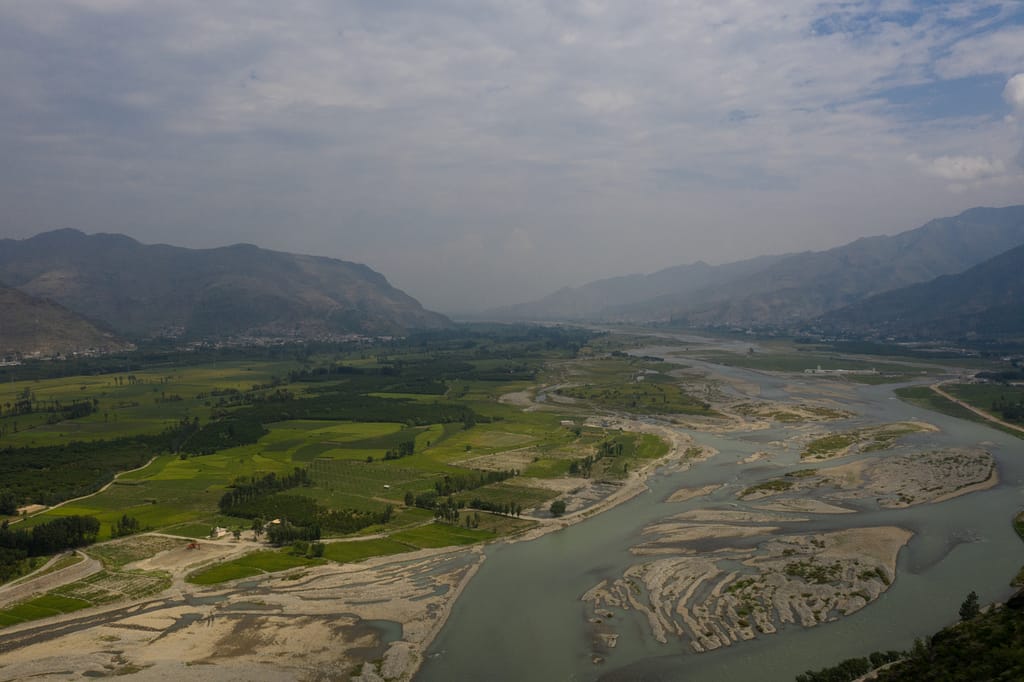
The Indus Basin is the beating heart of Pakistan. Its vast network of rivers, canals and barrages sustains millions of lives, feeds the nation and powers its economy. Yet, this lifeline is under immense strain. Managing its flows in the face of population growth, climate volatility and competing demands has become one of the country’s most urgent challenges.
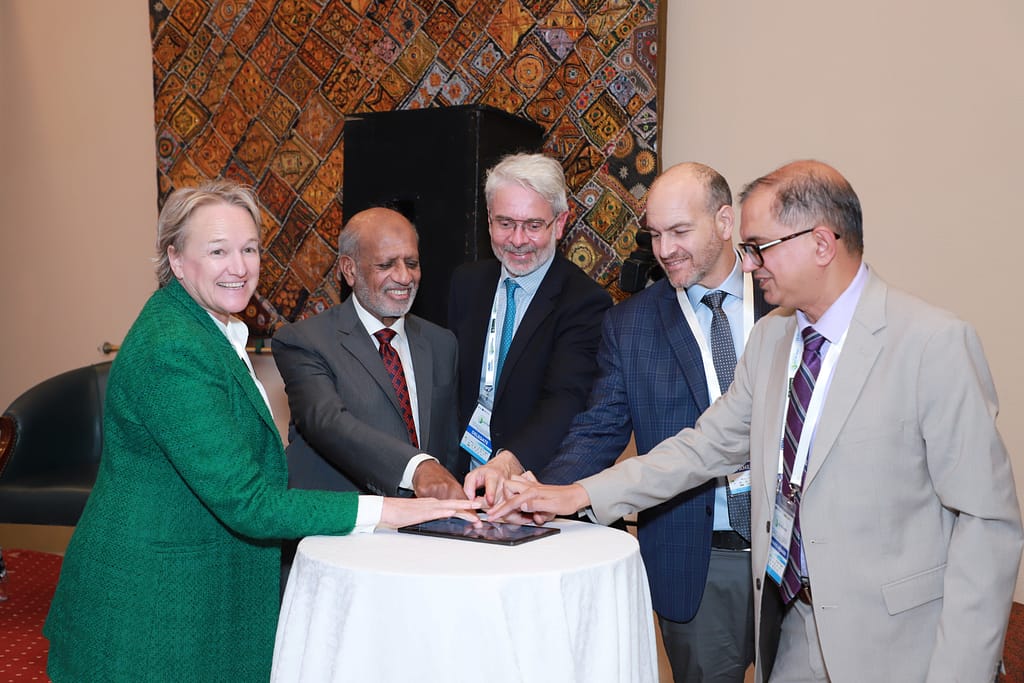
Against this backdrop, a new data-driven tool is designed to navigate the complex pressures on Pakistan’s most vital resource. The Water Allocation Planning Model for the Indus Basin Irrigation System in Pakistan is based on the open-source Pywr software. It was developed under the Water-Energy-Food-Environment (WEFE) Nexus Policy area of work of the CGIAR Policy Innovations Program, and represents the capstone of a multi-year collaboration led by the International Water Management Institute (IWMI) and the University of Manchester.
This new data-driven tool signals a critical shift from siloed, 20th-century management to an integrated, 21st-century systems approach, providing a platform for evidence-based cooperation in a region where water is a source of both life and long-standing tension.
A legacy system at a crossroads
Pakistan’s relationship with the Indus is a story of grand ambition and present-day peril. The 1960 Indus Water Treaty with India catalyzed one of the 20th century’s greatest engineering feats: the Indus Basin Irrigation System, which is the world’s largest contiguous irrigation system. Comprising three major reservoirs, 16 barrages and over 40 main canals, it was the cornerstone of the nation’s development.
But that system is now at a crossroads. The original infrastructure was built when Pakistan’s population was 77 million; today, it is over 242 million. This demographic pressure is now compounded by extreme climate and geopolitical volatility. The country faces persistent droughts and excess flooding during the same years, with recent floods devastating regions not typically prone to them. Furthermore, managing transboundary inflows has become a critical operational challenge, with erratic flows on rivers like the Chenab creating massive uncertainty for Pakistan’s farmers during crucial planting seasons.
In response, Pakistan is building new dams and hydropower plants and is currently on track to develop nearly 25 billion cubic meters of new storage and double generating capacity to 20,000 megawatts.
However, the country’s emerging challenges cannot be solved with concrete and steel alone. To navigate this complex and uncertain future, the physical infrastructure must be integrated with intelligent and dynamic management systems.
A new generation of water management
The challenge is no longer just building new infrastructure; it is making the entire complex system work intelligently. For decades, computer models have been effective accounting tools: effectively large spreadsheets that simulate what would happen from a single decision. The new Water Allocation Planning Model, based on the open-source Pywr (Python Water Resources) simulator, represents a step-change in capability. It operates at incredibly high speeds, running 30 years of daily operations for the entire Indus in less than one minute.
But the real power lies in connecting this to Artificial Intelligence (AI) and shifting from simulation to true optimization. Rather than simply running a single “what if?” scenario — such as, “what happens to our crops if we hold back water in the Mangla Dam this month?” — the AI tests every possibility. It simultaneously calculates hundreds of thousands of combinations of climate variations, erratic river flows and dam releases to answer a much bigger question: “what is the most efficient way to operate the entire river system?”
The AI then presents a menu of different, but equally optimal trade-offs to choose from, known as a Pareto front. For example, when balancing trade-offs between agriculture and hydropower generation, it shows decision-makers that if they want to push for a little more electricity, they can see exactly how much agricultural water they must give up to achieve that. This ensures that policies are based on transparent, efficient compromises rather than rigid directives.
A tool built on trust
Water in Pakistan is a sensitive issue with a long history of interprovincial disputes. Because of this, the project was founded on a community of practice from day one. The model was co-developed with partners including CGIAR, the University of Manchester and IWMI, as well as key Pakistani stakeholders like the Indus River System Authority (IRSA), Water and Power Development Authority (WAPDA) and the provincial irrigation departments.
This collaborative approach provided hands-on training and built confidence, ensuring the tool wasn’t a black box. Making the tool open-source was also a matter of national pride, ensuring Pakistan owns the intellectual property and is not dependent on external consultants — helping build trust among the provinces.
The real future beyond technology
The launch of the Water Allocation Planning Model provides a powerful, data-driven dashboard to manage the nation’s WEFE nexus. It can optimize dam operations, help regulators like IRSA make daily decisions in the face of erratic river flows and assess the resilience of infrastructure against future climate scenarios.
Perhaps the ultimate lesson, though, is one of governance. The greatest challenge to integrated management is often not technical possibility but institutional silos. The real barrier is human: getting separate ministries with different priorities to agree to jointly optimize for the national interest. The future lies in moving from sectoral competition to true nexus-based cooperation.
The launch of the Water Allocation Planning Model is a critical step, but its success will not be measured by its computational power. Technology alone cannot transform water governance. Model tools and algorithms are only as strong as the partnerships that drive them and the institutional commitments that sustain them.
Hussnain Afzal is Director (Technical) to Chairman of the Pakistan Water and Power Development Authority (WAPDA), Julien Harou is Chair in Water Engineering at the University of Manchester, Habib Ullah Bodla is a Science & Policy Advisor at IWMI, and Mohsin Hafeez is the Strategic Program Director for Water, Food and Ecosystems at IWMI.


