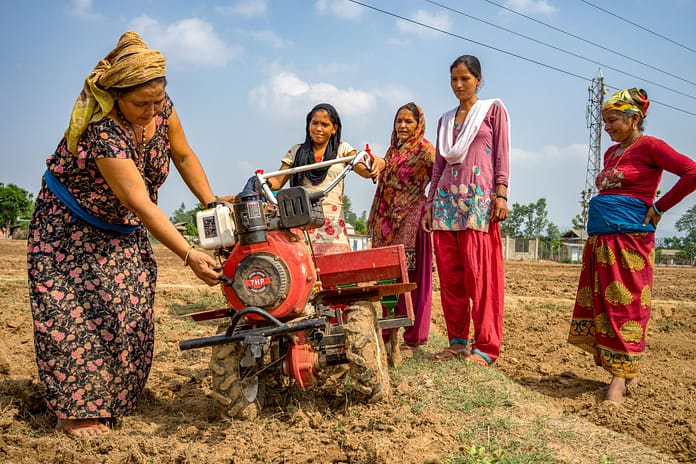
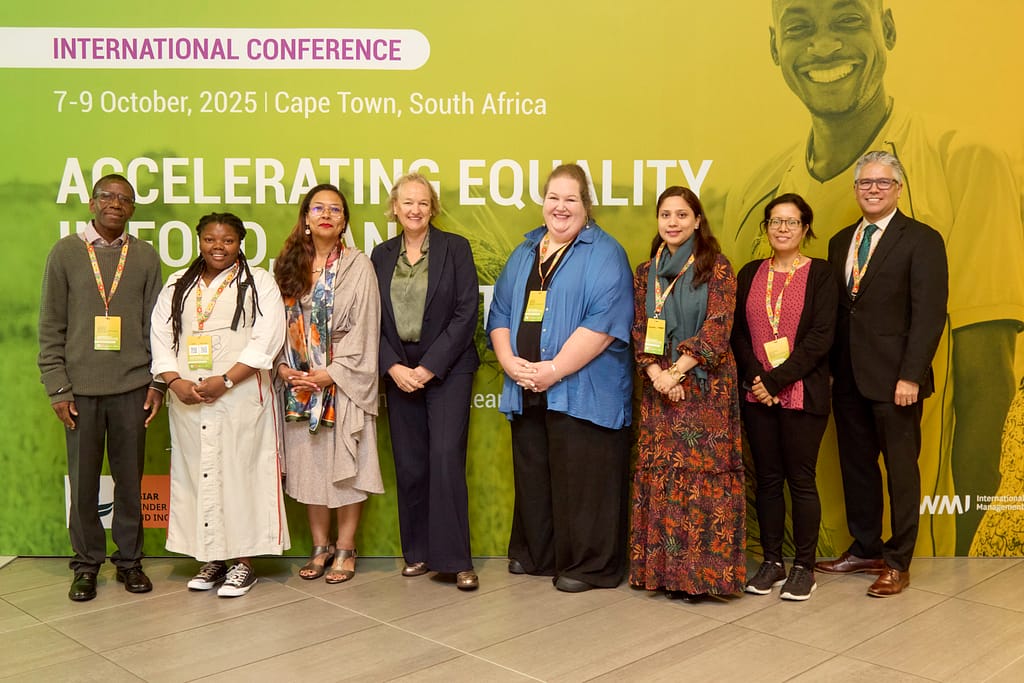
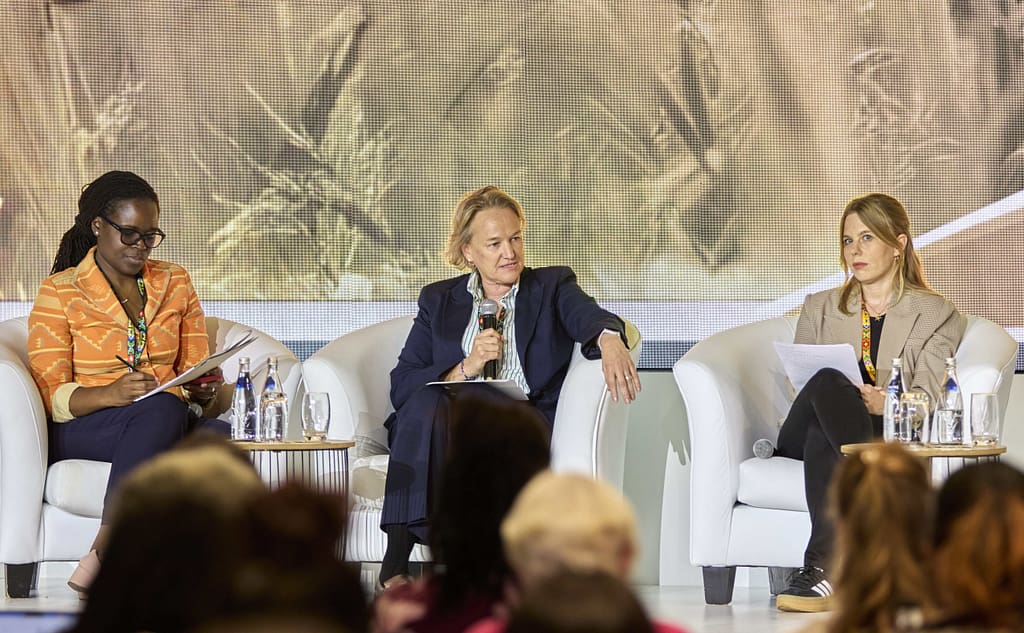
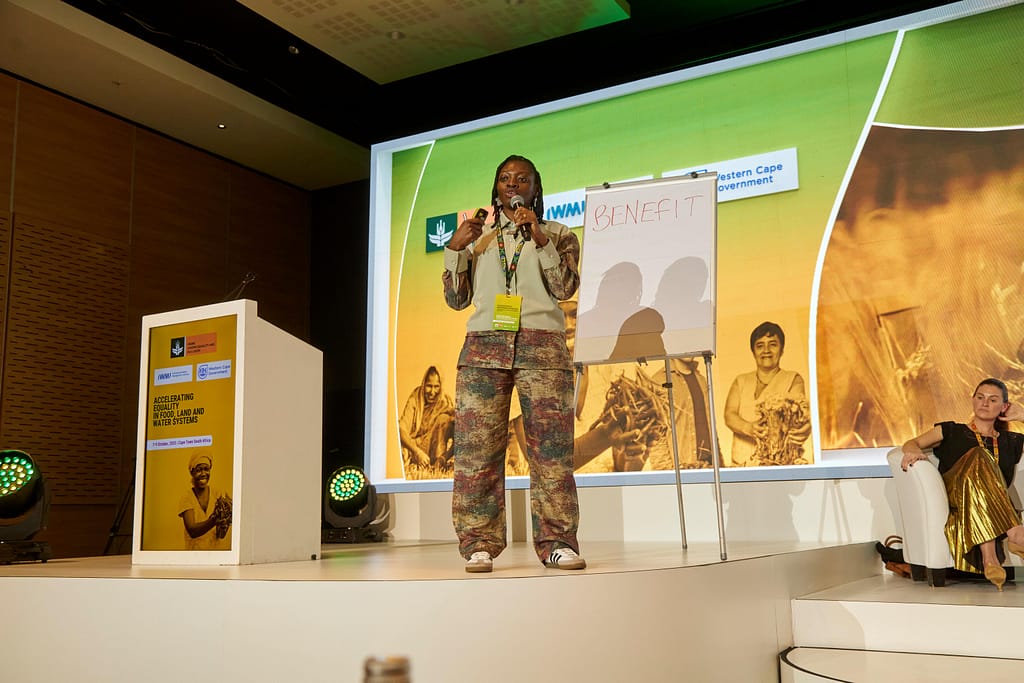
Water management that leaves no one behind requires inclusive innovations designed by, with and for those who are typically excluded from decision-making processes. This was among the key issues brought to the forefront by the International Water Management Institute (IWMI) at the 2025 CGIAR Gender Conference held in Cape Town, South Africa, from October 7-9, 2025. Under the theme, Accelerating equality in food, land and water systems, this year over 500 global researchers came together to redesign food, land and water systems at scale, to ensure equal access, voice and leadership for women, young people and marginalized groups in managing how water resources are used.
IWMI’s message was clear: if gender and inclusion are not integrated from the very beginning in climate and water security efforts, existing inequalities will only deepen. By 2050, under a worst-case climate scenario, climate change will push up to 158.3 million more women and girls worldwide into extreme poverty, forced to live under $2.15 per day. Food insecurity may also rise significantly, affecting up to 236 million more women and girls.
In the context of water security, the stakes are even higher because equitable access to water is critical to protecting livelihoods and helping communities withstand climate shocks.
However, these outcomes are not inevitable if we design and scale climate-smart innovations more responsibly.
What is inclusive scaling and why does it matter in the context of water security?
Inclusive and responsible scaling allows us to anticipate risks, ensure that benefits reach those who need them the most and prevent the very inequalities we seek to address. This proactive approach transforms awareness into action, ensuring that our research and innovations strengthen, rather than strain, community resilience and gender equity.
Inclusive scaling means that as climate-smart innovations are scaled on the ground, from pilot projects to wide-reaching interventions, they don’t just grow in numbers or in size, they grow in equity.
This means including the specific needs, priorities and contexts of different communities which made an initiative successful in the first place. Inclusive scaling involves recognizing the role of communities, especially women, youth and marginalized groups, as co-creators and not mere beneficiaries.
Therefore, developing successful scaling pathways requires taking into account differentiated access to water, land and innovations because a scaling approach that works for men may exclude women, unless gender dynamics are addressed head-on.
In Malawi for example, IWMI implemented the Gender Action Learning System (GALS) as a gender-transformative approach to support responsible scaling in water resilience. Historically, rural women in Malawi have had limited influence over agricultural decisions. They face unequal access to land, credit and other vital resources. This has left them particularly vulnerable to climate impacts.
By introducing GALS, IWMI adopted a participatory method that empowered both women and men to jointly design sustainable farming futures. Through collective planning and problem-solving, women gained greater ownership in decisions on crop choices, land use and resource allocation — directly shaping how water is managed and shared within farming systems.
Importantly, GALS also helped communities anticipate and mitigate unintended consequences of new practices. For example, in conservation agriculture, GALS helped mitigate short-term yield declines, increased pest pressures and the risk of deepening inequalities by promoting crop diversification, shared labor and knowledge exchange. By embedding gender and inclusion into every stage of innovation and scaling, IWMI ensured that climate-smart, water-resilient practices benefit all farmers equitably, not just those with more resources.
This is what inclusive and responsible scaling achieves: it prevents exclusion before it occurs, helps communities manage risks together and ensures that innovations truly serve the people they are designed to help.
Connecting the dots between inclusive scaling and real-world governance
Women, young people and marginalized groups are not just participants in water innovation. They are essential drivers of change. To truly prioritize gender and inclusion in water management, we must connect the principles of inclusive scaling with the realities of governance and policy.
Therefore, gender and inclusion cannot remain optional add-ons; they must become non-negotiable foundations of how water, food and climate policies are designed, financed and implemented. Every national water and climate strategy should include clear gender and social outcomes, backed by accountability mechanisms that make inclusion mandatory, not aspirational.
For water and food systems to be sustainable, women, youth and marginalized groups must move from the margins to the center of decision-making. Farmers in particular should be recognized as first-mile innovators, co-creating and adapting solutions rather than being passive recipients of research.
In addition, governments and institutions must also invest in gender-disaggregated and intersectional data to understand how overlapping factors, such as age, ethnicity, disability and socioeconomic status, shape people’s access to and control over water resources. One-size-fits-all policies risk leaving the most vulnerable behind. When data reflects lived realities, it gives visibility to diverse voices and helps design solutions that are fair, effective and context specific. Ignoring these perspectives creates blind spots in policy and practice. Disaggregated data not only tells us what works, but also for whom it works — a crucial distinction for crafting smarter and more equitable water governance.
Scaling water innovations without inclusion safeguards can unintentionally deepen vulnerabilities — especially during climate shocks such as floods, droughts and displacement — when women and girls face increased risks of gender-based violence. Integrating gender data and inclusive design into climate and water planning helps anticipate these risks and ensures that solutions strengthen both water security and human dignity.
When gender and inclusion are embedded at every step, from research to policy to implementation, we not only scale innovations; we scale justice, resilience and opportunity. This is how inclusive scaling connects ideas to action, and innovation to equity.
Scaling equity for water-secure futures
Inclusive and responsible scaling is not just about growing impact; it’s about growing fairness. When we consciously design for inclusion, anticipate unintended consequences and create space for all voices, we build water systems that are resilient because they are equitable.
As the insights from the 2025 CGIAR Gender Conference remind us, the future of water security depends on how well we scale equality alongside innovation. If we get this right, the solutions we create today will not only withstand a changing climate; they will transform it into an opportunity for shared progress.
The 2025 CGIAR Gender Conference was co-hosted by the CGIAR Gender Impact Platform, the International Water Management Institute (IWMI) and the Western Cape Government in South Africa.