

Monsoon chaos grips Pakistan yet again, echoing the devastation of the 2022 floods that submerged one-third of the country, devastating infrastructure and communities. Meanwhile, the crumbling urban water management infrastructure compounds this crisis. Cities like Islamabad, Rawalpindi and Lahore are facing declining groundwater levels amid rapid urbanization. Instead of recharging aquifers, rainwater rushes into sealed drains and narrow nullahs— many clogged or encroached upon— turning streets into flood zones.
The danger is not theoretical anymore. In July 2021, a sudden cloudburst dropped over 3.94 inches of rain in Islamabad’s E-11 sector, leading to devastating flash floods that killed two people when their home basements were inundated. Satellite imagery later confirmed that illegal narrowing of the natural nullah by housing development had blocked water flow, intensifying the flooding.
The human cost of this monsoon continues to climb. In July 2025, Reuters reported that Punjab saw at least 63 deaths in a single day, bringing the national total to 159. Al Jazeera confirmed that thereafter, fatalities quickly surpassed 180, with children tragically comprising over half of the dead.
Northern Pakistan has not been spared. In Gilgit-Baltistan, glacial lake outburst floods have wiped out villages and cut off tourism routes, while flash floods trapped dozens of tourists, prompting large-scale rescue efforts.
These are not future risks. They are today’s reality.
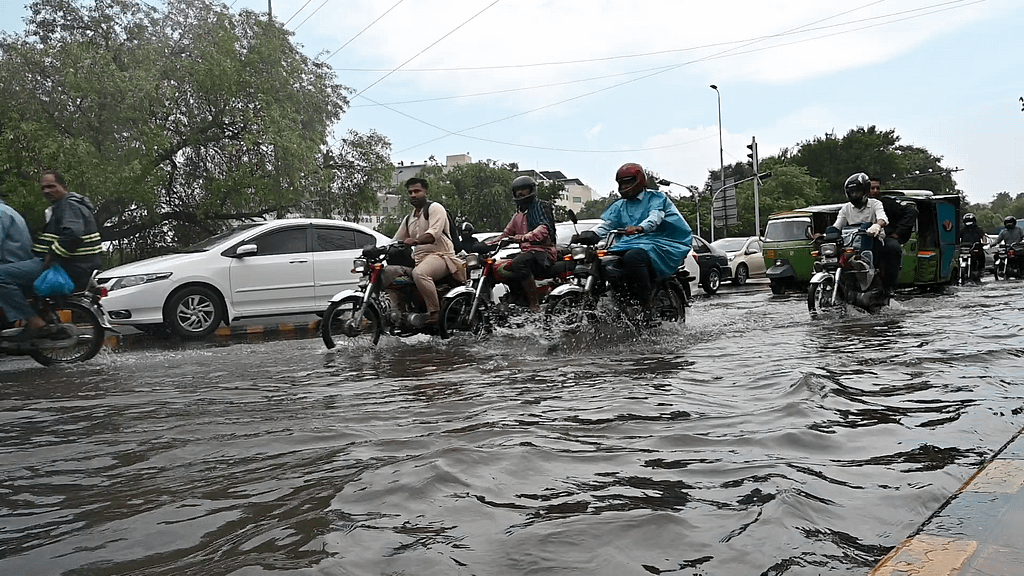
From runoff to recharge, can Pakistan seize the rescue opportunity?
Islamabad receives 55 to 93 inches of rainfall annually. Yet much of it is lost as surface runoff. Without intervention, this water overwhelms drains, causes flooding and flows away unused. Recognizing the potential to turn this problem into a solution, the International Water Management Institute (IWMI), in collaboration with the Pakistan Council of Research in Water Resources (PCRWR) and WaterAid, established a demonstration groundwater recharge well at Kachnar Park in 2022.
This system channels rainwater deep into the aquifer, with rain gauges, flow meters and real-time sensors monitoring the recharge process. It addresses two critical challenges at once: easing urban flooding and replenishing depleted groundwater reserves.
The 2022 monsoon had already proven the model’s success. In a single season, the well delivered 1.9 million gallons of rainwater back to the aquifer, raised the water table by around four meters and reduced flood peaks in Nala Lai.
The urgency for such measures has never been clearer. This year’s monsoon rains have been unusually intense, bringing sustained downpours that overwhelm drainage systems and inundate low-lying areas. Without recharge systems like at Kachnar Park, much of this water would be wasted as runoff. Since its establishment, the site has diverted an estimated 19 million gallons of stormwater underground, relieving pressure on the city’s drainage and directly improving groundwater. The impact is clear. In nearby Sector I-8, residents report that previously dry boreholes are functioning again, proof that the recharge systems are improving water tables.
The road ahead demands bold, scalable solutions
Encouraged by this success, the Capital Development Authority (CDA) has replicated the model by establishing 50 similar recharge sites across Islamabad, with plans to expand to 100 sites. Collectively, these wells returned nearly 10 million gallons of rainwater to underground storage during the 2022 monsoon season.
These are more than engineering projects. They are nature-based solutions designed for local realities and built with the community in mind. If implemented at scale in other urban centers, such systems could transform Pakistan’s approach to monsoon rains, preventing flash floods and storing water for dry months ahead.
Without governance, water strategies fall apart
Technology alone isn’t enough. Pakistan’s fragmented water governance, with separate bureaucracies overseeing surface water, stormwater and groundwater, undermines integrated management. As a result, rainwater flows into roads and sewers instead of replenishing aquifers.
For a pilot like Kachnar Park to become a citywide norm, policies must mandate rainwater harvesting, include recharge wells in municipal bylaws and coordinate agencies across water domains.
Without systemic reform, even effective projects remain isolated victories.
Choosing resilience over routine disaster
With each passing year, monsoon destruction is becoming a grim routine. But the success of the Kachnar Park recharge well shows that rainwater can be captured, stored and turned into a strategic water reserve. Scaling this vision will require city-level planning, municipal regulations mandating recharge infrastructure and community-driven water governance.
The choice is clear: brace for the worst every monsoon or build for a future where every drop counts. If Pakistan turns rain into resilience, the monsoon season could become a time of replenishment, not ruin.


