

As climate change accelerates water scarcity, floods and food insecurity across much of the world, the demand for science that speaks to lived realities has never been greater. Yet women – who are often the primary managers of household and water – remain significantly underrepresented in the scientific fields shaping water and climate policy.
Marked every February 11, the International Day for Women and Girls in Science aims to address this imbalance. The 2026 theme, ‘From vision to impact: redefining Science, Technology, Engineering and Mathematics (STEM) by closing the gender gap’, challenges institutions to move beyond symbolic inclusion and toward science systems that reflect the experiences, priorities and knowledge of women and girls.
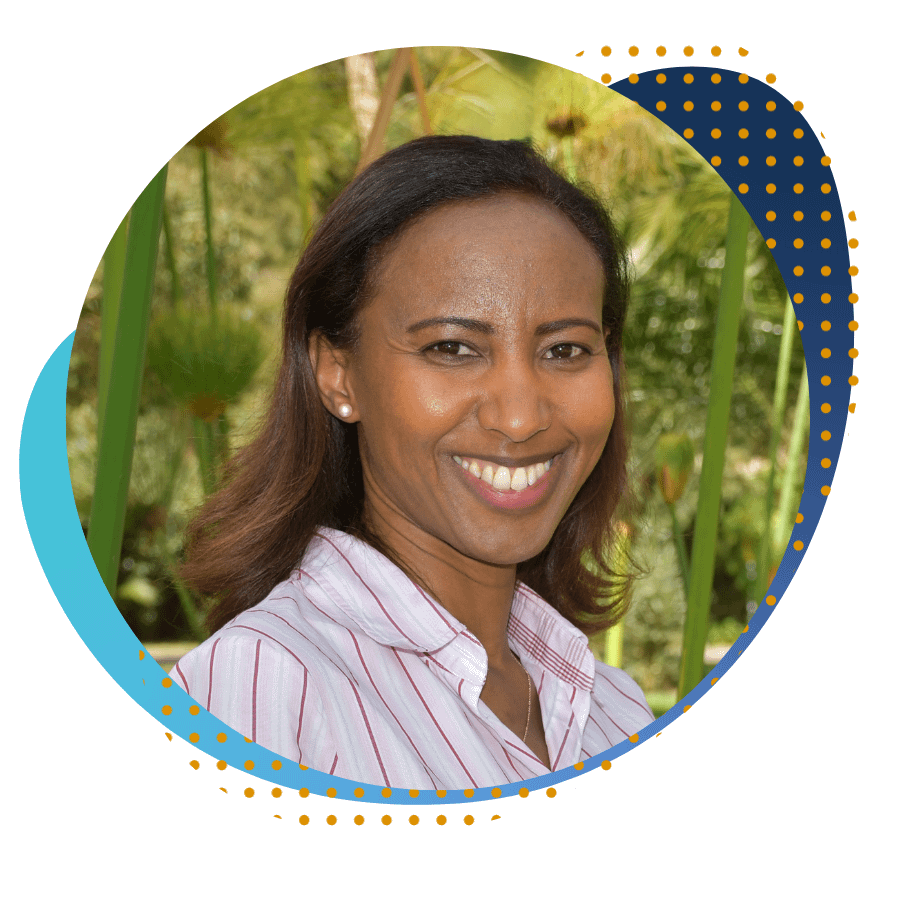
In this conversation, IWMI’s Meron Teferi Taye, a water and climate scientist based in Ethiopia reflects on the early influences that drew her to science and the barriers she has faced in a male-dominated profession. She explains why closing the gender gap in science is not simply about fairness, but about designing solutions that work for people.
What first sparked your interest in science, and how did that early curiosity shape the path that eventually led you to your profession?
Meron Teferi Taye: I grew up in Ethiopia in a household of girls where education was seen as the surest path to a meaningful life. My father, a mechanical engineer, worked on renewable energy and water supply. My mother, though not in a STEM field, was educated and deeply supportive. Around me were role models: an aunt who is a medical doctor and uncles who are civil and electrical engineers. From an early age, I saw that both women and men could belong in science — and that educating girls was considered the greatest inheritance a family could give.
My father spent hours designing wind turbines, water pumps and architectural plans for houses. I was fascinated by his drawings and would sit beside him, offering my own ideas, especially on floor plans. We debated designs, and he listened seriously. That mattered.
He also shared stories from his fieldwork about communities struggling without water or electricity, on women walking long distances to fetch water for domestic use, and the need to uplift people’s lives. Although I grew up in the city of Addis Ababa, those stories stayed with me. They helped me understand how deeply water and energy limit and shape opportunities. Those stories planted a seed — I wanted to be useful not only to my family but to society.
My father had done his master’s degree in the United Kingdom, and I wanted to follow in his footsteps and go further. That is why I set my sights on a doctorate. Through hard work and persistence, I completed my doctorate in water resources engineering in 2013, becoming one of Ethiopia’s youngest women PhDs in the field at the time.
What real-world challenges does your work seek to solve, and how does it translate scientific knowledge into tangible impact for communities and ecosystems?
Meron: My work focuses on water and climate, and the rising disruptions on water availability and access. Neither water nor climate respects political boundaries, and what happens in one area affects people in far-flung regions. Those interconnections become clear when you study river basins and climate systems.
Today, communities and ecosystems face two extremes: too much water from floods or too little through drought. Both are shaped by natural processes and by human decisions. My role is to generate practical, action-oriented knowledge and data —across river basins, cities, rural areas and refugee settings — for users such as farmers, households, energy systems and the environment.
At its core, solving water problems also means addressing one of the heaviest burdens many women bear. In many parts of the world, women collect water and produce and provide food for their families. When water systems fail, women feel the impact first and are hardest hit.
The research we produce helps water managers and decisionmakers anticipate and reduce risks from floods and droughts, plan better and design systems that work for communities at the grassroots level.
What barriers have you encountered in your professional journey, and what factors have been most important for you to turn roadblocks into opportunities?
Meron: Because I grew up in the city and attended an all-girls high school, I did not encounter many obstacles early on. That changed in university when I chose engineering and found myself among few women. Social expectations suggested that a woman’s place was in domestic roles, not in technical fields. People questioned why I needed a doctorate at all. What helped me was the strong belief in myself and a desire to prove — at least to myself — that I could do it.
Work life brought new challenges. In most workplaces, I was the only woman in the room. On some occasions, I was told that I was a mere technical assistant and not a project lead. I was often asked questions that male colleagues were never asked: whether my husband was comfortable with me traveling or whether I cooked at home. These questions may seem minor, but they reflect deeper doubts as to whether women truly belong in STEM or if those in STEM have fulfilling personal and social lives.
I learned to lean on support networks — both women and men — who believed in me and offered honest guidance. Mentors, colleagues, family and friends all played a role. No one advances alone. Finding and trusting a circle of support is essential.
How do you see your role in contributing to a redefinition of STEM? Not only through research but also informing policy, shaping practice or strengthening the links between science and society?
Meron: Opportunity matters as much as talent. My experience shows that when girls and women are given space to succeed, they do.
For me, redefining STEM means including women in the co-creation of solutions. Women bring perspectives shaped by daily realities in households and entire communities. They think in holistic and contextual ways, not only in technical terms. Their experiences and indigenous knowledge expand what science can achieve.
It also means measuring success differently. A project should not only be judged by technical outputs, but by social impact too. For example, climate information is often shared through SMS, yet many women in water-related risk areas do not own mobile phones. That excluded entire groups by default. Inclusive science means designing with people, not just for them.
Role models and visibility matters in closing the gender gap. In what ways do you hope your work and personal journey can inspire more women to pursue and thrive in STEM careers?
Meron: When women hold scientific leadership roles, the idea of belonging becomes real. My journey can help normalize the presence of women in STEM and show girls that science and professionalism are not defined by gender. Closing the gender gap is also the responsibility of men. By supporting girls’ education, listening to women’s expertise and challenging bias, men help reshape scientific culture. This makes science stronger for everyone.
When I lead projects or organize trainings and workshops, I ensure women have equal opportunity to participate, as well as connect them to information, opportunities and advice when they ask for it.
When I speak with young girls, my message is simple: you can do this.
On this International Day for Women and Girls in Science, what message would you like to share with girls and young women who aspire to a future in STEM but may be uncertain about how to get there?
Meron: No one should tell you that STEM is not for women. Women belong in science as much as they belong in the arts – they can excel in both. Choose your own path guided by your curiosity, strengths and values rather than parental or societal pressure. Self-chosen careers fuel genuine passion, innovation and the resilience to succeed.
Surround yourself with people who support you. When opportunities come, take them seriously. Aim for excellence, not permission.
Do not let cultural or psychological pressures define your limits. You will need a thick skin and resilience. Do not accept being treated as a token when you are capable of being a leader in your field.
But remember that science is not the only thing that matters. Balance ambition with relationships. Careers are important, but so are family, friendships and joy. Your work will not sit beside you at the end of life — people will.
Choose wisely. Dream boldly. Know that your presence in STEM is not only personal success. It’s part of positively changing the system for those who follow.


