
In a region where climate pressures, rising demand and environmental stress are reshaping access to water, Central Asia’s shared rivers tie five nations together. The Amu Darya and Syr Darya flow across Kazakhstan, Kyrgyzstan, Tajikistan, Turkmenistan and Uzbekistan — making cooperation, dialogue and trust essential in managing these shared hydrological resources.
Peaceful and collaborative transboundary water management is at the heart of Blue Peace Central Asia (BPCA). The initiative aims to transform water from a potential source of conflict into a foundation for cooperation, trust and sustainable development across the region. The BPCA initiative is funded by the Swiss Agency for Development and Cooperation (SDC) and implemented by the International Water Management Institute (IWMI) in partnership with the International Union for Conservation of Nature (IUCN) and the Central Asia Regional Economic Cooperation (CAREC) Program. Since 2024 IWMI has been working to strengthen regional dialogue, support basin-level initiatives, and develop the next generation of water diplomats and experts to promote long-term peace and resilience in Central Asia.
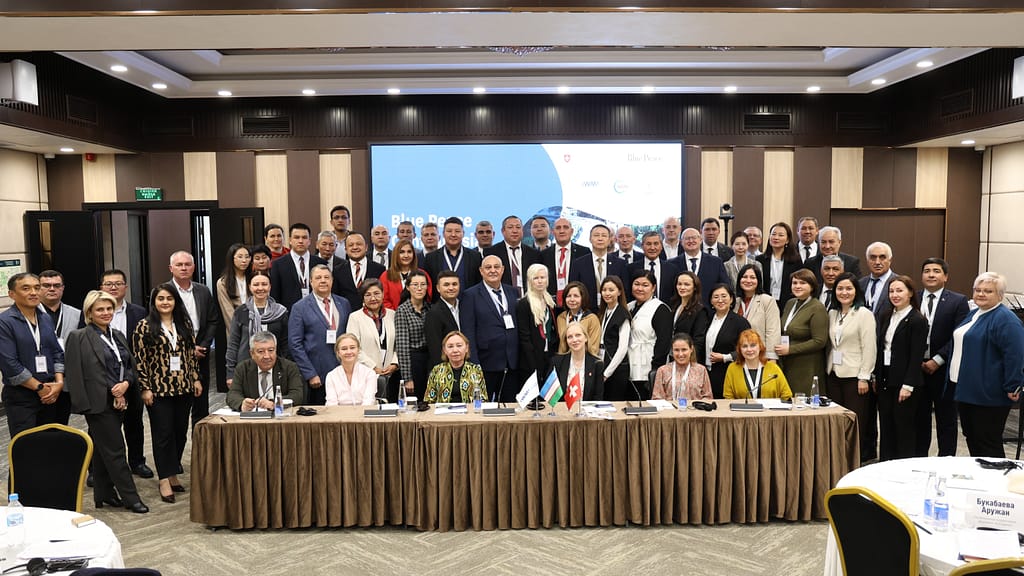
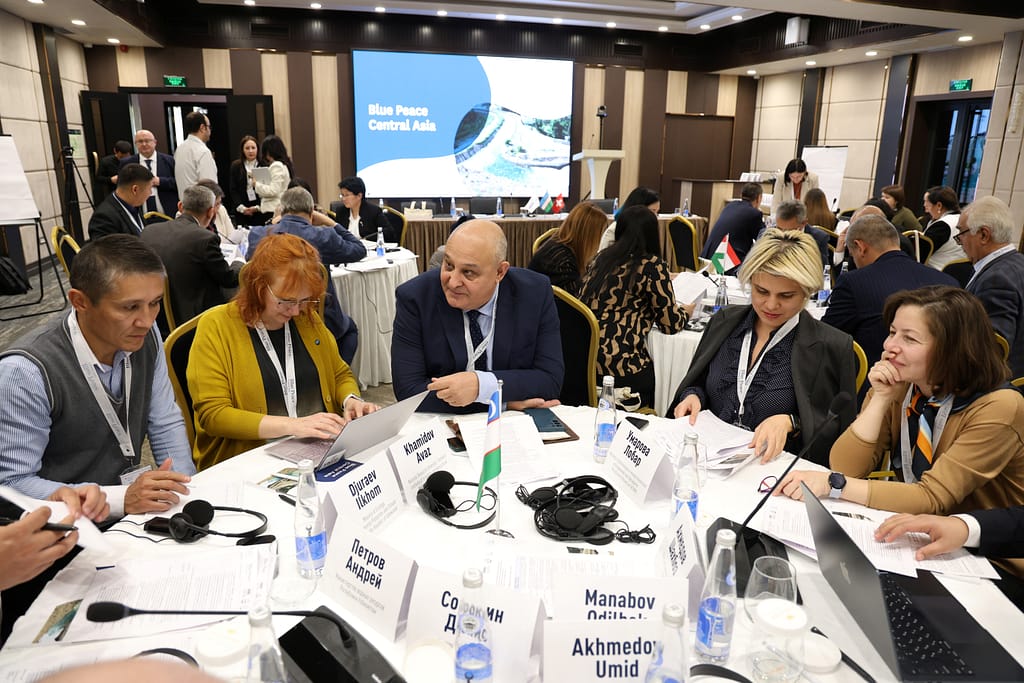
At the regional workshop “Water Challenges in Central Asia” held on 13 November in Tashkent, more than 60 representatives from across the region gathered to explore long-term pathways for sustainable water management and climate resilience. The event brought together government officials, researchers, and development partners from Kazakhstan, Kyrgyzstan, Tajikistan, Turkmenistan and Uzbekistan.
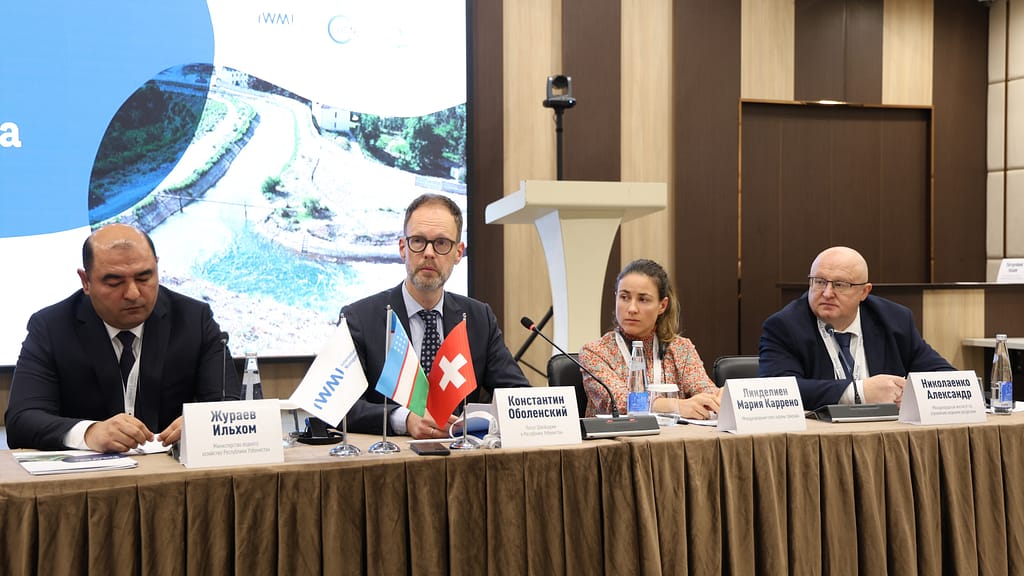
Speaking at the event Ilkhom Dzhuraev, first deputy director of the Agency for the Operation of Water Management Facilities under the Ministry of Water Resources of Uzbekistan, shared that sustainable water management is one of the most critical issues for the future of Central Asia. Emphasizing that as many Central Asian countries depend on the same river systems, strengthening dialogue, sharing information and investing in modern technologies is essential to fair and efficient water use.
The regional workshop focused on the three core pillars of BPCA: hydro-diplomacy, small transboundary tributaries (STTs) and capacity building. Discussions highlighted how climate change, glacier loss and rising water demand are transforming the region’s hydrology and how data-driven foresight and joint planning can help countries adapt. Innovative financing, data sharing and strengthened institutional partnerships among stakeholders were identified as urgent priorities for action.
In the upcoming year, BPCA will focus on expanding cooperation at the basin level, developing pilot projects in small transboundary tributaries, strengthening academic initiatives such as a regional master’s program in hydro-diplomacy and promoting youth engagement through hackathons that support innovation in water management.
Konstantin Obolensky, Switzerland’s Ambassador to Uzbekistan, reflected on the goals of Blue Peace Central Asia, noting that the initiative tackles the challenges of managing shared transboundary water resources by positioning water as a source of opportunity for cooperation, dialogue and shared progress.
By supporting initiatives like Blue Peace Central Asia that encourage regional dialogue, joint learning and trust-building, IWMI is helping country’s strengthen their ability to manage regional resources like shared rivers together. In doing so, Central Asia’s waterways can continue to unite rather than divide its nations, turning water into a driver of peace and sustainable development.