

Across northern Sri Lanka, the dry season ushers in a period of heat and diminished rainfall. As the monsoons fade in Kilinochchi District, the iridescent green of rice paddies is replaced by the dull yellows and browns of stover and dried dirt.
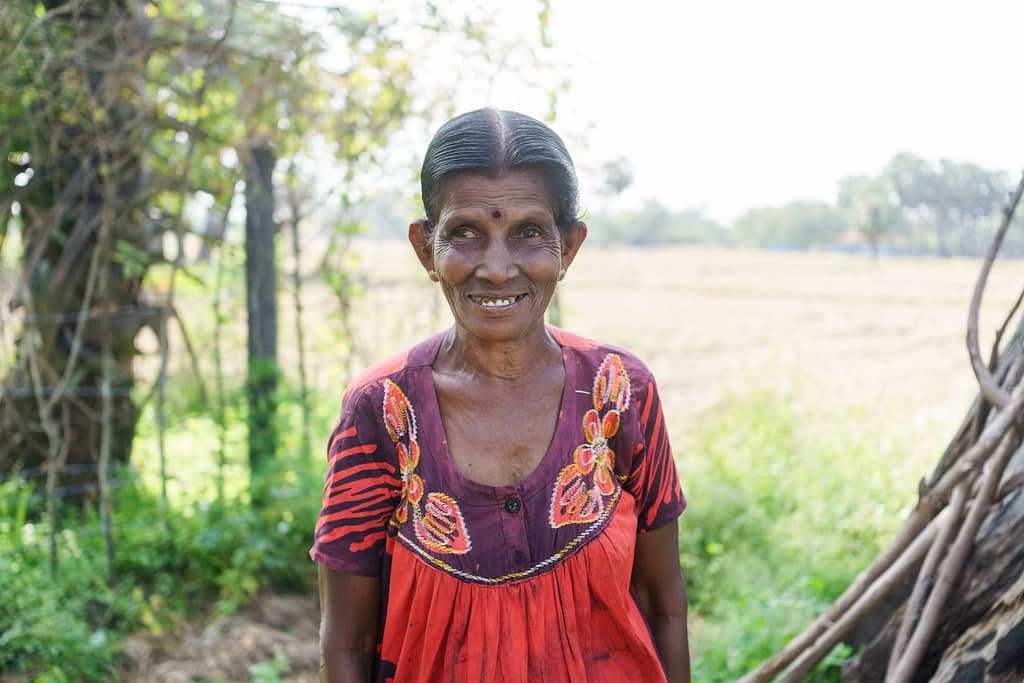
For farmer Ravindran Arundavarani, this time of year has typically meant months without crops and reduced income for her family. “When there is no rain, crops are badly affected and dry up. We’ve faced many hardships because of this.”
As climate change worsens, weather extremes and seasons become less predictable. The threat of drought looms large over communities whose lives revolve around whether they have sufficient water to sustain themselves and their agricultural produce. As a result, people are often unable to secure a stable income, provide for their families or plan ahead, leaving them trapped in a cycle of vulnerability and uncertainty.
Agriculture’s dependence on water security
Sri Lankan people have been navigating the challenges of seasonal water scarcity for centuries: there are no natural lakes in Sri Lanka, and stretching back 2,000 years, the lifeline of food security has been the country’s expansive irrigation systems. From stand-alone tanks of harvested rainwater to larger cascade systems of interconnected reservoirs and canals, over 16,000 small ‘irrigation tanks’ are spread across Sri Lanka’s dry zone.
Today, for the farming communities in Kilinochchi — including Arundavarani’s home village of Nallur and nearby Mudkompan — maintenance of shared irrigation systems is largely arranged through Farmer Organizations. These local associations of farmers lead agricultural programs, maintain irrigation infrastructure, distribute seeds and fertilizer, and coordinate with government officials. They are at the heart of local development and the well-being of rural agrarian communities.
However, for smallholder farmers such as Arundavarani and her neighbors, raising the money needed for investments in water storage is out of reach, even when they try to pool resources. The Farmer Organizations meant to support collective action often lack clear rules and processes, making it difficult to tackle water insecurity in an organized way. These challenges have created frustration and tension within the community.
Simultaneously, local government officials are highly under-resourced, particularly those in key field-level positions who interface with farmers. As a result, smaller rural communities and their specific needs are often overlooked, as limited funding and a focus on large-scale development projects leave little room to support them. This can cause their irrigation infrastructure to become degraded, threatening water access for all.
Community at the helm of local development
The International Water Management Institute (IWMI), working alongside Chrysalis, a Sri Lankan NGO empowering women and youth, and think-tank Centre for Poverty Analysis (CEPA), spearheaded a project from 2022 to 2025 to support irrigation management and capacity-building in Kilinochchi. With the goal of improving farmers’ year-round land productivity and food security. The United Kingdom’s Foreign, Commonwealth and Development Office-funded project, “From Conflict and Poverty to Cooperation and Prosperity,” linked efforts to strengthen water access and climate-resilient agriculture.
A central element of the interventions was community mobilization. They actively incorporated farmers and officials into the problem-solving process through open multistakeholder meetings and trainings, generating consensus-based solutions rather than delivering a one-time infrastructure upgrade. These gatherings fostered social cohesion through shared discussions, helping to break down systemic barriers and reduce inaccessibility within the decision-making process.
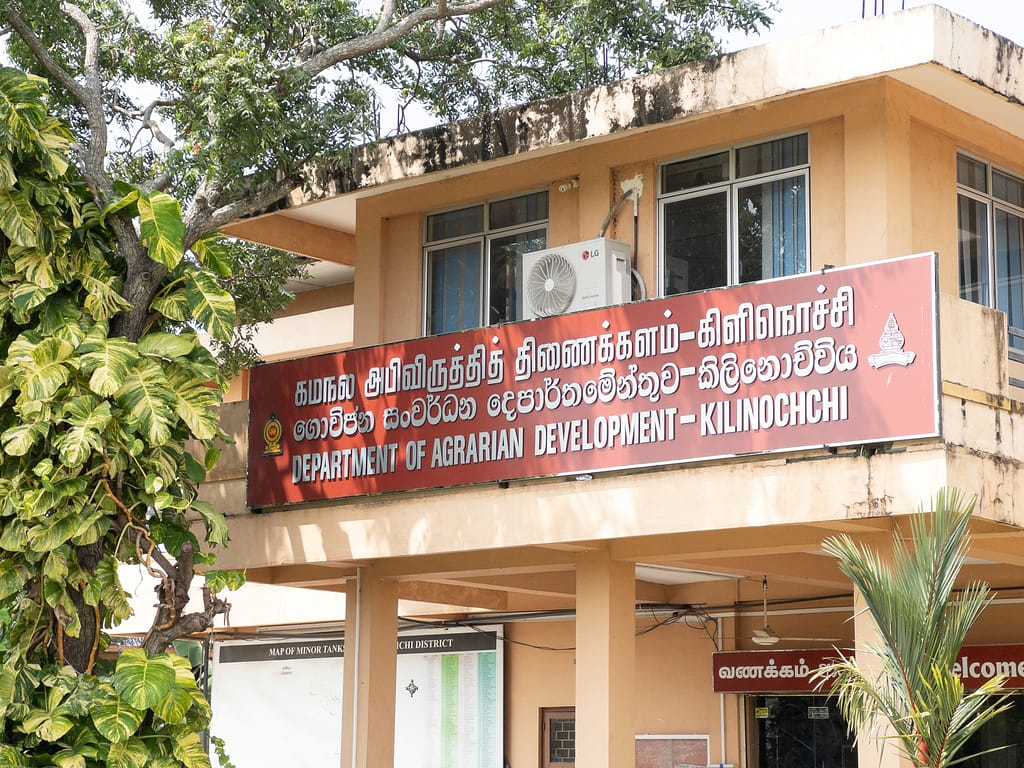
Over 350 farmers from Kilinochchi, including women and youth, and 71 government officials learned about water management, climate awareness and conflict mitigation through capacity development and climate-smart agriculture trainings. The lessons aimed to equip the Farmer Organizations and local officials to handle water challenges in the long-term.
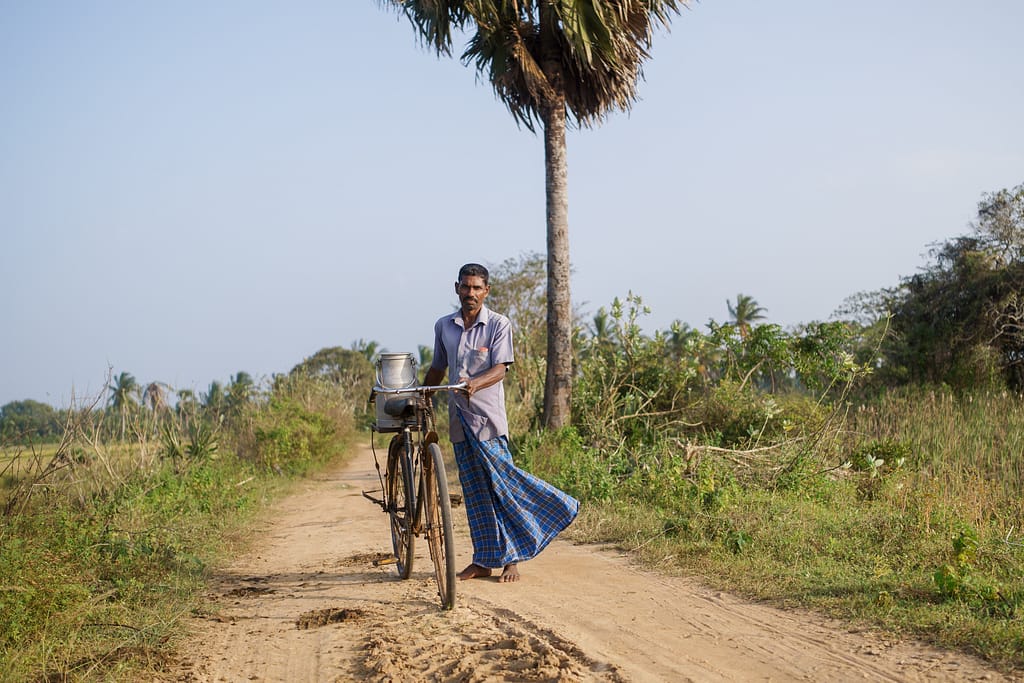
The nature of informal social networks within and between rural communities means the reach of such programs can go far beyond those who are directly trained. As farmers implement new agricultural methods such as integrated pest and plant nutrient management, micro-irrigation and crop diversification, others can see their success and follow suit — the ripple effect of innovation.
Investing in water infrastructure for the long-term
After hosting participatory planning meetings alongside newly trained government officials, IWMI and partners invested in improving existing irrigation infrastructure and creating new solutions. These efforts increased dry-season freshwater availability and harmonious water sharing, improving climate resilience and expanding cultivation areas for greater crop yields.
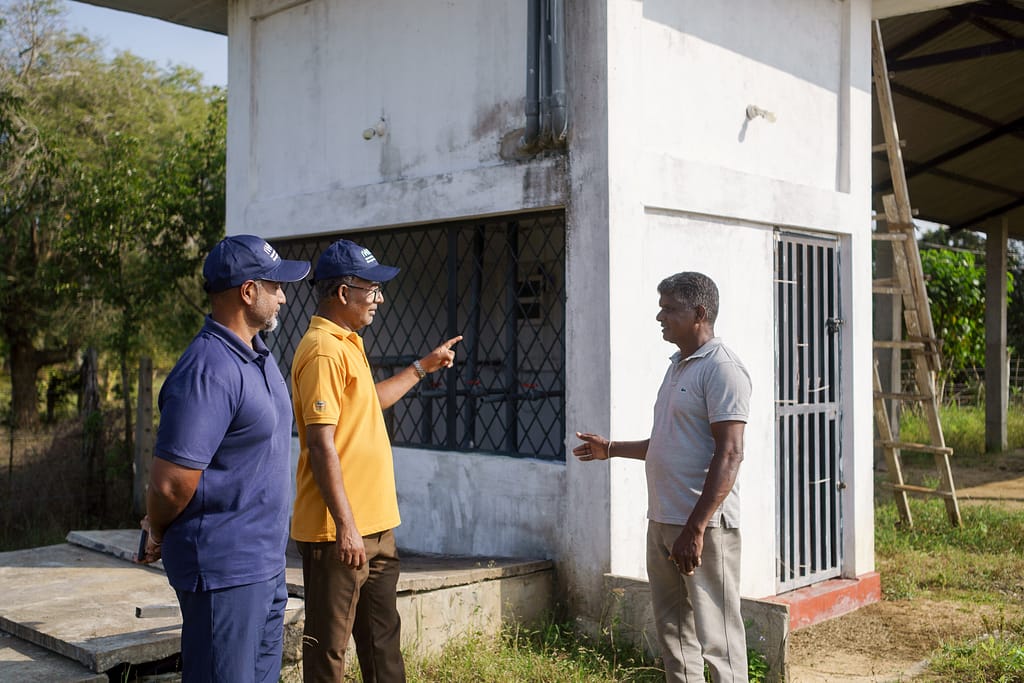
The first initiative was a farmer-managed solar irrigation pumping station in the village of Mudkompan. Community members helped finance and build the system. Operation and maintenance manuals were collectively crafted with Farmer Organizations and government officials to guide management and sustained financing of the new infrastructure.
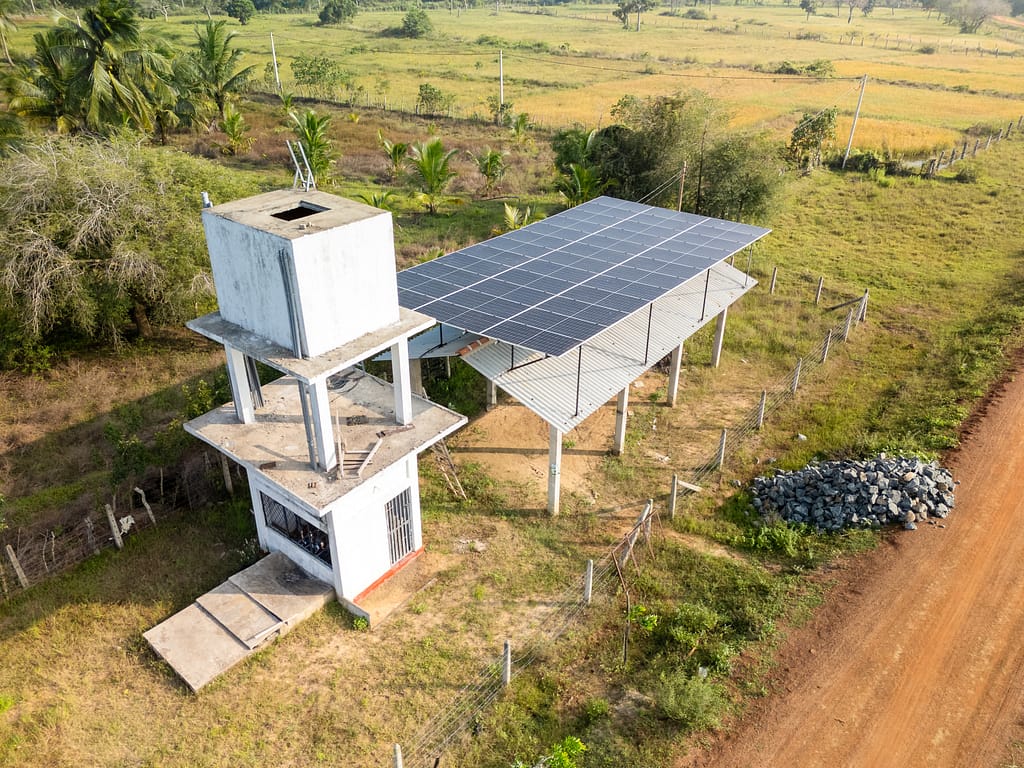
The solar irrigation pumping station draws water from the Iraman Kulam irrigation tank — a key freshwater reservoir in Kilinochchi —allowing farmers to sustainably irrigate the far reaches of their non-paddy highlands. Previously, the limited reach of canals created inequities around which farmer received water in the dry season, leaving some farmlands fallow. This meant that farmers could only harvest once a year while the soil recovered. The new solar pumping system has made dry season planting viable and encouraged crop diversification and intensification, boosting income and nutritional diversity.
The solar irrigation system is also self-financing. Under the blazing sun in the fields of Kilinochchi, the excess solar energy generated by the panels is sold to the Ceylon Electricity Board — the state-owned electricity utility provider. This generates funds for regular servicing and longer-term costs such as replacing solar panels.
In the 12 months since its operation, this Farmer Organization now has over one million rupees ($3,200) in its bank account. As one of the few farmer-managed solar irrigation systems in Kilinochchi District, this investment is a viable, scalable irrigation model that leverages the abundance of sunlight in Sri Lanka’s dry zone and the government’s energy purchasing policy.
The second initiative was the expansion of a pond in Nallur, Kilinochchi. The spring-fed pond represents traditional adaptation in northern Sri Lanka, where low land gradients limit the scope for irrigation tanks. Instead, many farmer communities rely on small, shallow water holes that retain limited monsoonal rainwater.
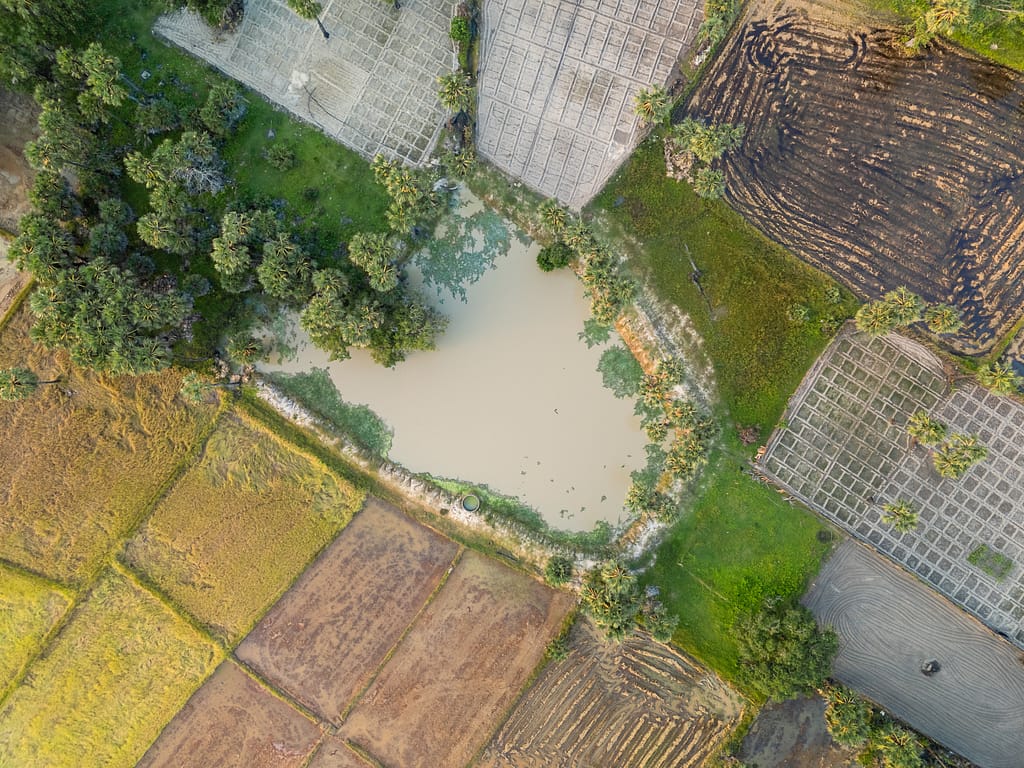
This pond is the central source of irrigation for 14 farmers, though as Arundavarani explained, “the pond depends entirely on rainwater. There was no year-round water because rainfall was insufficient.” To increase water storage for the community, the pond was deepened and significantly widened, whilst its sides and embankment were fortified.
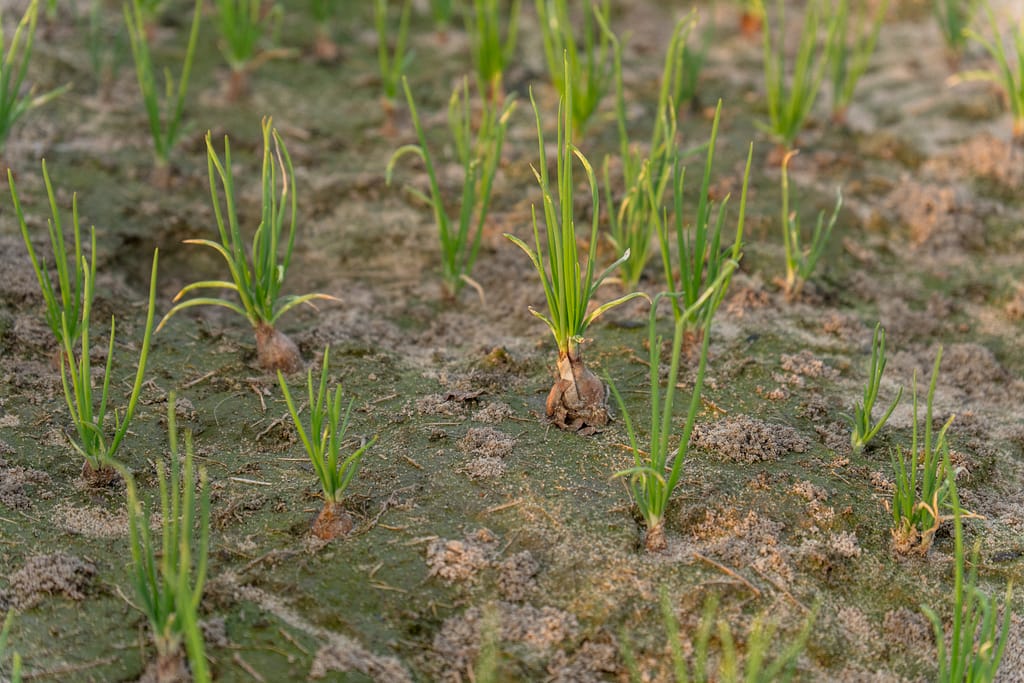
Arundavarani, as secretary of the Farmer Organization and a farmer reliant on the pond, was involved throughout. “Since IWMI and Chrysalis restored this tank, we are able to better cope with drought conditions. Many of the difficulties we faced earlier have reduced. When there was no water in the tank and rainfall was low, crops were destroyed due to climate change. Now when we cultivate crops, we feel secure because the tank has been rehabilitated,” said Arundavarani. Today, she cultivates a variety of small crops alongside rice, including black gram, onions, green chilies, pulses and eggplants using the regular water supply.
Small investments can bring meaningful change
In pairing technical interventions with social engagement strategies, IWMI targeted the holistic resilience of food production systems. And by co-creating solutions with the farmers — and having them contribute their own funds and labor — community ownership was established, encouraging continued maintenance and long-term sustainability.
Though these are smaller-scale investments — the pond expansion cost $1,132 and the solar pump $29,709 — perhaps lacking the ribbon-cutting flair and impact statistics of larger development projects, they meaningfully improve lives; in this case, for 61 families. Often, such projects fall through the cracks: too expensive for a small and marginalized community, too minor for strained government funding, and not exciting enough for development organizations.
Yet, by leveraging collaboration between farmers and government officers and enhancing the capacity of communities to meet their own socio-economic and climate challenges, the project demonstrates that even a small budget can deliver substantial improvements to food and water security.
For Arundavarani, the expansion of the pond and addition of new crops have meant her “children are now able to study better and move forward in life. The financial difficulties in our household have reduced.”
Through the eyes of Shiraj Morugama, a project and area manager for Chrysalis, this work is an example of climate justice, which “begins when communities most affected by climate change are empowered to lead solutions. By strengthening local institutions, promoting equitable water access and encouraging collective decision-making, this initiative shows how community-driven action can build resilience while preventing resource-based conflicts in vulnerable farming communities.”
The benefits stretch beyond household food and financial security; the ponds and reinforced water storage areas are mini biodiversity hubs and beautifying oases. In the area near the solar pump, Indian peafowls, white-breasted waterhens, red-vented bulbuls, purple sunbirds, white-throated kingfishers and rose-ringed parakeets flit and chirp. Perhaps they, too, feel the palpable sense of opportunity when farmers are given the tools to design their own water-secure future.


