

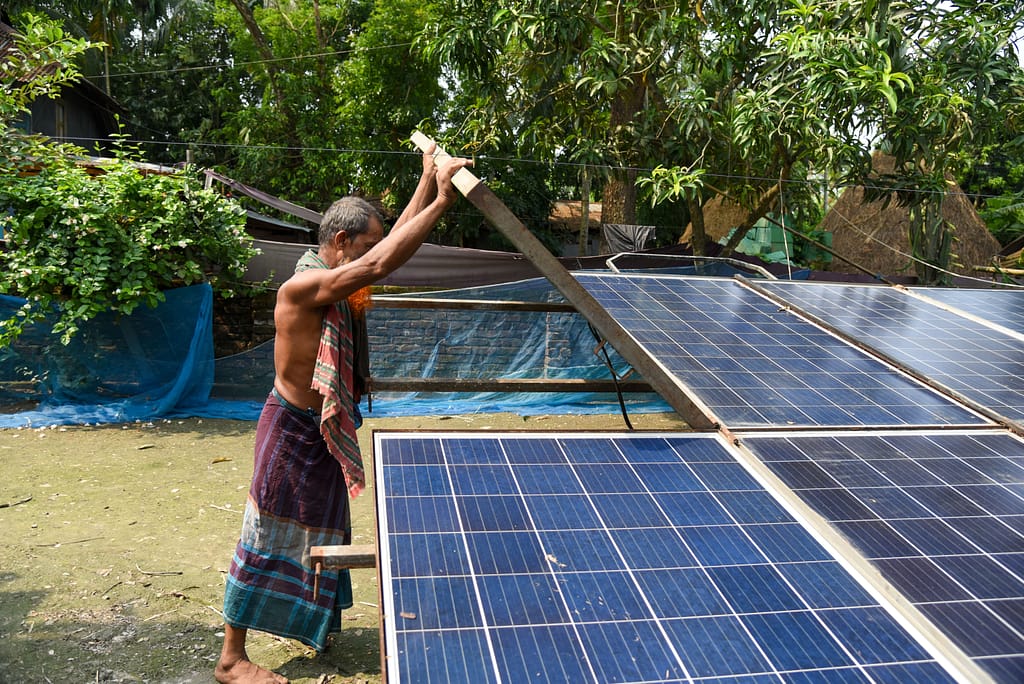
Solar-powered irrigation systems are increasingly promoted worldwide for their potential to reduce agricultural carbon emissions and improve water, energy and food security. However, there are ongoing concerns that the near-zero operational cost of solar irrigation could lead to over-pumping and accelerate groundwater overexploitation.
Understanding how farmers change the way they pump water after switching to solar power is key to predicting what it will mean for groundwater over time.
A recently published study by the International Water Management Institute (IWMI) shows that solar irrigation can be scaled without major groundwater risks when designed and managed well. The study conducted in Bangladesh is part of the Solar Energy for Agricultural Resilience (SoLAR) project, supported by the Swiss Agency for Development Cooperation (SDC).
Currently, around 1.6 million pumps are used for groundwater irrigation in Bangladesh, 80% of which are diesel pumps, while electric and solar pumps account for the rest. Most of this irrigation is used for the cultivation of water-intensive Boro rice in regions where the sustainability of groundwater is already under threat.
Fee-for-service model used for solar irrigation in Bangladesh keeps water use similar to diesel irrigation
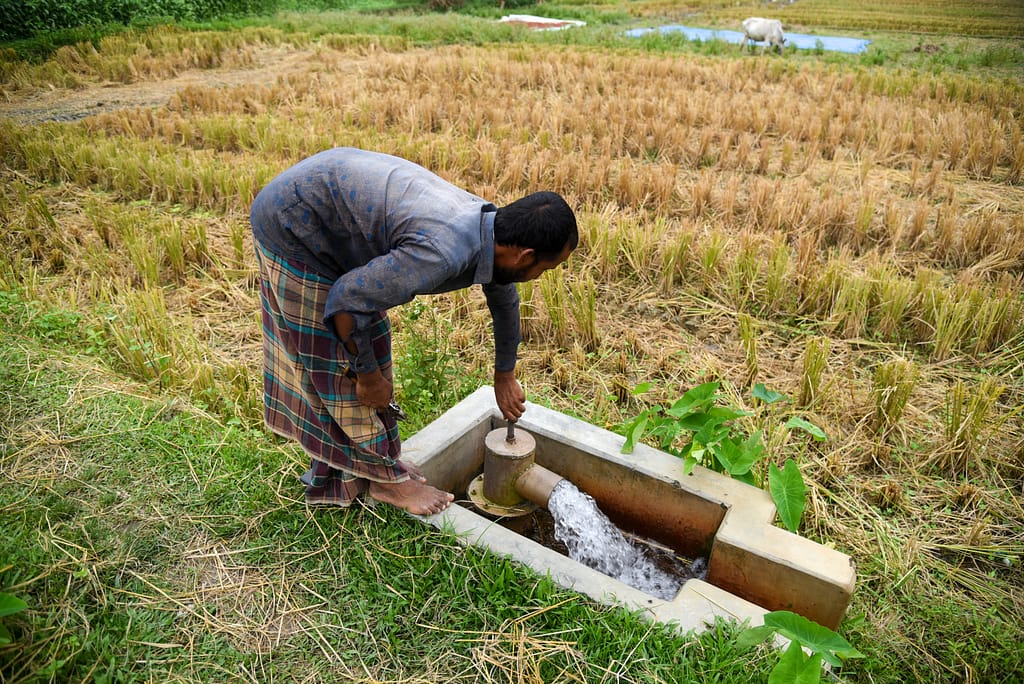
From 2021 to 2023, IWMI researchers compared water use for dry-season paddy cultivation in northwest Bangladesh using diesel and solar-powered irrigation pumps. The study found that farmers using either type of pump consumed the same amount of water.
After accounting for factors such as soil type, crop variety and land elevation, farmers used 694-1,014 mm of irrigated water for solar irrigated plots and 663-775 mm for diesel irrigated plots. Despite solar-powered irrigation being 20-30% cheaper, farmers did not use more water.
It is important to note that these results are context-specific to the fee-for-service model. This model, which is dominant in northwest Bangladesh, is managed under institutional arrangements that encourage efficient operation. Fee-for-service means that a private company installs and operates solar irrigation pumps using financing from the Infrastructure Development Company Limited (IDCOL) and then sells irrigation water as a service to farmers. As a result, farmers don’t need to buy or maintain the pump — they simply pay a fee for the water they use. Irrigation providers also have a clear incentive to distribute water efficiently to maximize revenue.
The study also shows a small 4.2 percentage point increase in the area used for paddy cultivation in the dry season. This is because farmers have shifted from other crops to paddy due to increased irrigation reliability and decreased costs from solar-powered systems, rather than from newly cultivated land.
Groundwater modelling also suggests that the use of solar pumps, accounting for a marginal increase in paddy area, had minimal impact in the region, with less than one meter drop in groundwater levels.
However, if paddy expansion or water use were to rise significantly during the dry season, groundwater stress could emerge, especially in the Barind region’s clay-dominated southern districts like Rajshahi, Pabna and Bogra.
Context-specific policy solutions are key to sustainable solar expansion
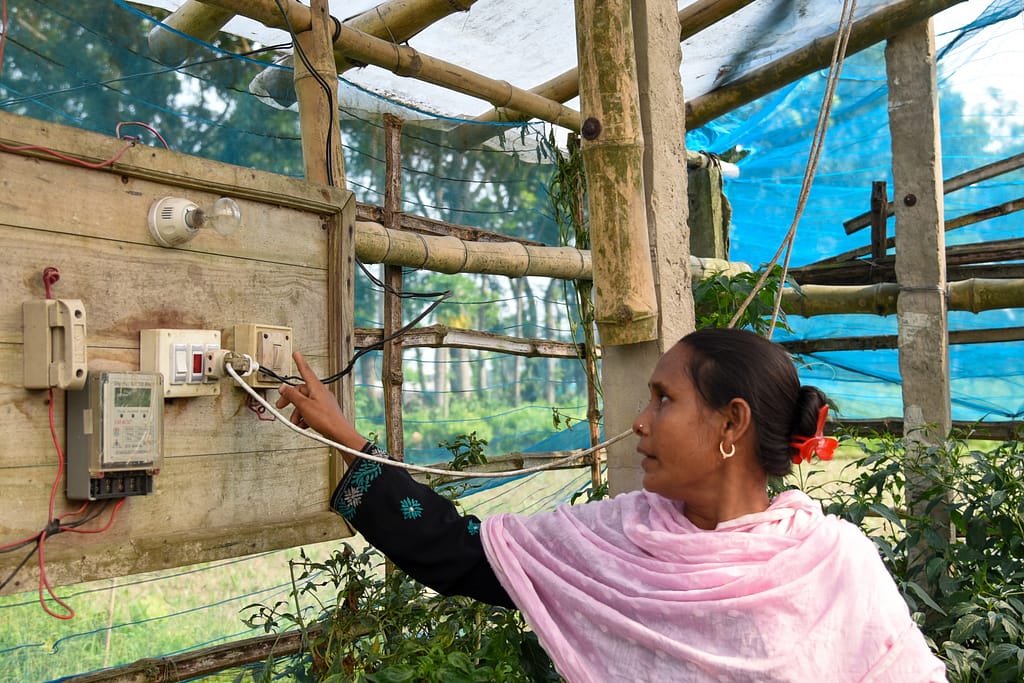
“Solar irrigation holds tremendous promise for decarbonizing agriculture and improving energy access. But sustainability depends on smart and context-specific deployment of solar irrigation models backed by strong governance and institutions,” said Mohammad Faiz Alam, senior regional researcher at IWMI and the lead researcher involved in the study.
Policies that safeguard groundwater resources are critical. For example, promoting water-saving practices like alternate wetting and drying can cut water use by 20-40%. Alternate wetting and drying is a water-saving irrigation technique for rice paddies that involves periodically drying fields for a few days before re-flooding, rather than keeping them continuously flooded. This method significantly cuts water use and irrigation costs, while also reducing methane emissions by disrupting anaerobic conditions, without sacrificing crop yields.
Within larger schemes, like government support programs, policies could link solar irrigation pump subsidies or sponsor contracts to maintain cropping patterns or improve irrigation efficiency, which would help stabilize groundwater use.
Regionally, governments should use solar suitability maps and improved groundwater monitoring to guide targeted deployment of solar irrigation pumps. This approach will minimize risks to groundwater sustainability.
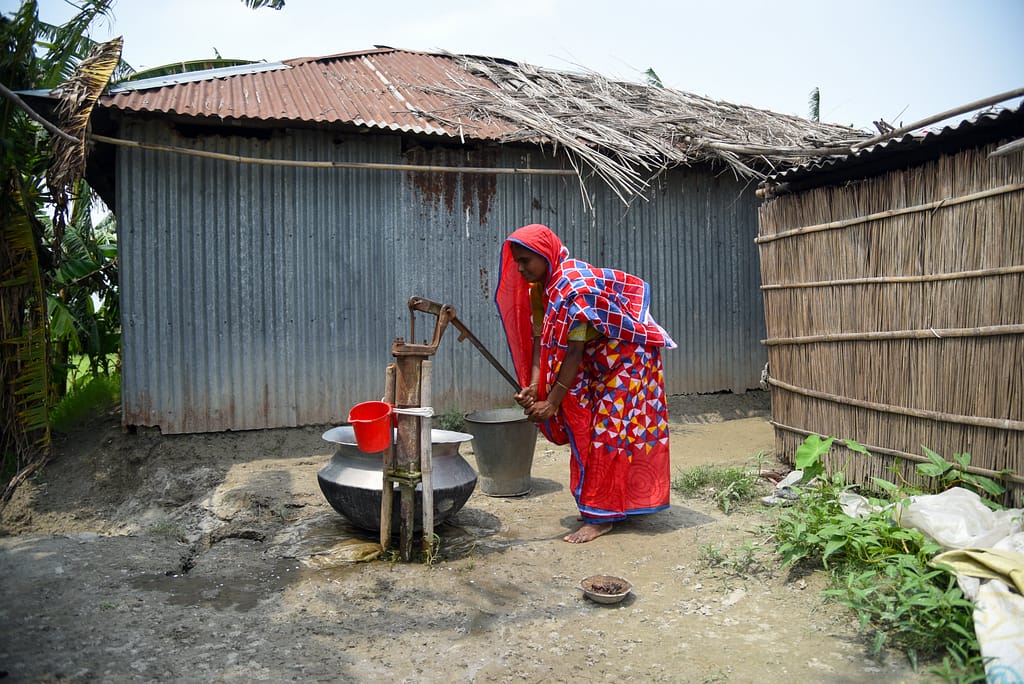
Integrating managed aquifer recharge to offset depletion in groundwater-stressed zones can also help restore depleted aquifers and improve groundwater availability.
Other models, such as individual farmer-owned pumps or grid-connected systems, could yield different outcomes depending on pricing, incentives and local hydrogeology.
Comparative research across different models and geographies are needed to better understand how solar irrigation impacts groundwater under diverse agroecological and market conditions.
These findings provide critical evidence to guide smarter context-specific policies and investment decisions for sustainable solar expansion in the region, ensuring that expansion strategies strengthen farmer livelihoods while safeguarding groundwater resources.
“This evidence helps us design smarter, more sustainable solar irrigation pathways,” said Darshini Ravindranath, project lead for SoLAR and senior researcher at IWMI. “We now have a much clearer understanding of the factors that can support responsible scaling of solar irrigation, how incentives need to be aligned, and what safeguards are essential to protect groundwater in vulnerable regions.”


