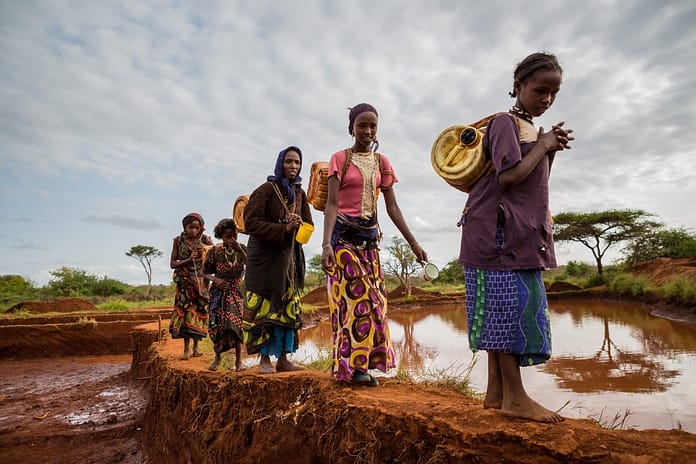

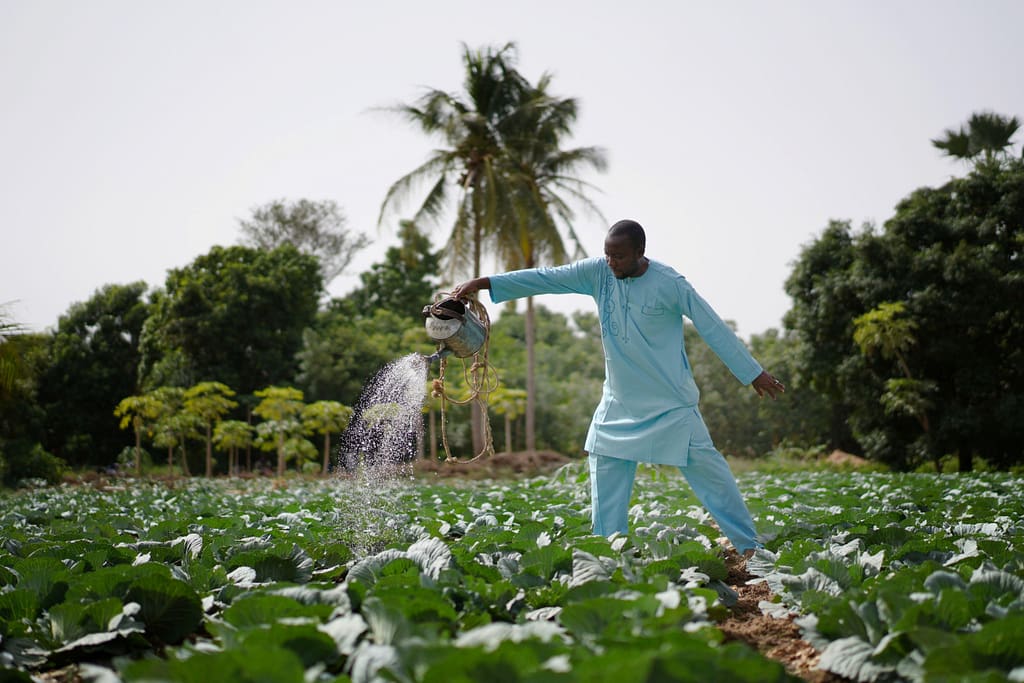
This November, the International Water Management Institute (IWMI) and WaterAid launched the “Principles for Just Water Partnerships” at COP30, marking a major milestone in turning a key concept into action.
Just Water Partnerships (JWPs), first proposed by the Global Commission on the Economics of Water (GCEW), are national coordination platforms designed to put justice and social equity at the heart of water investments. The GCEW called for the Partnerships in its flagship report, Turning the Tide: A Call to Collective Action, presented at the UN Water Conference in 2023. The report urged for Just Water Partnerships to be established to “enable investments in water access, resilience and sustainability in low- and middle-income countries, using approaches that contribute to both national development goals and the global common good.”
The driver behind JWPs is the serious financing and governance challenge in existence, with a global annual US$140 billion funding gap in WASH and water-resources management, even though it is estimated that 90% of natural disasters are water-related. Declining aid flows, rising climate risks and weak regulatory systems leave many countries unable to absorb existing finance effectively and facing severe future risk.
The consultation process from Seville to Stockholm to Belém
Throughout a design process, IWMI and WaterAid brought together governments, utilities, NGOs and the private sector to review and reshape a set of principles for Just Water Partnerships to cover planning, financing and governance of water resources, and investments in water, sanitation and hygiene (WASH).
To get the principles ready for launch at COP30, nearly 500 institutions across 34 countries were consulted, with two-thirds of responses coming from the Global South. National dialogues in Ghana, Madagascar and Nepal helped ground the process in real policy contexts. Online surveys and desk reviews drew on lessons from initiatives such as the Just Energy Transition Partnerships (JETP), the Water Governance Principles of the Organization for Economic Co-operation and Development and the Valuing Water Initiative.
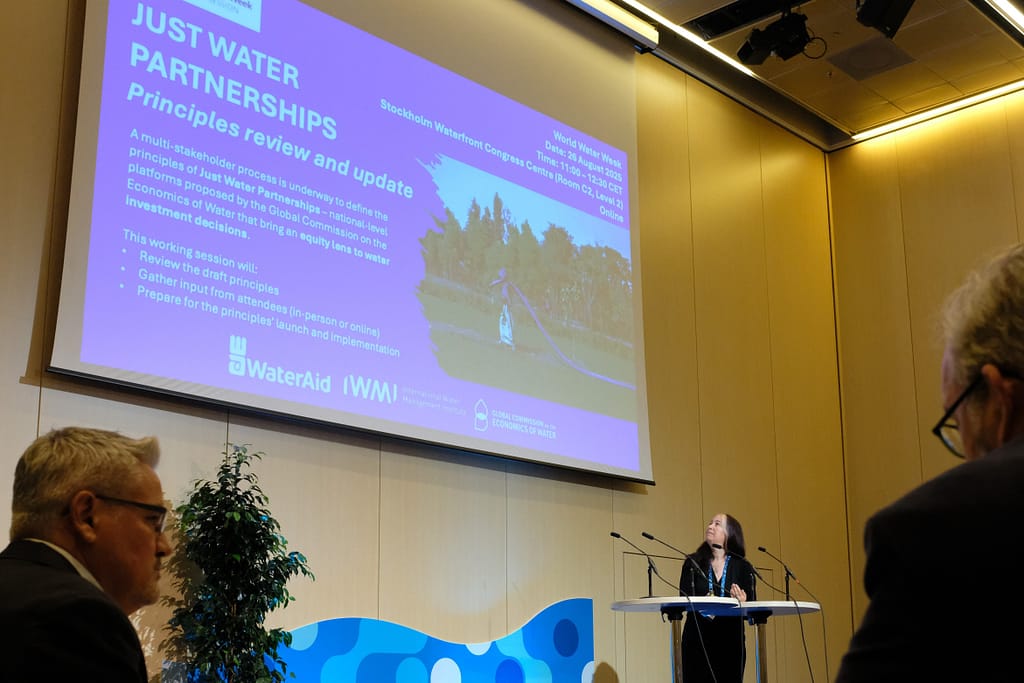
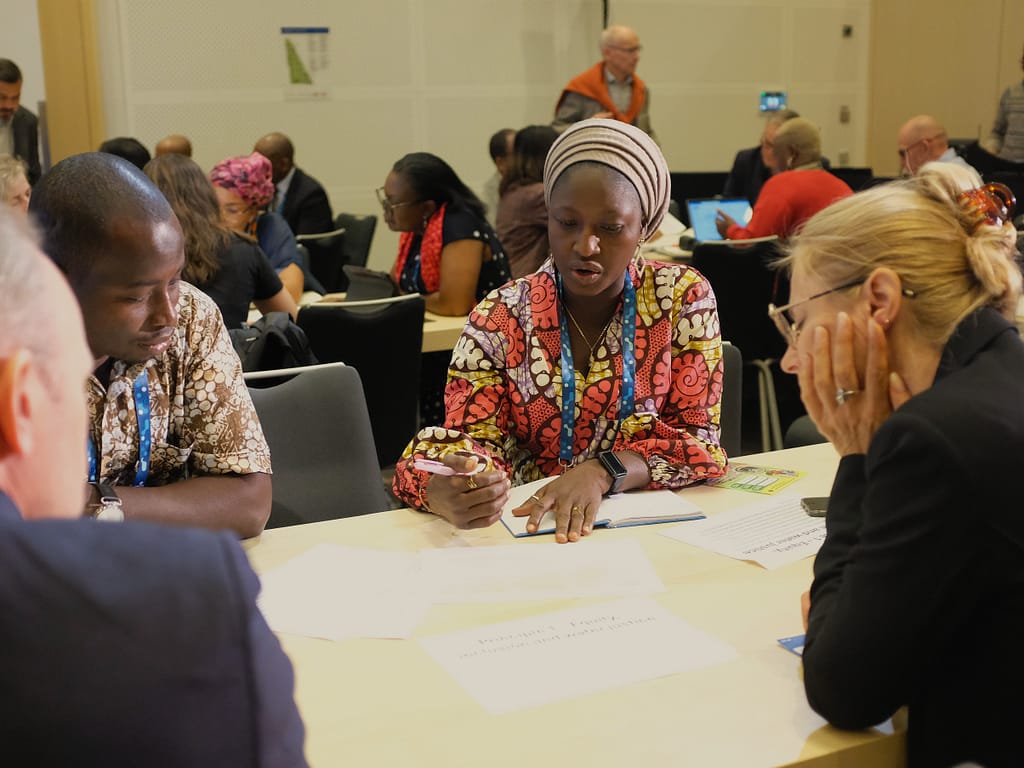
Stockholm World Water Week (SWWW) in August was a chance to review progress. It was the final waypoint on the road to launching the principles at COP30. Designed as a “world-café” dialogue, groups of experts, guided by facilitators, tested whether each of the seven principles was helpful, actionable and adaptable to national contexts.
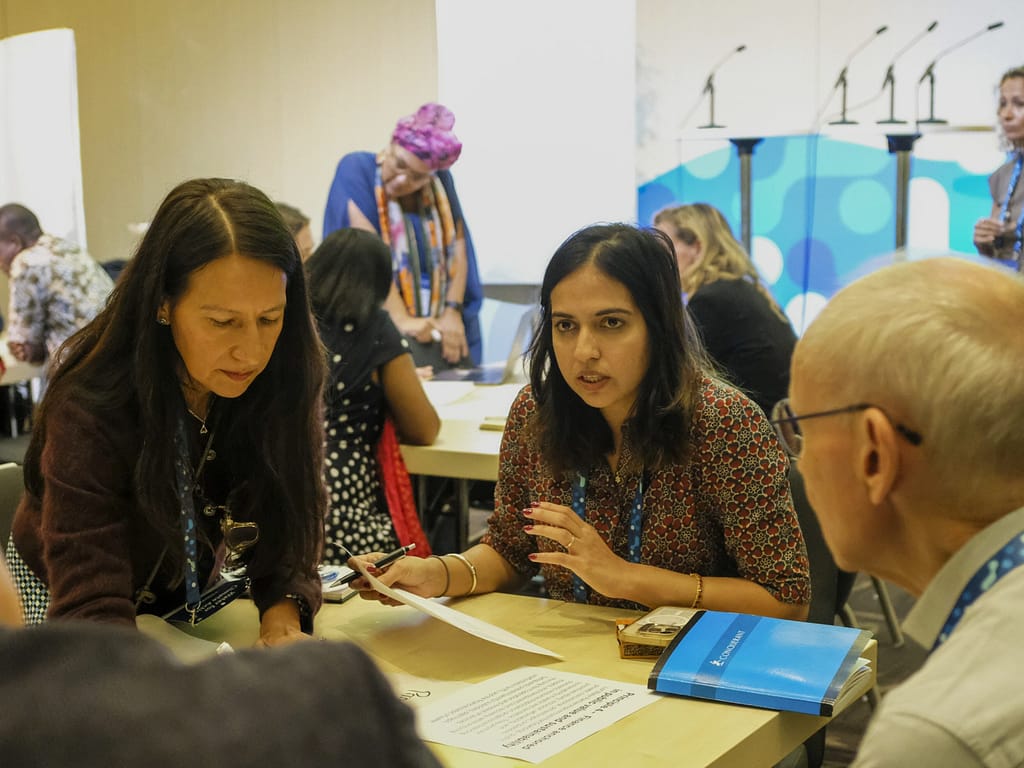
Central to the challenge of Just Water Partnerships was understanding what ‘just’ truly meant. Grounding the framework in the human right to water and sanitation was therefore essential, with explicit reference to informal settlements and vulnerable groups. Stronger localization, through recognizing cultural contexts, data gaps and the cost of accountability, was identified as a key driver of impact.
Being precise about who owns, who leads and which level of government is necessary to implement the principles effectively was raised. While national governments should lead, it was argued that accountability must extend to co-owners and communities, and local government involvement was recognized as a cornerstone of the JWP principles. The principles should also clarify which ministries or agencies “hold the pen” and ensure sufficient institutional capacity to act.
Legitimacy and representation were key. However, who truly spoke for youth, Indigenous peoples or local communities was a key question to consider across the JWP principles. Adding researchers as recognized stakeholders and linking the principles explicitly to government-led processes was identified as a strategy to avoid duplication.
Stakeholders at the SWWW session also recognized the need for private-sector inclusion under clear accountability rules.
Cost-recovery and affordability remained contentious policy issues. Operational costs were often unrecovered, while inequitable tariffs persist. Embedding the principles of locally-led adaptation, distinguishing between WASH and water-resource financing, and improving governance were identified as strategic steps to help ensure funds reached the right places.
Key challenges remained, however, including the need to extend transparency beyond government budgets to include private-sector and multilateral partners. Monitoring efforts involving citizens and third-party oversight were strongly endorsed, but with a caution that such mechanisms must respect national political contexts and provide feedback directly to water users.
A recurring theme was ensuring a broader understanding of learning — across formal and informal systems, and between national and community levels. The Just Water Principles must embed multi-level feedback loops, ensuring marginalized groups and people with disabilities are recognized, while defining key terms to maintain consistency. Simpler, more compelling language could also help attract funding for adaptive approaches.
Stakeholders suggested making stronger reference in the principles to nature and biodiversity, and not only climate finance. To achieve this, countries would need a clearer articulation of how Just Water Partnerships complement existing national adaptation plans and just energy transition frameworks. Stakeholders at the Stockholm World Water Week session further emphasized that the JWP principles should reinforce cross-ministerial collaboration and highlight Just Water Partnerships as vehicles for leveraging climate finance toward inclusive, multi-sector resilience.
Across the consultations, three core messages recurred: make the principles simpler, more actionable and measurable; ensure governance clarity on who leads and funds; and position Just Water Principles as tools for operationalizing existing commitments — from the Sustainable Development Goals and human rights to climate and adaptation pledges.
From Belém to the rest of the world, a decisive year ahead
“Finding common ground is key. These principles are not set in stone; they must live through how countries use them,” said IWMI Board Chair and Executive Director of GCEW, Henk Ovink, while closing the session at Stockholm World Water Week. He recalled that a year earlier, the Just Water Partnerships existed only as an idea at a small meeting in New York. The coming year, he said, will be decisive. “The next step is to anchor Just Water Partnerships on the road to the UN 2026 Water Conference and the post-2030 agenda.”
Following the launch of the principles at COP30 in Belém, Brazil, the onus now moves to country engagement, including involvement in the UN Water Conference 2026 preparatory meeting in Dakar, Senegal in January, where, it is hoped, initial Just Water Partnership commitments may be made.
There is still a long way to go, but at IWMI and WaterAid, we are committed to supporting the move from paper principles to practical action at country level.
Alan Nicol is the principal researcher on policy and governance at the IWMI, Lesley Pories is head of policy of WASH financing and Mariana Dias-Simpson is a consultant project manager at WaterAid.