


The Indo-Pacific, broadly spanning the Indian and Pacific Oceans, is home to about half the world’s population. Accounting for nearly two-thirds of the world’s economy, it is one of the most consequential regions on the planet. Where water defines both geography and daily life, climate and water security are critical to the region’s future stability and growth.
In April 2026, the Australian Centre for International Agricultural Research (ACIAR), the Australian Water Partnership, the Department of Foreign Affairs and Trade, and the International Water Management Institute (IWMI) convened a timely discussion on one of the Indo-Pacific’s most pressing challenges: water security in a changing climate.
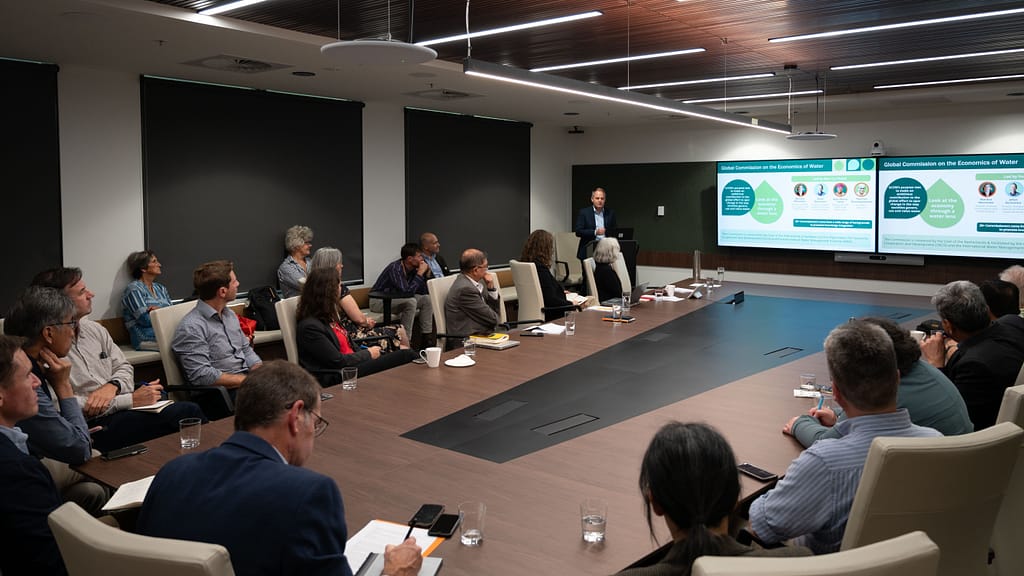
“We must move beyond incremental change and set bold, coordinated missions to stabilize the global water cycle. That is why IWMI is committed to building and supporting coalitions for collective action to transform water systems,” said Mark Smith, director general of IWMI.
Smith cited the flagship report of the Global Commission on the Economics of Water (GCEW), which calls for a fundamental shift in how water is valued, managed and used. It advances the idea of a new economics of water, arguing that the global water cycle should be governed as a shared common good.
On the role of science in this shift, Smith said, “We need to direct research and innovation toward transforming our water future. That includes rebuilding food systems and restoring ecosystems, embracing circular water economies, scaling clean energy and technology, and ensuring that no child dies for lack of safe water.”
Across the discussions, one message was clear: water is not a sectoral issue. It sits at the center of climate resilience, food systems, economic development and regional stability, increasingly shaping development pathways across the Indo-Pacific.
Climate change is intensifying droughts, floods and variability, while demand continues to rise across agriculture, cities and industry. Together, these pressures are placing a growing strain on already stressed systems. The question is no longer what needs to be done, but how to accelerate solutions at scale.
Translating the recommendations from GCEW’s report “The Economics of Water” into practical regional action was a central focus of the discussion. This requires a shift in how water is understood — recognizing the hydrological cycle as a global common good, and rethinking how water is governed, valued and financed.
Australia contributes to this not through a single institution, but through a broad and connected international water security team. This includes government, research institutions, universities, NGOs and the private sector working across bilateral and regional partnerships.
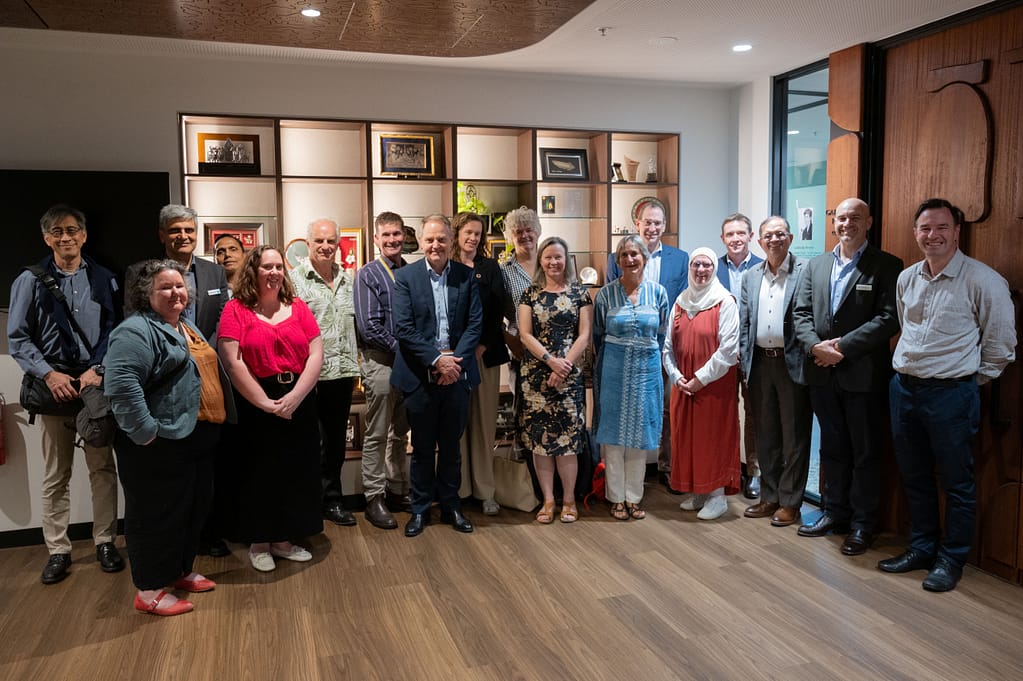
As discussions unfolded, three themes for advancing climate-water action in the Indo-Pacific came into focus.
Urgency. Water insecurity is already constraining development and resilience across the region.
Australian expertise. From basin governance to water accounting, Australia brings practical experience in managing variability. This is already being applied across Eastern and Southern Africa, South Asia, Southeast Asia and the Pacific. Australia’s experience in cross-sectoral water reform also offers important insights for how other nations and partners can better address water security.
Partnerships and implementation. Turning global frameworks into impact will require stronger alignment between policy, science and finance, and deeper collaboration across partners. It needs to be supported by coordinated engagement on the ground.
The discussion also highlighted key contributions of the Global Commission on Water, including understanding the importance of atmospheric moisture flows, advances in water accounting and a broader approach to valuing water beyond pricing alone. Its mission-driven focus, spanning food systems, ecosystem restoration, circular water economies, and water, sanitation and hygiene (WASH), provides a practical pathway for action.
The Indo-Pacific does not lack knowledge on water. The challenge is connecting that knowledge to coordinated action through investment, institutional strengthening and delivery at scale.
Australia and IWMI have a clear role to play, working with partners across the region to help translate global ambition into practical outcomes.
The focus now is on maintaining momentum and moving from dialogue to delivery.


