

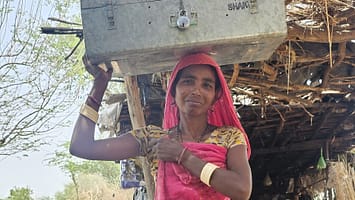
What community water leaders had to say about why they continue to volunteer
The second blog in this three-part series explores the motivations of community volunteers in India and the challenges they face.
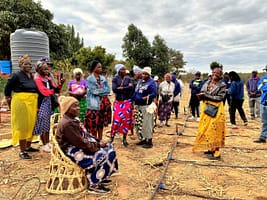
A village leader in Zimbabwe shares her experiences in building water security
In conversation with IWMI researchers, Sabina Shonhiwa says reliable access to water could transform her community far beyond agriculture gains
Why water governance needs better community feedback
The first blog in this three-part series explores why lived experience should be at the heart of designing and improving
Groundwater is the unseen ace in the pack of water resilience
Countries can make progress on SDG 6 by integrating groundwater into water planning, policy and investment.

The vital role of safe spaces in agriculture research
How a gender-transformative methodology applied in Malawi evolved into a research tool for inclusive innovation adoption and responsible scaling.

One rainy day
A short film exploring flood risks through expert insights and guidance on preparing for extreme weather events.

IWMI’s Water Governance Accelerator
The Water Governance Accelerator supports countries in meeting international commitments through evidence-based solutions grounded in IWMI's scientific expertise.
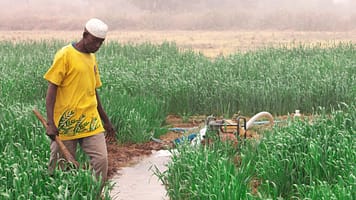
Lake Chad is gaining water and that reshapes the irrigation agenda
IWMI estimates targeted irrigation investments around a recovering Lake Chad, could feed more than 12 million people and unlock billions

Digital inclusion in agriculture
IWMI's Sanju Koirala explains why connectivity alone is not enough for digital agriculture to succeed.
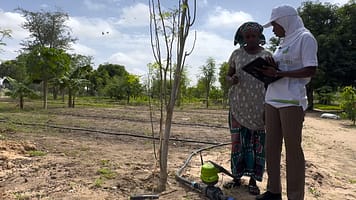
Young African innovators are transforming smallholder irrigation
AI-enabled irrigation systems are reducing water use on farms by as much as 55% in West and Central Africa.

One phone call helps Ghana’s smallholder farmers access irrigation
The IRRILINE advisory service, co-created by IWMI and Farmerline, is live in Ghana and starts just by dialling 399.
Growing food and solar power on the same land
Bangladesh is racing to expand renewable energy, but one question continues to challenge policymakers: where will all the new solar
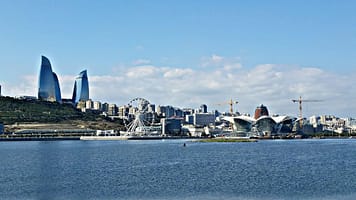
From Baku to bankable
How FCDO and IWMI are turning pilots into investment opportunities with international financial institutions in fragile contexts.
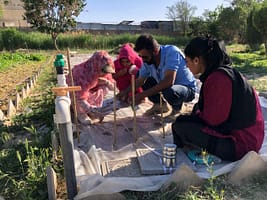
Kitchen gardening for climate resilience
Climate-smart kitchen gardens are an avenue for women and youth to improve food security and conserve water in Pakistan.
IWMI launches ENSO Outlook to turn El Niño forecasts into anticipatory action
The reliability of modern climate predictions presents a window of opportunity in which to act to prevent the worst impacts
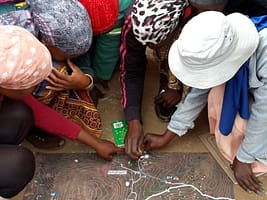
Who sustains water infrastructure after the ribbon is cut?
In South Africa, strong community and municipal collaboration keeps water services reliable beyond construction and opening ceremonies.

Rethinking Barind’s water crisis
Water scarcity in Bangladesh's Barind shows that the real challenge lies not only in conserving water, but also in governing
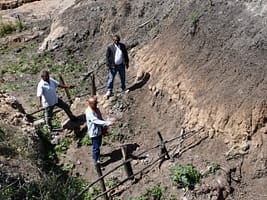
Ethiopia’s Halaba community fights back against the gullies
Community-led restoration shows landscape recovery starts with local ownership.

When El Niño stops being a probability
IWMI’s Giriraj Amarnath explains how early guidance for farmers can turn a looming dry spell from a potential disaster into

Revived Roman canal brings new life to Iraq Al Amir farms
The rehabilitation covered 650 metres of the canal under Al Murunah, a project funded by the UK's Foreign Commonwealth and
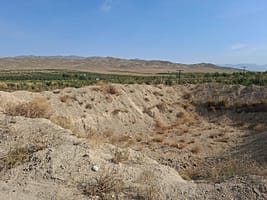
Central Asia moves together toward drought readiness
A regional assessment maps how five Central Asian countries are impacted by droughts and how they can collaborate on mitigation.
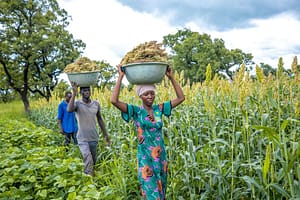
May-June 2026 Research Journal Roundup
Roundup of research, journal and other academic articles from May and June 2026.
Water, multilateralism and the architecture the world deserves
Henk Ovink, Chair of IWMI’s Board of Governors shares that the water cycle can be a catalyst for local-to-global cooperation,

In Memoriam – David Seckler
IWMI mourns the passing of David Seckler (1935–2026). David served as Director General of IWMI from 1995 to 2000.
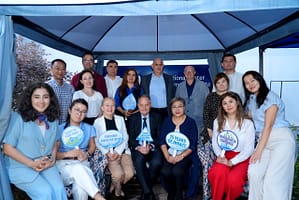
IWMI marks 25 years of water partnership in Central Asia
From local rivers to transboundary basins, IWMI's 25-year journey reflects the power of science and cooperation in addressing Central Asia's
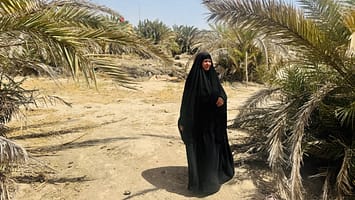
In southern Iraq, locally grounded solutions help protect against sand and dust storms
On the International Day for Combating Sand and Dust Storms, an IWMI pilot shows how community-led restoration can shape future

The last drop of coffee?
As climate change threatens the world’s robusta coffee supply, nature-based solutions help smallholder farmers in Viet Nam build resilience —
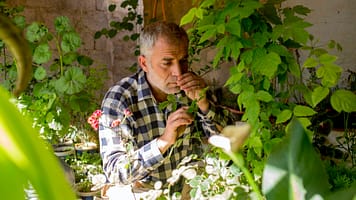
Sustainable water and sanitation support dignity in refugee camps
Nature-based water management solutions in humanitarian settlements create co-benefits for public health, camp economies, collective well-being and biodiversity.
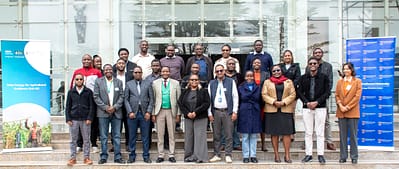
IWMI supports solar agriculture capacity in East Africa
A partnership with Strathmore Energy Research Centre will develop solar-in-agriculture training curricula for farmers, agri-businesses and policymakers in Kenya and
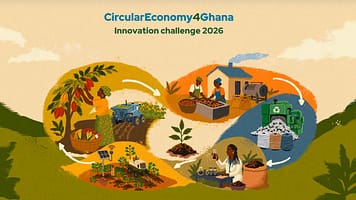
CircularEconomy4Ghana Innovation Challenge opens for applications
Startups and entrepreneurs invited to apply for support to scale technology-driven circular economy solutions in Ghana's agriculture and textile sectors.
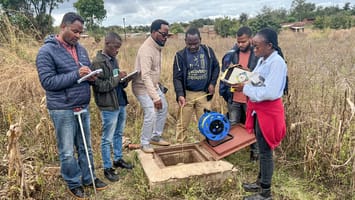
Groundwater is Africa’s hidden lifeline, but real-world data is lacking
Researchers are combining continental insights with local fieldwork to ensure groundwater is used sustainably and equitably.

The ENSO Outlook helps people turn climate information into anticipatory action
As the 2026 El Niño develops, the newly launched ENSO Outlook links climate data to floods, droughts and water risks,
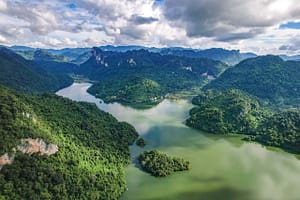
IWMI and IPCC to hold first Expert Meeting to advance the science of water in climate change
The co-sponsored meeting will help shape the evidence for IPCC’s Seventh Assessment Report by spotlighting water’s role in climate adaptation,
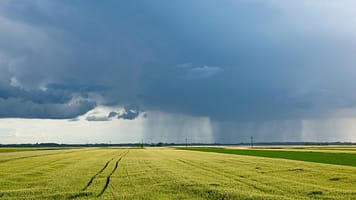
The economic shockwaves of a water cycle off balance
The world's destabilizing water cycle is becoming a defining economic risk for governments, industries and investors.
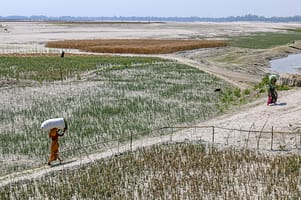
How Bangladesh’s Family Card Program can leverage women’s roles in agrifood systems
Unconditional cash transfers to women can strengthen economic empowerment if paired with broader gender-responsive agrifood interventions.
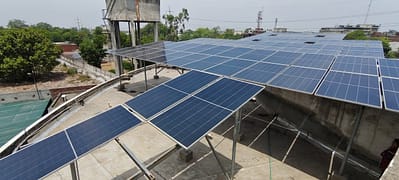
Inside IWMI’s push for greener operations
At IWMI’s Pakistan office, practical initiatives — from solar energy to rainwater harvesting — demonstrate how organizations can reduce their
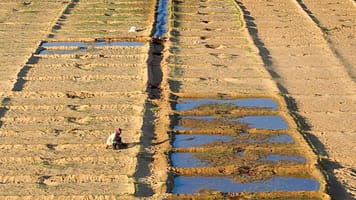
Why the Al Murunah integrated development approach is scalable
With women’s earnings up 50%, lower salinity levels and nearly 500 villagers managing water systems, Egypt’s results point to scalable
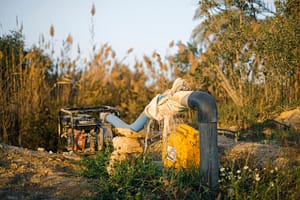
IWMI enables communities to build resilience through Nature-Based Solutions in Egypt
Communities in Izbat Al Hamra are gaining the tools, knowledge, and opportunities needed to adapt to a changing climate.
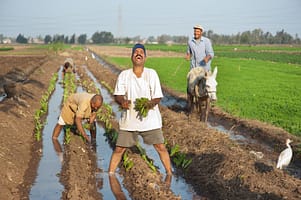
IWMI’s Al Murunah project team moves from pilot success to scaled impact
The Al Murunah team convened stakeholders in Egypt to replicate and scale the project's nature-based solutions approach in other communities.
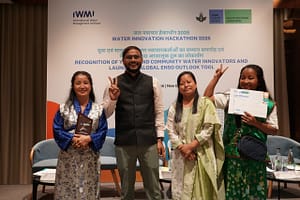
Meet India’s next Water Innovators!
IWMI announces winners of National Water Innovation Hackathon.

At Dushanbe, IWMI calls for meaningful action to bridge the gap between water commitments and delivery
IWMI invites partners to jointly accelerate action across water intelligence, the food nexus and governance.
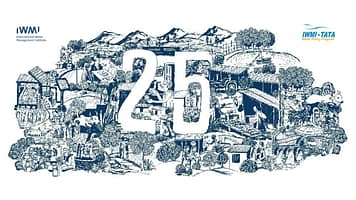
Twenty-five years of the IWMI-Tata Partnership
From India’s agriculture fields to its parliament, the IWMI-Tata Water Policy Research Program continues to shape programs and policies.

Fossil fuels still dominate in Africa’s electricity future
IWMI's Davy Vanham argues that Africa can meet its growing energy needs while protecting scarce water resources by investing in
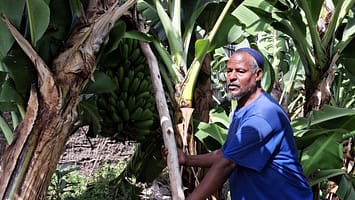
Aligned policies and science are pathways for Ethiopia’s smallholder irrigation
Government officials, researchers and farmers are coming together to inform sustainable smallholder irrigation systems in the Meki River watershed.
PM-KUSUM is a serious policy instrument. What it requires now is institutional depth
IWMI's Anurag Banerjee, Darshini Ravindranath and Tanmoy Bhaduri argue that India’s energy transition will be judged not by installed gigawatts
Mapping and monitoring Africa’s underground water supplies in preparation for a hotter future
IWMI's Girma Yimer Ebrahim explores how countries can protect and manage groundwater for the long term and ensure it remains
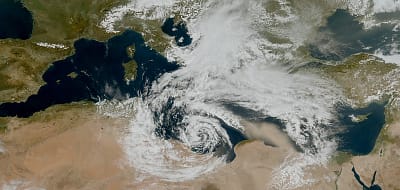
Why climate change holds all the (Uno) cards, for now
Emergent properties are our biggest climate threat, yet could also be the key to making significant progress against climate change.
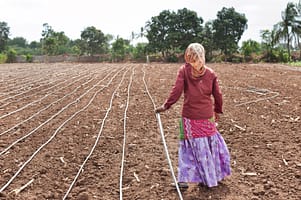
Can we outpace the next drought in India?
On World Day to Combat Desertification and Drought, find out how India's first anticipatory AI-powered drought advisory is turning early
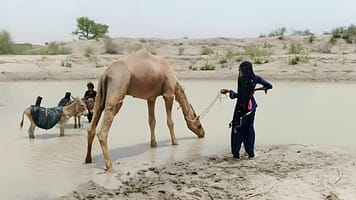
Women, water and the weight of drought
The invisible burden of water scarcity shaping the daily lives of women in Pakistan’s Tharparkar district.

River health for water security
The IWMI-led Global Environment Flows Platform brings together open-access tools to estimate environmental flows and track progress towards diminishing water
