

When we envision a refugee camp, we often think of a temporary setting: a place of impermanence where displaced persons pass through on their way to an ultimate destination, or in the hopes of returning home one day. Yet most individuals live in camps for years or decades.
Though the aspiration is for humanitarian camps to be short-term solutions in the face of crisis, the reality is that they are often long-term urban settlements. Their water and sanitation infrastructure must reflect this protracted displacement. Nature-based solutions offer an avenue for building durability, climate resilience and dignity for residents.
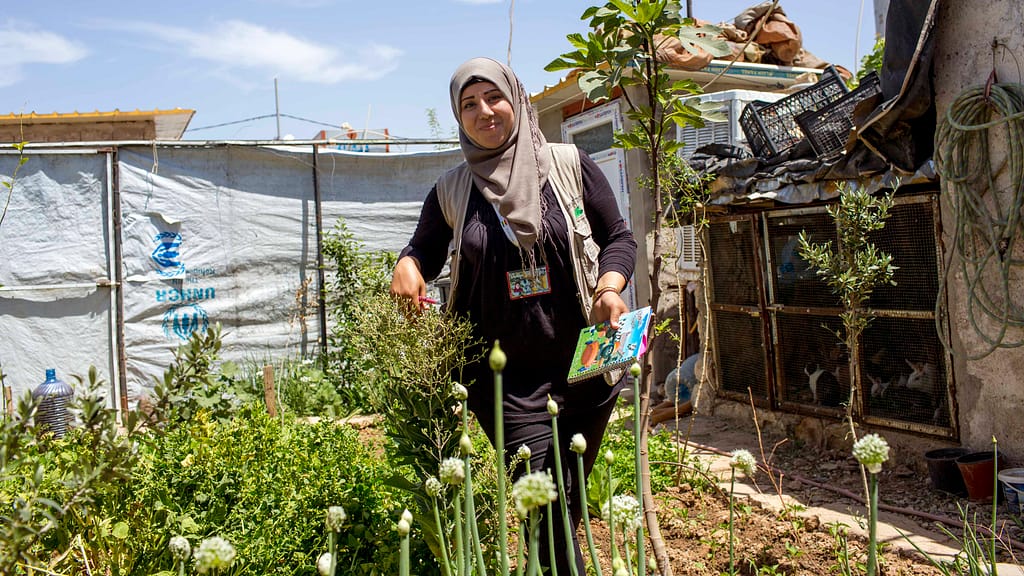
As conflict, persecution and natural hazards continue to force people from their homes as refugees and internally displaced persons (IDPs) across the globe, there are simultaneously shrinking opportunities for resettlement. This makes safe, liveable refugee camps a greater imperative. However, within rapid informal urbanization, there are often glaring mismatches between emergency infrastructure and the actual needs of refugee communities — especially regarding surface water and wastewater management.
A webinar from the International Water Management Institute’s (IWMI) Frontlines Learning Exchange (FLEX) broached this topic with a discussion of “Green and grey infrastructure solutions for fragile urban communities and displacement landscapes.”
Water is a central humanitarian challenge
According to Muhammad Khalifa, IWMI regional researcher on Integrated Modeling and Assessment, “urban areas everywhere are facing complex challenges. But these challenges become even more intense and complex in fragile, informal and displacement settings, where basic infrastructure is often missing or overstretched.” He added: “Communities in these contexts deal with flooding and poor drainage, heat stress and lack of cooling, water scarcity, waste mismanagement, pollution and food insecurity — and in some cases, many at the same time, and often without knowledge and resources to respond.”
Water resources are a target in conflict, and access to water is one of the first losses felt by refugees. Clean water is central to hydration, personal hygiene and food preparation. Yet surface water management is overlooked in humanitarian settlements.
Governments frequently place refugee camps on undesirable land that is unsuitable for farming, such as flood plains or rocky, non-arable land. This makes it more difficult to guarantee water access and protect against disaster. Camps introduce impermeable surfaces, creating surface runoff and increasing the likelihood of flooding. Insufficient drainage infrastructure leads to ponding and improperly handled waste causes cross-contamination of surface water.
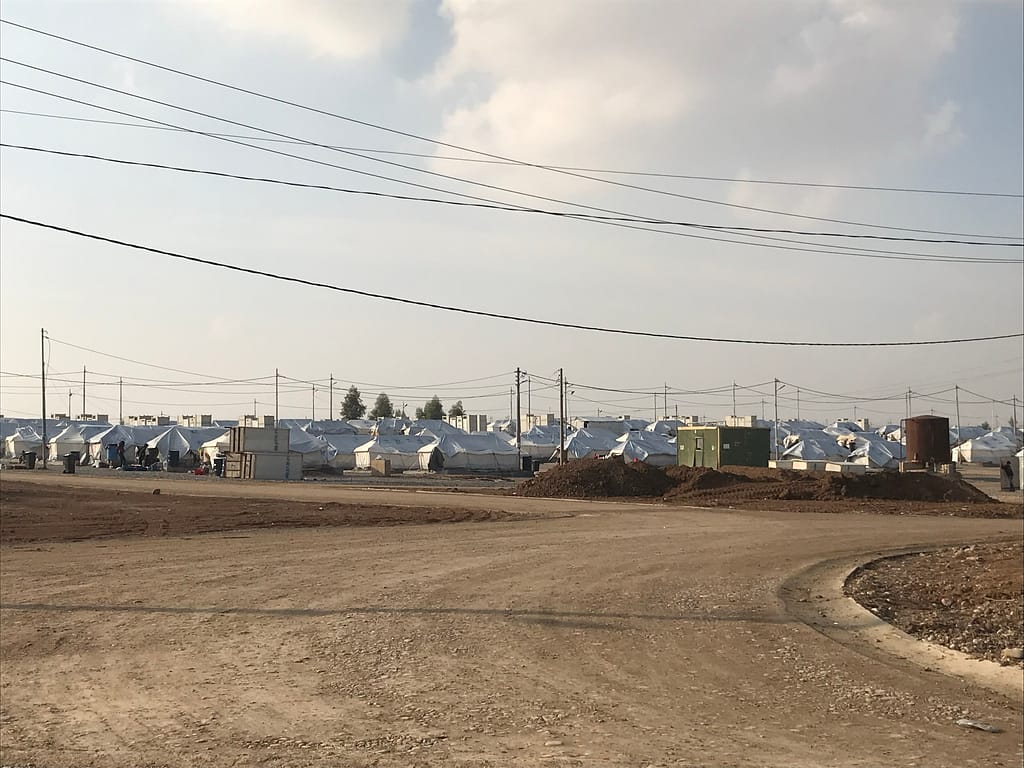
Refugee camps are urban spaces and hydrological systems. These settlements are often home to thousands of people and fundamentally change the hydrological landscapes within which they are built.
There is a growing effort to integrate climate adaptation into humanitarian settlements from the outset. If governments and humanitarian organizations prioritize sustainable water, sanitation and hygiene (WASH) systems and introduce green infrastructure to refugee camps, they can simultaneously ensure climate resilience, community well-being and environmental co-benefits.
Sustainable water management systems
Green infrastructure refers to systems that use natural processes and vegetation to manage water, mitigate flood risks and improve biodiversity, such as rain gardens and bioswales. Grey infrastructure involves engineered, often concrete-based, solutions, such as dams and stormwater drainage systems. The two best serve a community when combined within hybrid systems to address surface water management.
IWMI researcher on Water, Conflicts and Resilience, Mitchell McTough, is a proponent for sustainable urban drainage systems (SuDS) in humanitarian settings, a type of hybrid infrastructure. SuDS are water management practices that align modern drainage systems with natural water processes, “maximizing the benefit of surface water run-off in a given space through improved infiltration and retention that resembles a natural environment.”
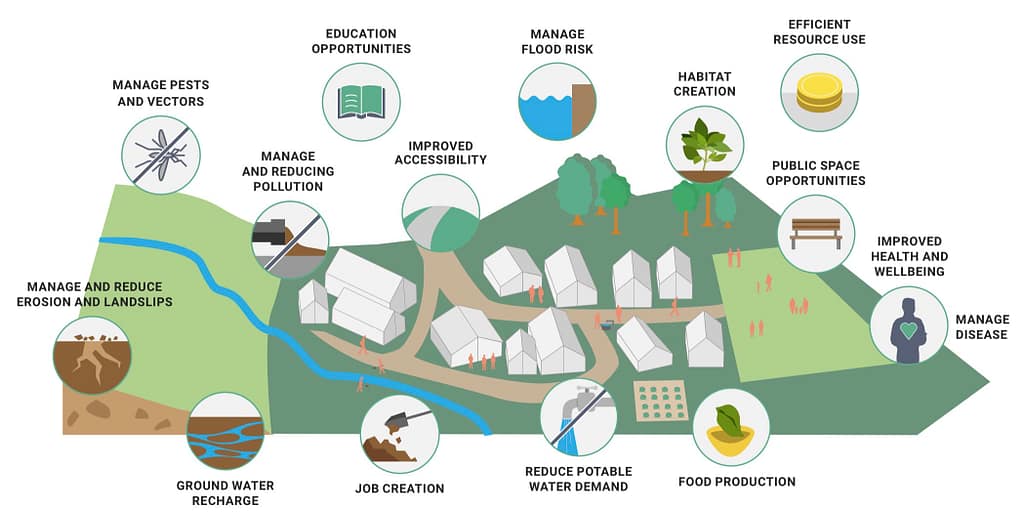
SuDS aim to fulfill four main objectives: control water quantity, improve water quality and enhance amenity and biodiversity. In humanitarian settlements, SuDS revolve around site adaptation projects and household level efforts. By doing a topographical survey before a camp is built, they can be built to the contours of the land.
Water quantity and quality are managed through the construction of filter strips, swales and trickle trenches, which help remove pollutants and control the rate of flow of water. Improved solid waste management keeps pollutants out of water sources, and rainwater harvesting reduces water resource demands with water reuse.
For the camp residents, these interventions mean enhanced amenities and ecosystem services. The nature-based solutions that improve water flows also grant them parks and recreational areas, which have therapeutic benefits. Rain gardens enable urban agriculture and improve food security. And, importantly, refugee camps begin to feel less like concrete sprawls and more like home.
The introduction of green spaces for water management also results in habitat creation and more biodiversity, making the camp a better home for plants, insects and animals too.
Though grey infrastructure is essential for water and sanitation — such as tanks, pumps, wells and filtration systems — it often requires material that cannot be acquired locally and relies on external skilled workers. Additionally, it introduces impermeable surfaces that cannot adequately handle flooding and create stagnant water, with the potential to become vector breeding sites for disease-carrying mosquitos. When green infrastructure can be used instead, it reaps environmental and social benefits.
Adaptive co-management is key
For sustainable water management systems to succeed in humanitarian settlements, refugees and IDPs must be involved from the start. No one can determine the needs of camp residents better than themselves, and they can participate in the design, construction and maintenance of SuDS through cash-for-work programs, ensuring local ownership and economic empowerment.
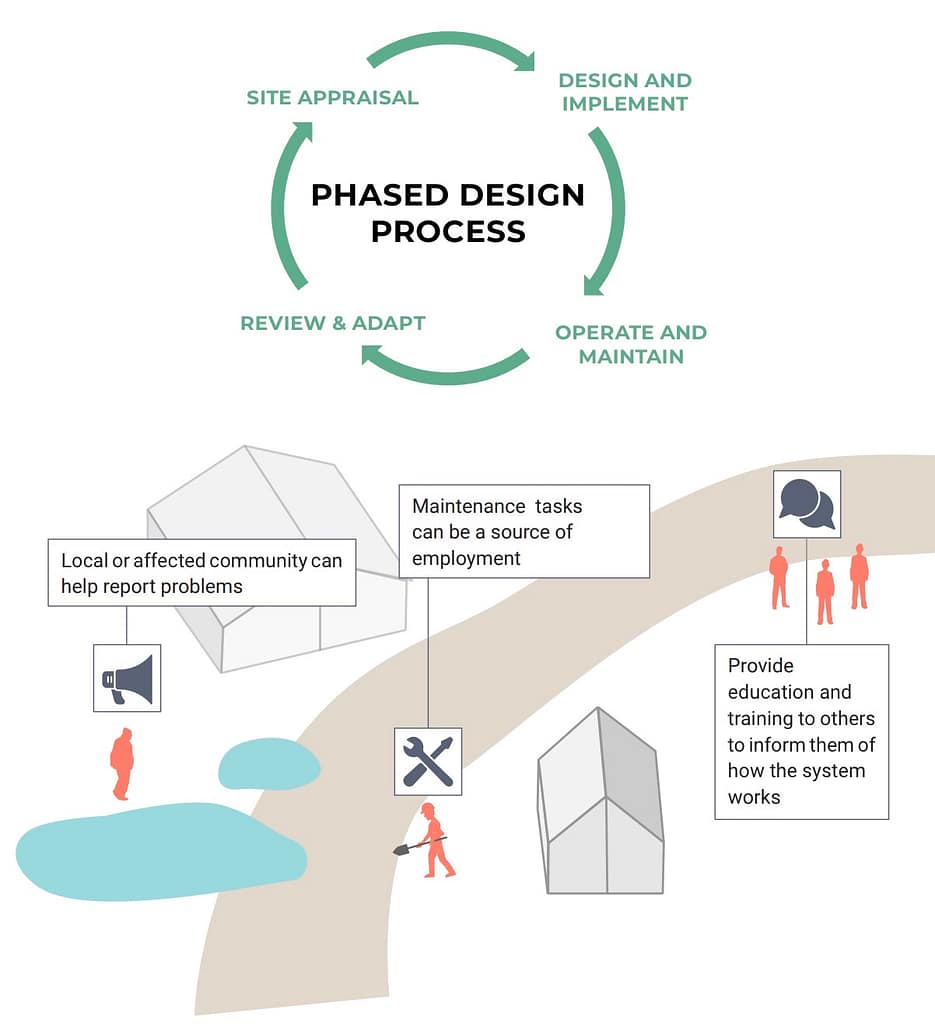
This collaborative approach was demonstrated, for example, in the Gawilan Refugee Camp in northern Iraq, active since 2013 in hosting Syrian refugees. As part of his doctoral research, McTough consulted refugees through interviews, surveys and focal groups on what they saw as their central surface management challenges. These, along with topographical and water quality data collection, informed the creation of a SuDS.
Refugees were involved in the construction of the SuDS and compensated, creating rain gardens, filter strips, gabions, micro-check dams, soak away pits, bioretention ponds and conveyance swales. The system remains functional nearly a decade later, improving amenity and biodiversity, and serving as a model for other camps.
Though SuDS are still a nascent concept within humanitarian planning, they have the potential to change how we approach refugee camps. They center community well-being, ecological health and climate resilience — recognizing that the urgency of addressing a displacement crisis does not negate people’s right to a dignified home.
IWMI is leading efforts to take science to difficult places. Sandra Rucksthul, IWMI research group leader on Fragility, Conflict, Livelihoods and Water, explains how “as displacement becomes increasingly protracted, humanitarian planning must evolve beyond emergency response. Water is more than a humanitarian necessity — it is a foundation for reducing risk, strengthening climate resilience, restoring ecosystems, improving public health and creating more dignified communities.”


