

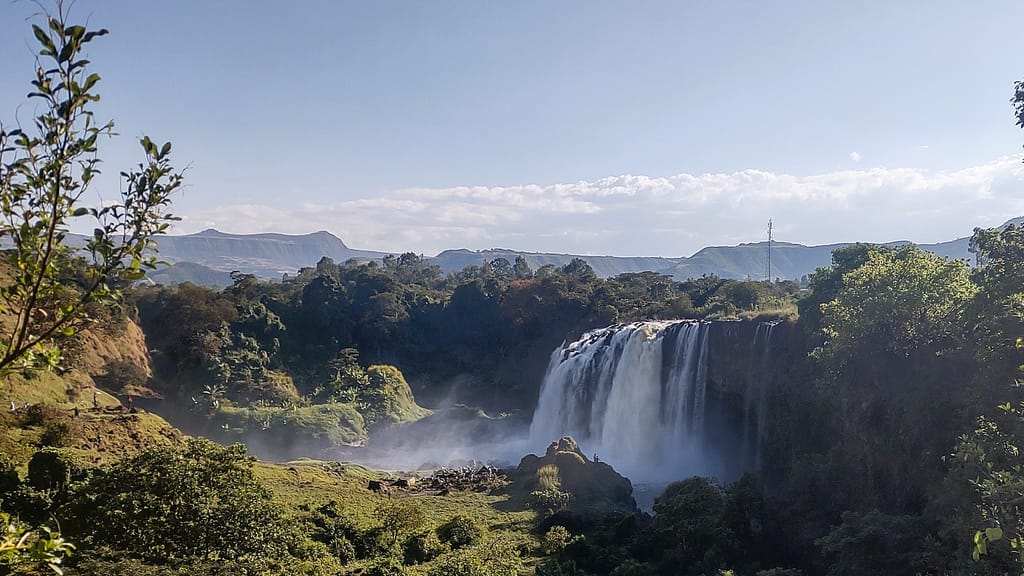
The eastern Nile Basin stands at a crossroads of opportunity and challenge. Its waters nourish farms, generate energy and sustain fragile ecosystems that millions rely on. Yet these same resources are under constant pressure from competing demands. Agriculture requires irrigation, urban areas demand electricity, factories push for growth and ecosystems call for protection. The real challenge lies not only in acknowledging these pressures but also in reconciling them across spatial scales and time horizons.
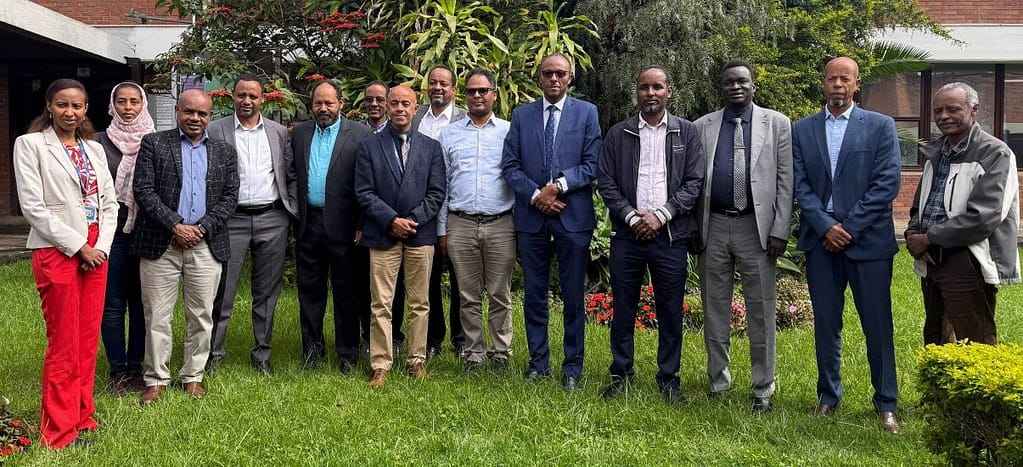
Earlier this month, policymakers, practitioners and researchers came together in Addis Ababa, Ethiopia, for a science-based roundtable dialogue on policy and implementation across Water-Energy-Food-Ecosystem (WEFE) synergies in the eastern Nile Basin.
While the need for coordination among key water-use sectors has been recognized for decades, actual on-the-ground implementation remains limited. During the roundtable, stakeholders discussed practical approaches beyond sectoral boundaries. Envisaging a future where policies and practices are not only well-intentioned but genuinely interconnected.
Call for cooperation
Ethiopia’s Minister of Water and Energy, Habtamu Itefa, opened the dialogue with a call for change. He explained that while the Ministry of Water and Energy (MoWE) has several existing platforms for stakeholder engagement on topics like watershed management, groundwater and water, sanitation and hygiene, this dialogue stood apart. He highlighted its value in the interconnections across sectors to address synergies and trade-offs. Further, he affirmed the government’s support for such dialogue nationally and across borders. He stressed that cooperation is vital for countries in the eastern Nile Basin to maximize benefits from water, agriculture and energy sectors while maintaining environmental well-being.
Experiences shared from other parts of the world provided a sobering reminder of the need for urgent cooperation.
Mohsin Hafeez, the International Water Management Institute’s (IWMI) Strategic Program Director – Water, Food and Ecosystems, shared insights from Asia and highlighted the consequences of uncoordinated resource management. He explained that, during the 1980s ‘Green Revolution’ in India, rapid groundwater extraction fueled agricultural productivity but left behind depleted reserves. The short-term gains in agriculture were undeniable, enabling more reliable harvests and the ability to grow multiple crops a year. However, decades later, the country is still grappling with depleted aquifers and shrinking reserves. Today, India faces high baseline water stress, with per capita water availability ranking among the lowest globally. Hafeez’s message was clear: better sectoral coordination could have prevented this damage. His advice for African basins is to learn from Asia’s experience and adopt coordinated resource management to minimize similar trade-offs.
Other speakers also confronted the challenges head-on. Janez Sunik, Associate Professor of Water Resources Management at IHE Delft Institute for Water Education, underscored that policy coherence across sectors is crucial for effective implementation, as conflicting policies hinder progress. Sunik reminded participants that tradeoffs are inevitable in any system, including WEFE. Therefore, the task is not to erase tradeoffs but to minimize their harm.
Bizuneh Asfaw, the National Integrated Water Resource Management (NIWRM) Coordinator of MoWE reflected on Ethiopia’s NIWRM program, pointing out gaps in coordination between federal, regional and basin-level efforts. He pointed to limited awareness, fragmented policies and inadequate data as key challenges requiring attention. Basin plans, he explained, could serve as key tools to improve sectoral coordination, but not all basins have them.
Shaping a shared path
Despite these hurdles, the roundtable discussions brought out several essential aspects to enhance WEFE synergies. These include the need to establish a common vision and shared goals, consensus on cross-sector indicators of success and the sharing of knowledge, data and tools for joint decision-making purposes. The need to create cross-sector coordination bodies with clear mandates and accountability was stressed. Aligning investment planning while maintaining common social and environmental safeguards were also deemed crucial.
The policy dialogue concluded with a set of key actions, including calls for investment in raising awareness of the basin as the fundamental unit of water management, development of cross-sector performance indicators and shared decision support tools. Stakeholders also prioritized modernized data strategies and decision-support systems that draw on emerging technologies, citizen science and open-source tools and data. Participants further recommended that stronger cross-sectoral collaboration, underpinned by a mutual vision and transparent dialogue, is crucial for managing competing demands and trade-offs effectively.
Equally critical is cross-sectoral policy coherence and the allocation of dedicated budgets to support joint WEFE activities. Building capacity through enhanced training, institutional strengthening and retention of skilled personnel was highlighted as a priority to ensure efficient systems.
What lies ahead
The roundtable participants left with a collective understanding that dialogue must continue. They expressed interest in convening similar regular forums at both the national and transboundary levels, with the next meeting planned during Ethiopia’s MoWE Water and Energy Week at the end of October. What will determine the future of the eastern Nile Basin is not only the scale of its resources but the quality of its cooperation. If the region succeeds in fostering understanding and aligning its policies with science-based knowledge, it will not only minimize trade-offs but also unlock opportunities for shared prosperity across borders


