

Pakistan stands at the frontline of climate change. From devastating floods to recurring droughts and intensifying heatwaves, the country faces growing threats to its environment, food and water security. Agriculture, consuming more than 90% of the country’s freshwater, lies at the center of this challenge, particularly in the irrigated Indus Basin where water demand continues to rise under a changing climate.
Across the agricultural regions of Punjab and Khyber Pakhtunkhwa in Pakistan, the International Water Management Institute (IWMI) and its partners are introducing a new approach to understanding these changes.
Eddy Covariance Flux Towers are slender scientific structures installed within fields that can measure processes invisible to the naked eye. Their sensors track the exchange of water, carbon, methane and energy between the land and the atmosphere.
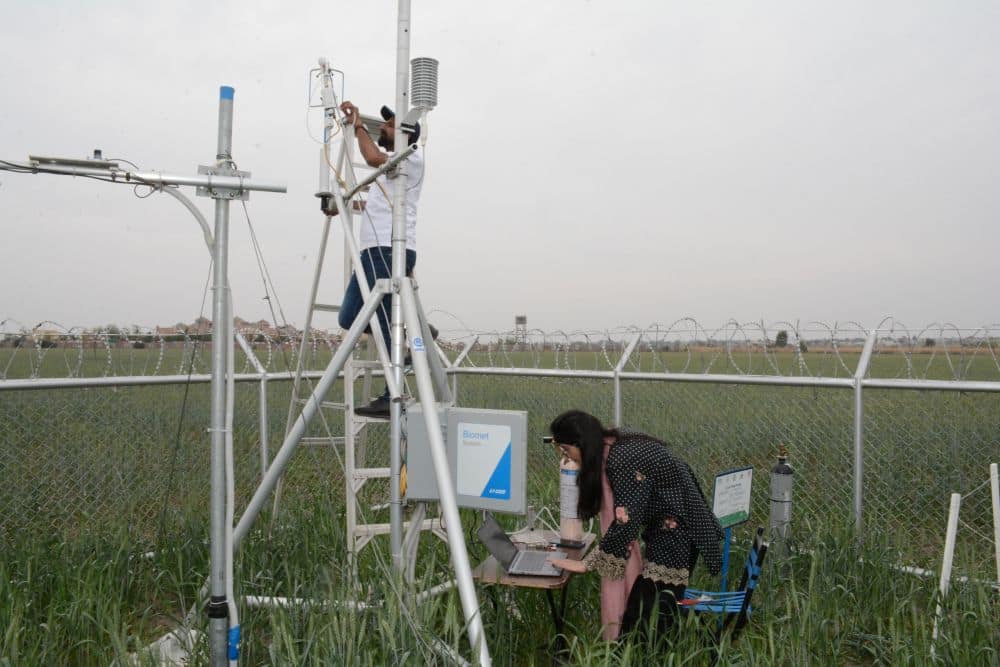
Much like how a doctor uses a stethoscope to listen to a heartbeat, these towers listen to the land. They quantify how much water crops actually use, how much carbon and methane they absorb or release, and how heat and wind influence field-level conditions.
For decades, irrigation planning and climate reporting in Pakistan relied largely on estimates, models or international averages that did not fully reflect local conditions. Flux Towers are changing these with real values. By directly measuring evapotranspiration — the water lost from soil and crops — Flux Towers provide precise, field-level data that supports smarter irrigation planning, better groundwater management and more climate-resilient farming practices.
How Flux Towers work
Flux Towers function as open-air laboratories. Within a footprint of roughly 200m to 500m, each tower provides continuous measurement of the exchange of gases and energy between the land surface and the atmosphere.
An Eddy Covariance Flux Tower is equipped with advanced instruments that work together to capture a complete picture of soil-water-plant relationships.
Gas analyzers measure the movement of carbon dioxide (CO₂) and water vapor, providing real-time insights into crop growth, water use, and greenhouse gas emissions. Sonic anemometers function as three-dimensional wind sensors, tracking air movement above crops and soil to calculate the exchange of heat, moisture and gases between the land surface and the atmosphere. Net radiometers and quantum sensors measure incoming and outgoing solar energy and photosynthetically active radiation, helping explain patterns in crop productivity and photosynthesis. Climatic probes monitor temperature and humidity, identifying periods of heat or water stress that can affect plant performance.
Meanwhile, soil moisture probes and heat flux plates track soil heat exchanges, soil water content and temperature, offering valuable information about irrigation efficiency and overall soil health. Rain gauges measure both the amount and intensity of rainfall, which is essential for understanding field water balance and drought conditions.
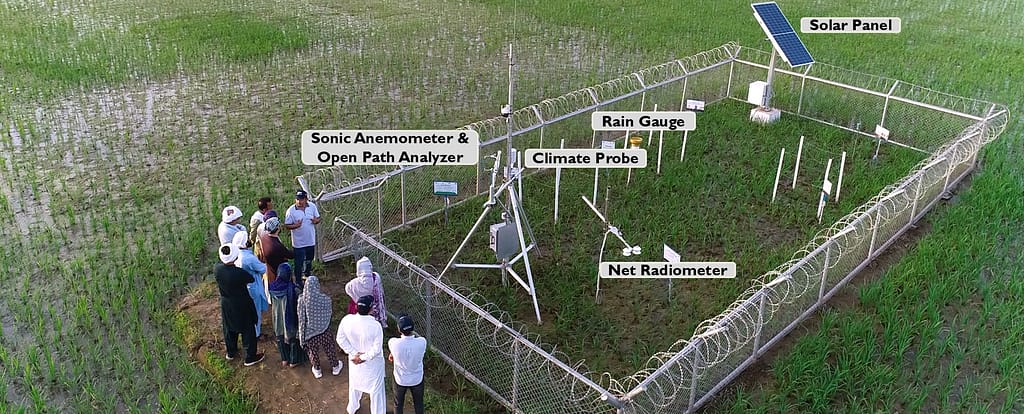
Using these tools, the towers generate high-resolution data every 30 minutes — revealing the soil, water and plant behaviors that were once invisible.
At the same time, the towers measure greenhouse gas exchanges from agricultural fields, including carbon dioxide and methane. This process is especially important for countries like Pakistan, where agriculture accounts for 42% of national greenhouse gas emissions, and crops serve as both a crucial source and a sink of these gases.
At two key sites in the province of Punjab, Okara and Faisalabad, the Flux Towers are equipped with specialized methane analyzers that directly measure methane emissions from rice fields. This capability is particularly significant, as methane is one of the most potent greenhouse gases and a major contributor to climate change from irrigated rice systems.
By capturing real-time methane data at the field level, Pakistan can take an important step toward accurately quantifying and eventually reducing agriculture’s climate footprint. This places the country among a small group globally with the ability to directly monitor methane emissions from crops, strengthening both national climate strategies and international reporting commitments like the Paris Agreement.
From data to decisions
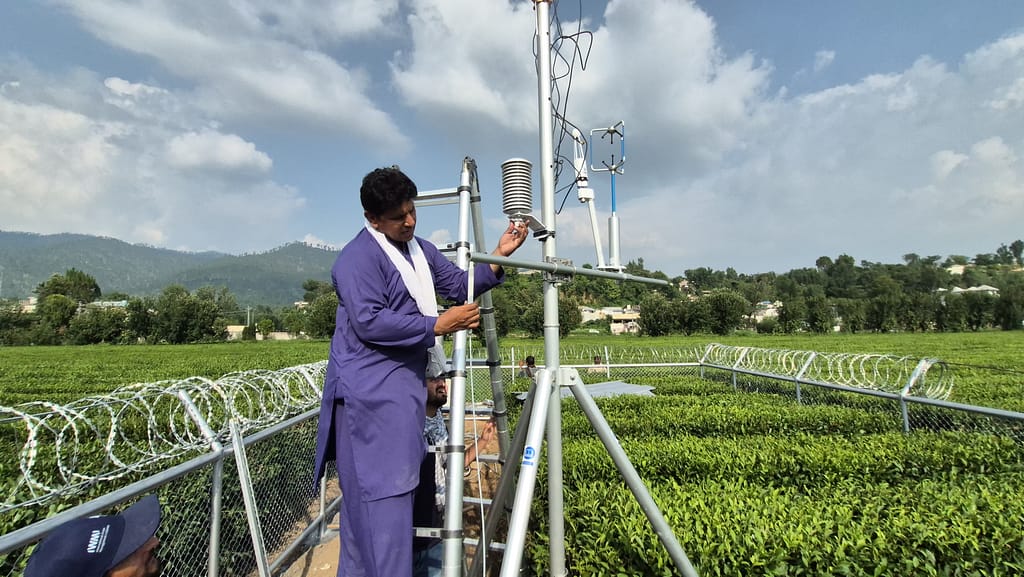
The value of Flux Towers extends well beyond scientific research. The data they generate are already being integrated into water accounting systems that support provincial governments in Punjab and Khyber Pakhtunkhwa in implementing better water governance and managing scarce groundwater resources more effectively.
Flux Tower measurements also help validate satellite-based remote sensing models, improving large-scale estimates of evapotranspiration across regions and river basins. At the national level, this evidence supports climate adaptation planning, aligns with Pakistan’s Nationally Determined Contributions (NDCs), and enhances the country’s ability to access international climate finance with confidence and credibility.
The introduction of Flux Towers signals a shift in how countries like Pakistan approach water and climate challenges, providing the evidence needed to move from reactive responses to proactive climate-resilient planning.
As this system expands, the vision is clear: to make every drop of water count, to safeguard food security and to protect communities from the growing risks of climate change. With support from the UK’s Foreign, Commonwealth & Development Office (FCDO) and CGIAR’s Policy Innovations Science Program, and in close partnership with government institutions, IWMI is ensuring that these invisible measurements lead to visible change, supporting policy makers, planners and implementers for sustainable water resources management.


