
Water is not merely a resource; it is the bloodstream of life on earth. It binds food to energy, health to education, and economies to ecosystems. Yet it remains chronically undervalued, politically fragmented and financially neglected. If the 21st century is to be defined by one failure, it may be this: the persistent inability of governments, markets and institutions to invest in water as the foundation for life, livelihoods and lasting peace.
The drive behind creating principles for “Just Water Partnerships” — national-level platforms proposed by the Global Commission on the Economics of Water to put social equity at the center of water investment decisions — was the need to tie water supply and sanitation with water resources management and finance. This would help plug the enormous gap in investment required to meet global SDG 6.0 targets and designing a set of principles was regarded as the essential foundational step on this journey.
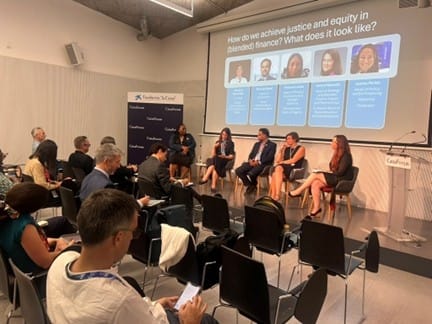
The development process of the “Just Water Partnerships” principles kicked off with a session at the Financing for Development 4 (FFD4) conference in Seville, Spain in June, when the International Water Management Institute (IWMI) and WaterAid came together to elaborate on the financing challenge for water security — a core focus of the Just Water Partnerships concept.
A journey from crisis to mission
“We must stop treating water as a sector,” said Mariana Mazzucato, co-chair of the Global Commission of the Economic of Water (GCEW). “It is a transversal crisis that cuts across every sector — from gender to food, from climate to geopolitics. We cannot fix it (water scarcity) with siloed thinking or short-term finance.”
This emphasis on re-evaluating water as part of wider systems helped underscore the need for a radical rethink on investing in water.
Mazzucato spoke of an economic system that values the private return on water but not its public purpose, warning that the world is “not short of money — only of mission.”
The GCEW called for mission-oriented partnerships in which the public and private sectors share both risk and reward. “No rents without responsibilities,” she stated. “If corporations receive subsidies or water rights, they must reinvest profits into innovation, conservation and community benefit.”
Mazzucato’s provocation struck a chord in the meeting. And this need to think afresh about how to finance water investments helped shape the wider collaborative process bringing together governments, civil society, researchers and the private sector to develop the Principles for Just Water Partnerships. Water systems must be governed as common goods, not commodities. Deforestation in the Amazon, for instance, can trigger droughts in Africa; yet governance remains bounded by national silos and outdated contracts. “We have ministries for finance, for energy, for agriculture,” Mazzucato observed. “But the water crisis doesn’t fit neatly into any of them.”
A just approach to finance
Not only is investment required, but investment that places justice and equity at the fore — as central to achieving sustainable outcomes. Money is not the solution if investments go to the wrong places and people.
WaterAid frames the debate in human terms: who decides how water is valued, who benefits and who bears the risk? Without putting justice at the heart of finance, we risk repeating the same inequalities that created today’s challenges. The Seville gathering was as much about coalition-building as concept design. It was to build a movement — one that listens, learns and adapts as countries begin to shape their own Just Water Partnerships.
Inclusive finance is not a trade-off but good business
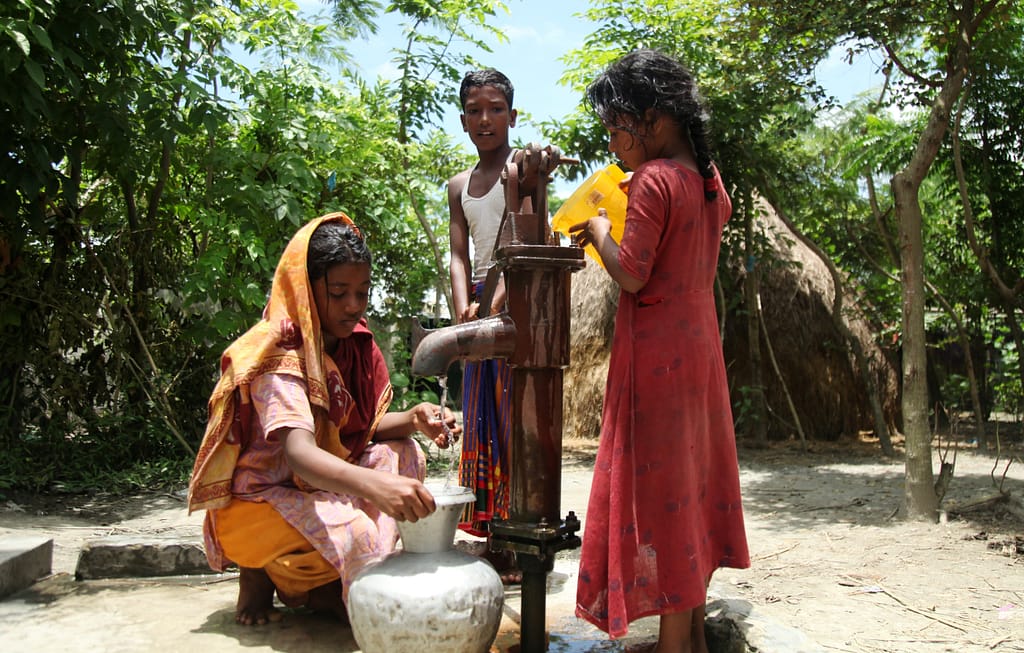
From multilateral development banks to national financiers, the Just Water Partnerships panel members agreed that systemic reform must underpin water’s “just transition.”
“When women farmers in Morocco gain access to training and water infrastructure, productivity rises and communities thrive,” said Astrid Manroth of the European Bank for Reconstruction and Development (EBRD), describing how EBRD’s new strategy embeds human capital and equal opportunity within its investment portfolio. Investments in water, if done correctly, have multiple socio-economic benefits — a point raised by Theresa Laval from Nigeria’s Development Bank, which prefers a thousand small projects to one large, centralized scheme. “Our partnerships must prioritize the last mile. We blend finance to make it profitable for banks to lend where it matters most — to women, to youth, to communities without water,” said Laval.
Such voices underscored a larger point: national development banks are indispensable in resolving the financing challenges for Just Water Partnerships. National development banks are often the closest to the ground; they are agile actors in local contexts but remain peripheral in global finance. Bringing them into the center of blended-finance strategies could help shift “from billions to trillions” without deepening debt.
Rethinking the global architecture of finance
There is a new generation of development banks emerging that seek to integrate nature, climate and equity into their investment logic.
“We are trying to redefine infrastructure,” said Mortaza Syed of the Asian Infrastructure Investment Bank (AIIB). “At AIIB, we count success not only in returns, but in resilience — in greenhouse gas reductions, in jobs for women, in restored ecosystems.”
Syed also drew a contrast with his former position as Deputy Governor of Pakistan’s Central Bank. “Too often, poor countries are told to focus on growth first and equity later,” he reflected. “But climate and inequality are not afterthoughts. They are the growth model.” When re-imagining a financial sector that serves development, Central Banks play a crucial role and must use prudential regulation to direct capital toward just and sustainable investments.
The policy bridge
We are facing an amplification of risk. Climate shocks are intensifying, insurance markets are retreating and public budgets are under siege. Yet water remains the weakest link in our resilience. Recent floods around the world, including the €18 billion-worth ($21 billion) of damage in Valencia, Spain in 2024 are evidence that through water systems, climate change hits first and hardest. Just Water Partnerships are therefore a key feature in reducing future risk and building resilience, not least through concretely representing collective action in practice.
The Just Water Partnerships model is also designed to bridge long-standing divides — between water, sanitation and hygiene (WASH) and water resources management, between finance and policy, and between national priorities and community realities. If we can align policies across these boundaries, we can move from fragmented projects to coherent, country-owned programs that deliver water justice.
A newly centralized notion of justice
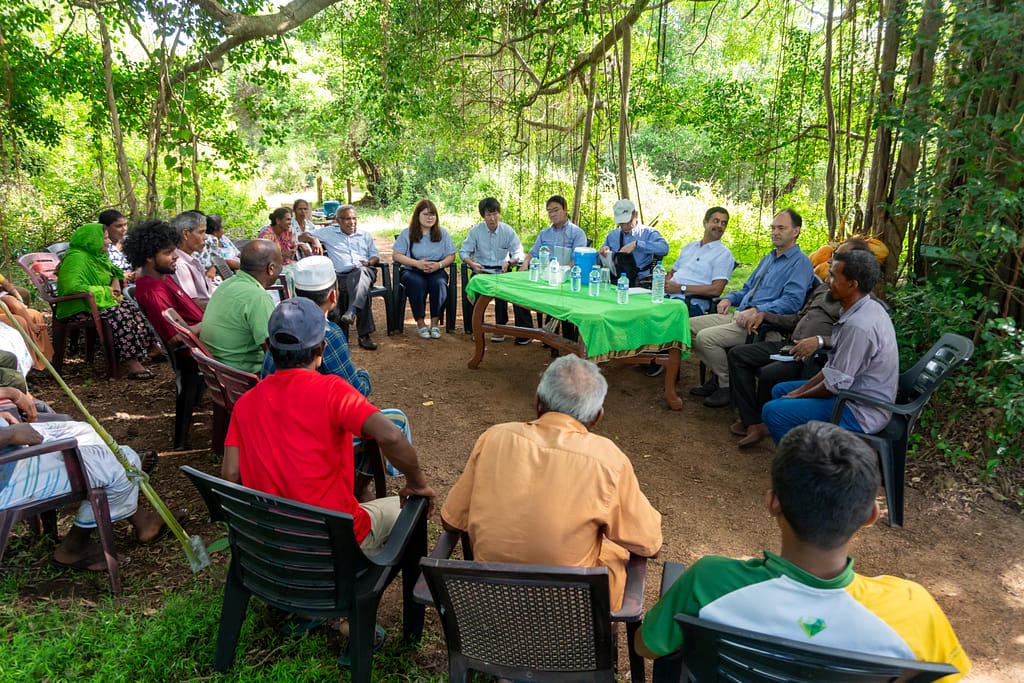
Throughout the Seville dialogue, a recurrent theme emerged: justice must be embedded not only in principles but in practice. We cannot have a partnership without participation. Each country that adopts a Just Water Partnerships will need to define what justice looks like in its own context. That means national dialogues, citizen oversight and locally grounded institutions able to hold both governments and investors accountable.
Developing the Principles for Just Water Partnerships is as much political as it is technical – i.e. as much about who holds power as it is about where pipelines go. This is why it is essential that building and sustaining JWPs is inclusive and representative, where decision makers listen to utilities in Lusaka, Zambia, basin authorities in the Andes and community organizers in Dhaka, Bangladesh. Justice must be lived, not just legislated.
If Seville offered one lesson, it was that we must be mission-driven, mutually accountable and build on foundations of trust. As Mazzucato framed it, “Good partnerships are about design — and the courage to say no to bad deals.”
This November at COP30, IWMI and WaterAid launched the “Principles for Just Water Partnerships,” following extensive consultations across Africa, Asia and Latin America.
The room in Seville hosted bankers and activists, scientists and policymakers, but a rare consensus formed: water can no longer be treated as an afterthought of development. It is the bloodstream of civilization — and its health will determine humanity’s own. This is not a time for timidity. The alternative is not just unjust—it is unthinkable.
Alan Nicol is the principal researcher on policy and governance at the IWMI, Lesley Pories is head of policy of WASH financing and Mariana Dias-Simpson is a consultant project manager at WaterAid.