

Every year in Lao PDR, the farming season is at risk of disruption by extreme weather patterns — which are increasingly unpredictable due to climate change. When heavy rains arrive in June, fields that were dry and workable quickly turn into waterlogged plots. Floodwater settles in lowland areas, vegetables rot before they mature and pests thrive in the humid environment. Then, after monsoon season recedes, extreme heat from March to May dries the soil, stresses crops and prevents farmers from growing their vegetables.
For the 633 families in Attapeu Province, these weather extremes mean long periods with limited vegetable supply, high market prices and reduced income. Despite farmers’ best efforts to grow more, the climate gives them a narrow window for production each year.
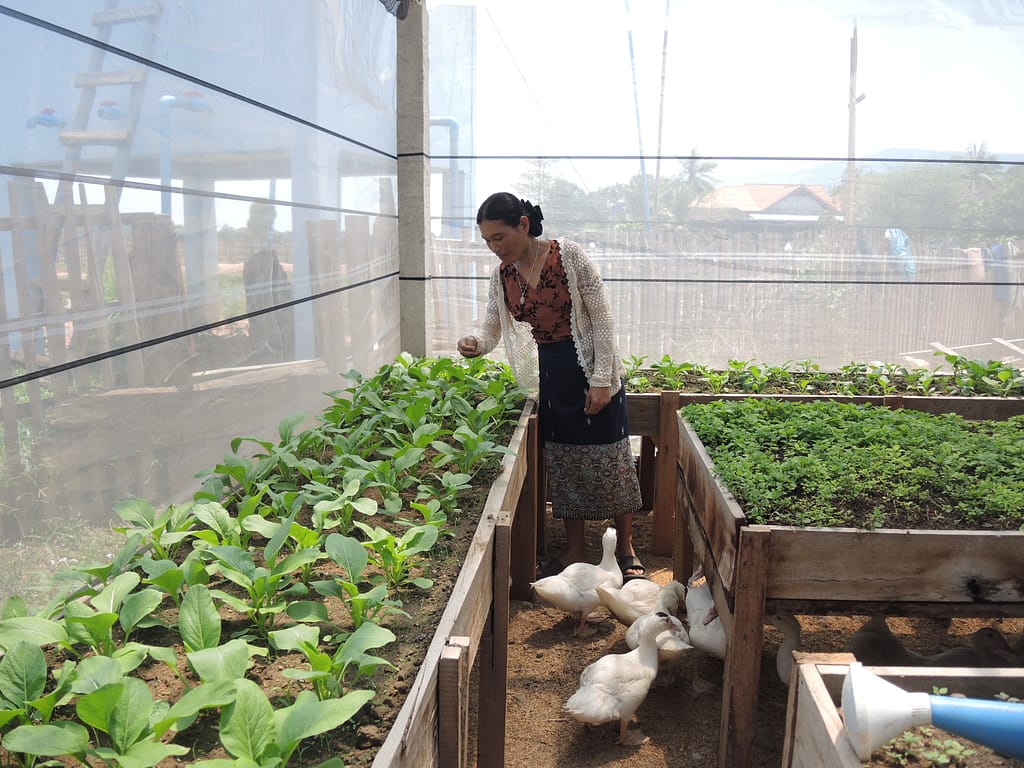
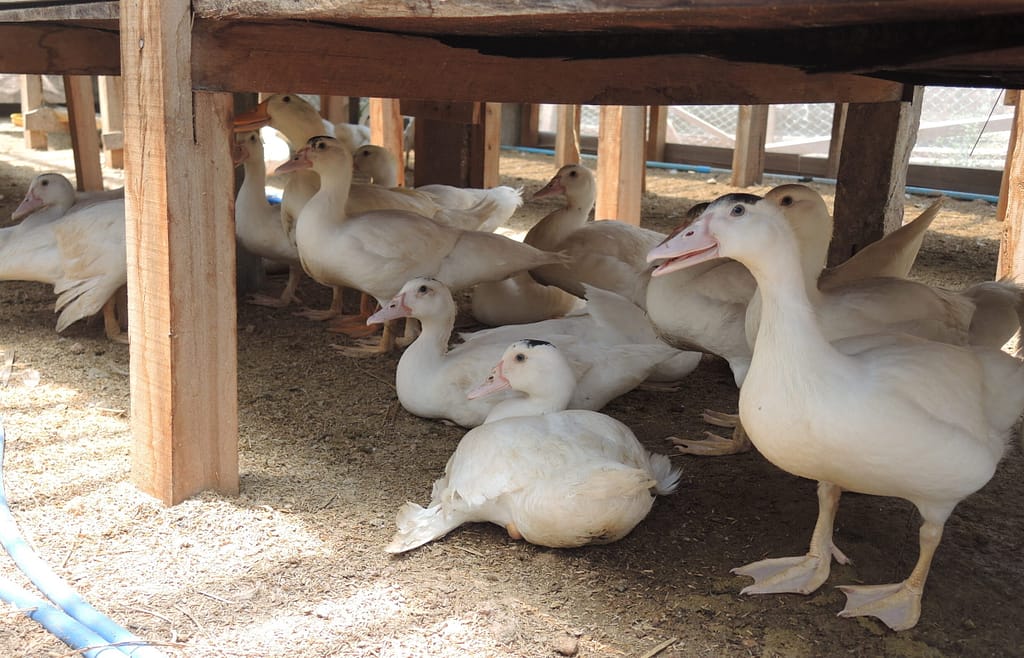
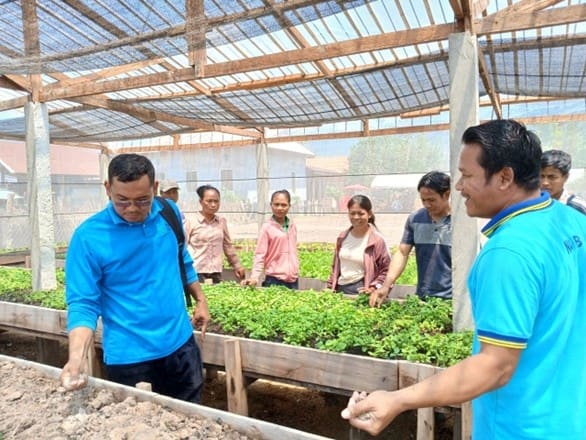
In response to these challenges, the International Water Management Institute (IWMI) introduced small greenhouses designed to protect vegetables from both heavy rain and harsh sunlight. Under the vegetable shelves, ducks roam — helping to naturally recycle waste, reduce pests and eventually provide an additional source of income when sold as poultry.
In Attapeu, across the five villages of Done Muang, Done Phay, Done Soung, Dongbarkmai and Inthi, 12 families started using this integrated crop and livestock system for the first time in November of 2024.
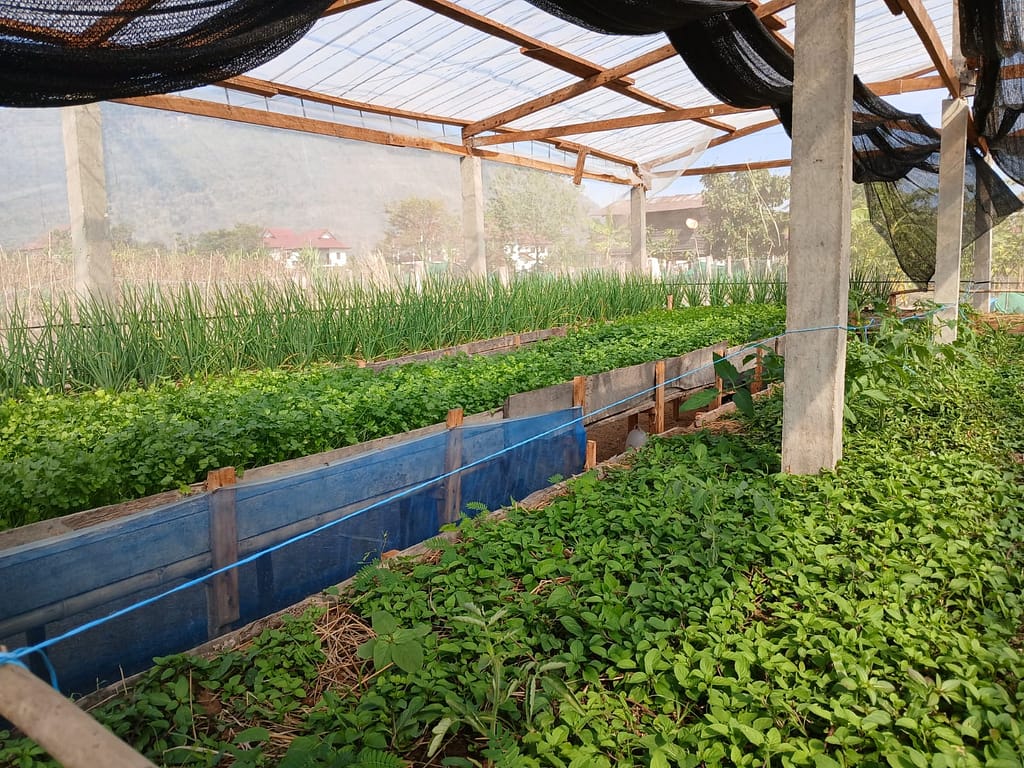
Greenhouses expand the growing season and increase productivity
Of these farmers, most had never used greenhouses before, but with support and funding from IWMI and local agriculture offices, they learned how to build the structures, care for seedlings, use shade to manage heat and maintain a hygienic space for the ducks.
Previously, these farmers often gave up vegetable planting during the monsoon months between June and October. However, with the new greenhouses, they were able to grow four to 10 types of vegetables year-round, including choy sum, mustard greens, peppermint, coriander, green onion and morning glory. Harvests increased from only one to three cycles per year, to three to 12 cycles per year.
Ducks are an important part of the system, simultaneously nourishing crops and opening another avenue for profit. Duck manure fertilizes the greenhouse soil, the vegetable waste becomes duck feed and the ducks help reduce pests. Lao farmers can harness this symbiotic relationship to boost their incomes.
In 2025, the farmers earned $1.20–$1.40 for every $1 they made before using greenhouses and integrated system, even accounting for the costs of seeds, duck feed and other greenhouse components — an average income increase of about 20–40%.
Families also consumed more home-grown vegetables, improving their food security and diversifying their diets. Based on project data collected by IWMI, the 12 households, with approximately 20–30 children, gained regular access to a variety of vegetables and protein from ducks. In comparison, the 2023 Laos Diet Quality Profile shows that 91% of Lao people eat at least one vegetable daily, but overall dietary diversity remains limited, with only 73% of women achieving minimum dietary diversity.
Adjusting to a new farming system
However, the farmers encountered some hurdles while using the vegetable and duck system. Many ducks got sick from poultry diseases in the early stages, and high heat inside the greenhouses stressed both the ducks and the vegetables during the dry season. To address such challenges, IWMI collaborated with district agricultural groups to organize trainings on preventing duck disease, record keeping and improving ventilation during the hot season — using a sample greenhouse for demonstrations.
The individual impact of the greenhouses is substantial.
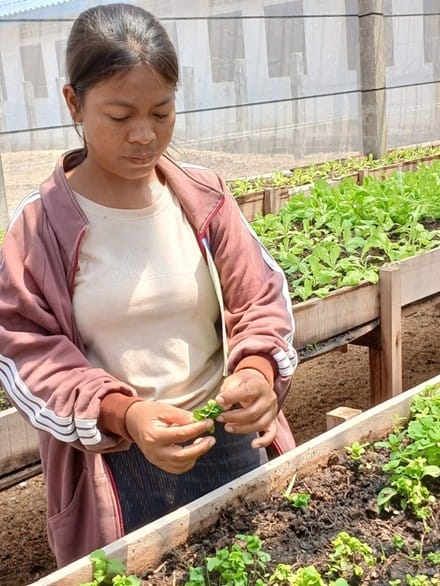
Chansone Daninthy a 33-year-old greenhouse farmer from the village of Inthi and mother of three, received support from IWMI to establish a greenhouse. She worked as a daily laborer during the rice harvest and planting seasons, in addition to working on sugarcane and banana farms. The work was physically demanding and often required her to travel far from home to earn an income. Since starting greenhouse vegetable production and raising ducks at home, Chansone no longer needs to travel for daily labor. She now earns income from both the vegetables and ducks, while also having a steady supply of fresh food for her family.
What is most special for her is the time she has gained — she can care for her children, prepare meals for them before and after school and stay close to her family every day. “I don’t have to go far from my children anymore,” Chansone said. “This makes me feel comfortable and secure.”
After one year of using the new integrated system, farmers expressed satisfaction with the results and a desire to continue forward with it. With some improvements such as better duck health management and heat control, farmers believe the system can grow and reach more households across Lao PDR.


