

More than half of the world’s population relies on rice as a primary staple food, particularly in Asia, where rice has been domesticated for thousands of years. In Lao People Democratic Republic (Lao PDR), rice is much more than just a basic food item: rice consumption is at the heart of daily life. Rice — sticky rice especially — is enjoyed at every meal and is deeply woven into Lao culture.
Rice remains the primary crop grown in Lao PDR, and accounts for 50% of the country’s agricultural output. In 2024, farmers cultivated 3,750,740 tons of rice over 916,616 hectares. For a small country dominated by agriculture, this makes rice essential not only as a food source but also as a livelihood.
However, traditional rice varieties are incredibly water- and labor-intensive. As climate change impacts deepen in countries like Lao PDR, farmers are searching for ways to ensure high crop yield and sustainability.
Red rice gives new hope as a potential solution
In smaller rural communities like those in Attapeu, a southern province of Lao PDR, the annual rice crop must meet the food needs of over 168,000 people. The Lao Provincial Agriculture and Forestry Office estimates the rice requirement for the area to be about 25,000 tons per year, which includes demand from migrant labor and tourists.
Farmers in Attapeu primarily cultivate traditional rice varieties, such as Kao Ma Li, Thasano, Thadokkham and Kao Kang, which are also used for beer and noodle production. These varieties typically yield between two and 3.2 tons per hectare, with market prices ranging from 5,000 to 7,000 Lao kip ($0.22 to $0.32) per kilogram. However, these traditional varieties provide limited income and low yields, making it difficult for farmers to improve their economic situations. In the face of these challenges, farmers and agricultural specialists have been searching for ways to boost agricultural productivity, promote sustainable food systems and increase the commercial value of rice.
In 2023, the International Water Management Institute (IWMI), in collaboration with the Lao Farmer Network (LFN), introduced a new high-value red rice variety to Lao PDR. Derived from varieties originally from the Philippines, this red rice is a high-quality, naturally low-sugar grain that supports a healthier lifestyle. This initiative represents a significant step towards diversifying rice systems and increasing overall rice production. This variety of red rice has a higher yield and market value and can be sold at prices between 8,000 to 10,000 Lao kip ($0.37 to $0.46) per kilogram from Attapeu, making it an attractive choice for farmers.
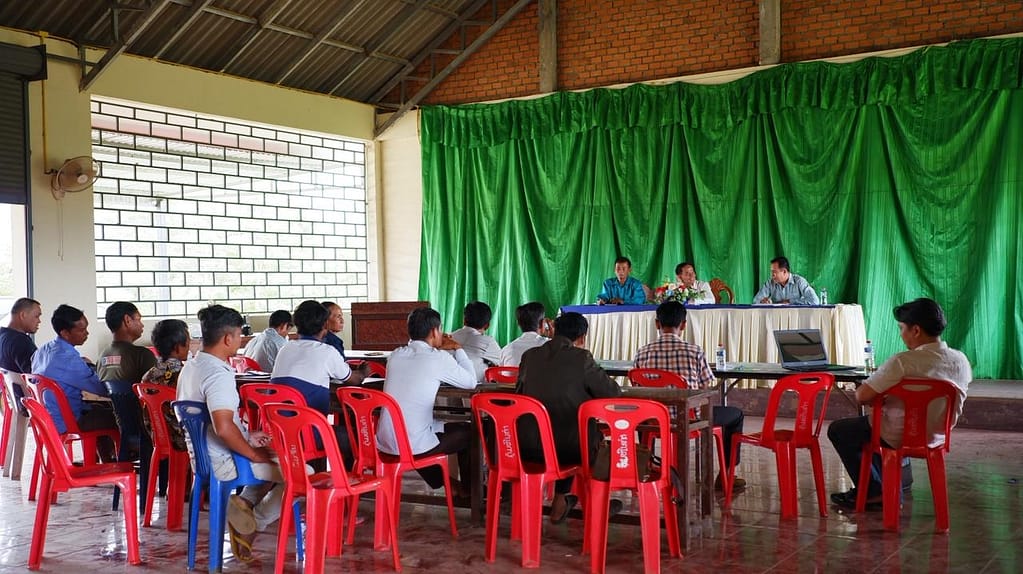
During the trial phase from 2023 to 2024, IWMI and LFN established “Red Rice Groups,” which connected 57 farmers across five villages, together cultivating an initial area of 5.2 hectares of red rice.
IWMI distributed 600 kilograms of red rice seeds, provided bio-fertilizers and trained farmers on rice planting techniques, maintenance, record-keeping and cost management. One hundred and fifteen farmers learned how to enhance economic outcomes in rice cultivation. IWMI is also supporting the construction two red rice storage units. These Red Rice Groups have become vital hubs for sharing technical knowledge and supporting farmers in shifting towards the commercial production of red rice. These seeds of red rice are expected to yield up to five tons per hectare, nearly double that of traditional rice varieties, depending on the farming techniques used and favorable climatic conditions.
Growing interest and future prospects
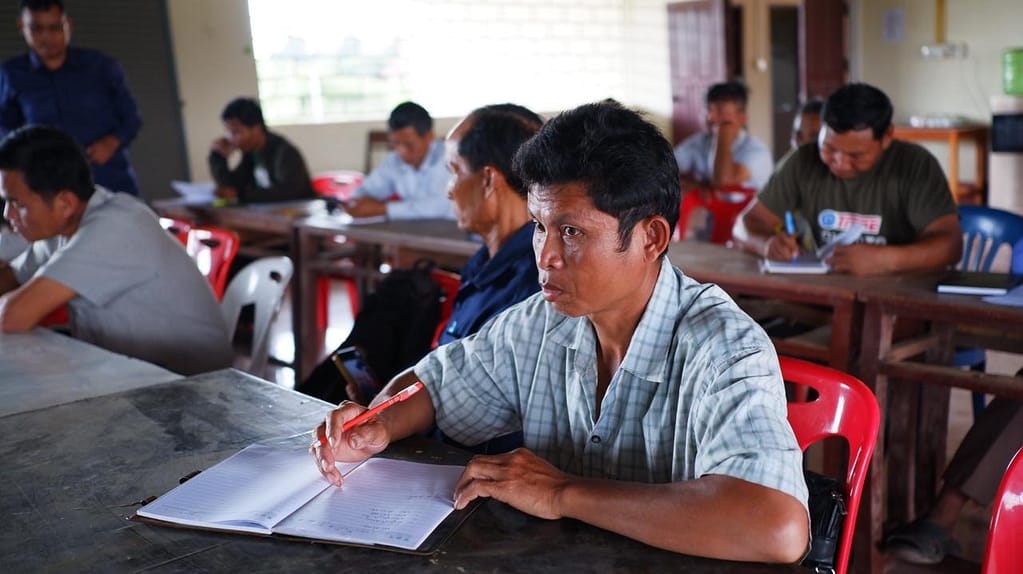
After two years of trials, interest among farmers in red rice has grown significantly. This year, the Red Rice Groups included 63 farmers who are expected to cultivate nearly 25 hectares, with the target of producing up to 120 tons of red rice.
More farmers have been eager to join because of the crop’s potential to grow their incomes and the opportunity to engage in sustainable farming practices.
The progress of the red rice trials has created a strong foundation for wider adoption across Attapeu Province in 2025. With more members joining and increased planting areas, red rice is emerging as a promising option for sustainable farming and improved livelihoods, and could soon become an important part of the region’s agricultural landscape.
A business opportunity on the horizon
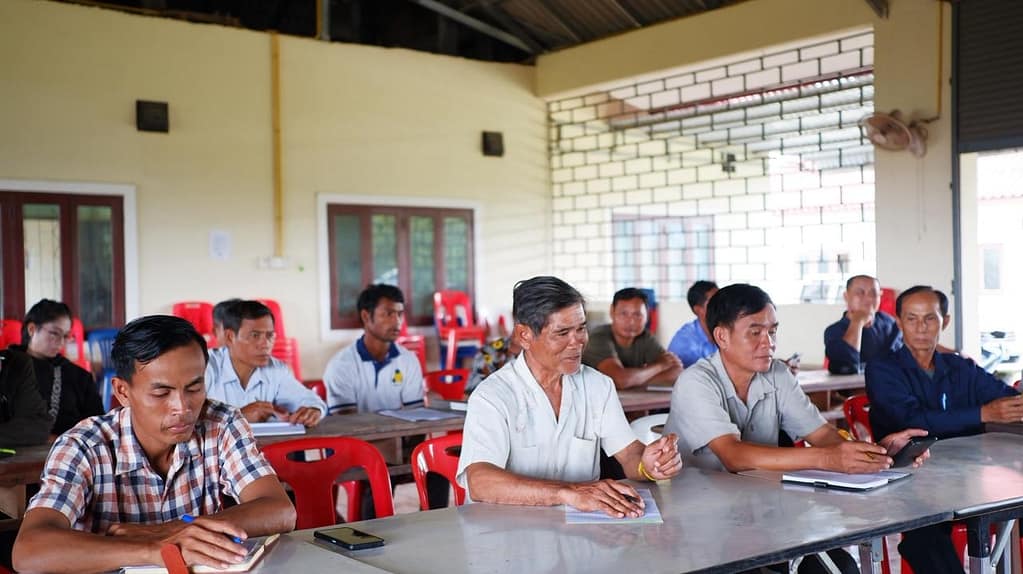
Currently, the Lao PDR Farmer Network is planning to export 30–40 tons of red rice to France. With growing interest from both producers and buyers, red rice could be further bolstered by strong international demand. However, the market potential for red rice within the Attapeu province itself remains largely unexplored.
This uncertainty creates a crucial research and policy gap, as it is essential to understand whether the local market will absorb some of the increased supply or if traditional varieties will continue to dominate the plates of Laotian families. Gaining insight into these market dynamics is key to unlocking the full potential of red rice to transform livelihoods and uplift the nutrition of local communities.
While red rice shows potential for increasing incomes, farmers in Attapeu still face several challenges. Attapeu comprises mostly sandy soils with low organic carbon, which makes it difficult for the crop to achieve the standard quality and high yields required by buyers. Farmers need to improve soil health and field management to meet these expectations. If yields are low or grain quality does not meet the standards of buyers, who are mostly based in Vientiane, they may not travel to remote areas, leaving farmers with limited market options. These issues highlight the need for sustainable soil improvement, technical support and stronger linkages between farmers and buyers. Promoting red rice production in Attapeu Province is not just about enhancing agricultural yields; it is also about preserving the cultural heritage of Lao PDR as a rice-producing hub and ensuring the food security of its people.