

Irrigation
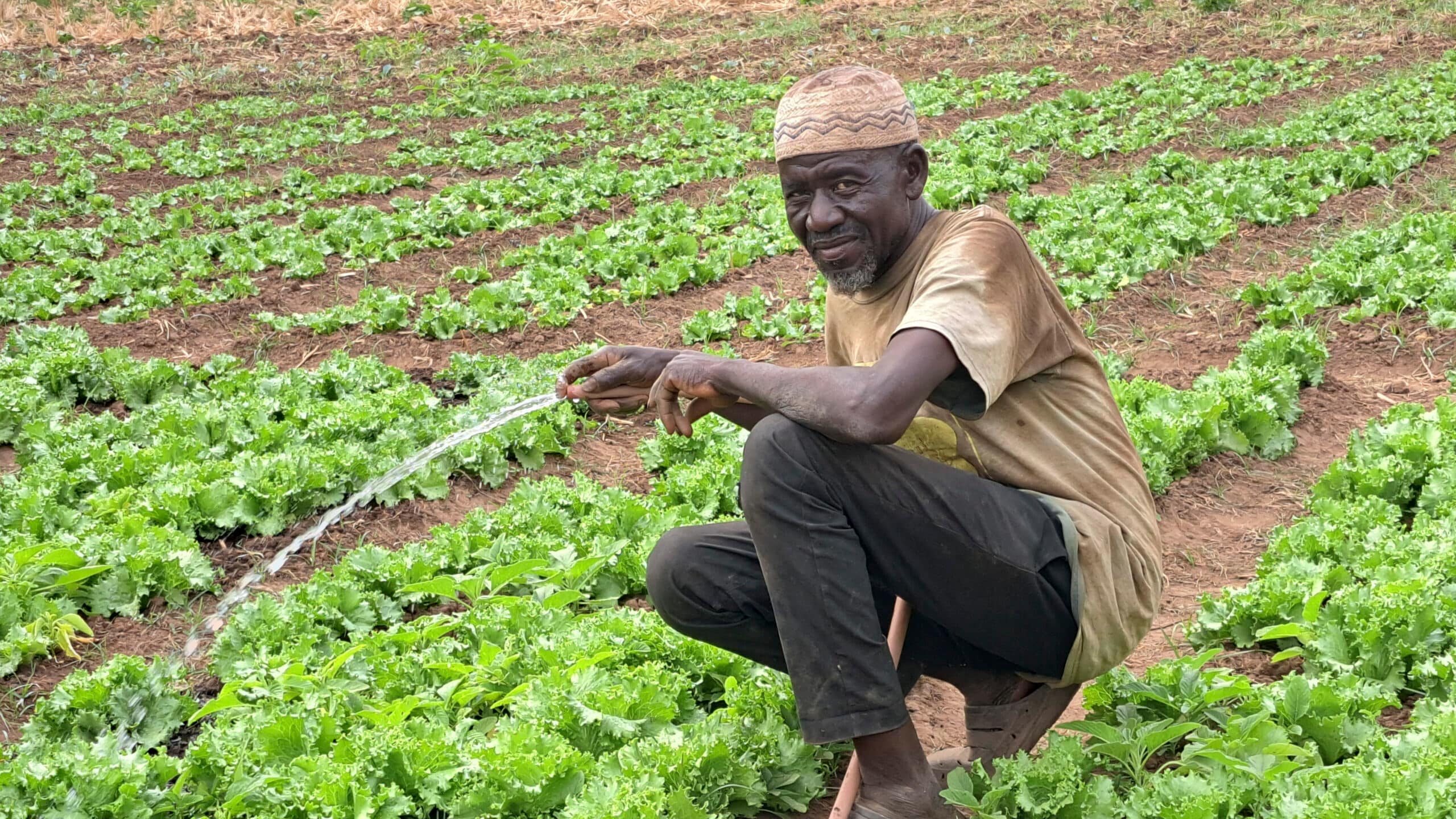
Smallholder farmers produce more than a third of the global food supply but face challenges such as increasing competition for water, unpredictable rainfall, limited financial capacity and restrictive gender norms. Farmer-led irrigation has significant potential to support agricultural transformation and adaptation to climate change by enabling farmers to produce greater quantities of high-value crops in areas with rainfall variability. Built on the belief that farmers should have agency and autonomy over decision-making related to irrigation, farmer-led irrigation is a process where farmers invest in, expand or improve their agricultural water use by adopting or developing small-scale, locally relevant and market-oriented solutions.
IWMI’s research on farmer-led irrigation focuses on six areas:
 Innovation bundles |  Gender and social inclusion |  Environmental sustainability |
 Adaptive scaling and partnerships |  Financing ecosystems |  Human capacity development and knowledge exchange |
These aim to influence policy, strengthen irrigation markets, services and value chains, test innovation bundles using renewable energy such as solar and accelerate farmer-led irrigation development in an inclusive and sustainable way. These are defined by ways to grow, catch, trade and consume healthy and nutritious food while helping the world to live within planetary boundaries, stop the loss of biodiversity and maintain a safe climate.
Resources
Analyzing the Enabling Environment to Enhance the Scaling of Irrigation and Water Management Technologies: A Tool for Implementers
Designing scaling strategies that are adaptive to context and available resources requires an understanding of the enabling environment in which the scaling processes are embedded. This can be achieved by conducting an analysis to identify enablers and hinderers influencing farmers’ adoption of irrigation and water management technologies and introducing measures to ensure success. This tool provides implementers with a structured guide to carrying out this analysis.
Considering Gender When Promoting Small-scale Irrigation Technologies
Many actors promoting irrigation technologies in low- and middle-income countries want to ensure that men, women and different social groups have equal opportunity to participate in and benefit from irrigation but are uncertain how to do so. This tool provides a set of questions to assess gender dynamics in irrigation in a specific context.
The Farmer-led Irrigation Development Guide: A What, Why and How-to for Intervention Design
Farmer-led irrigation development holds significant potential to safeguard domestic food security and strengthen farmers’ ability to recover from shocks and adapt to a changing environment. The guide aims to provide governments with the practical strategies to catalyze farmer-led irrigation and scale it up, making it a faster, more sustainable and inclusive process.
Contacts


Projects

Latest news



Publications
Deploying solar pumps at scale in South Asia: opportunities for solarizing agriculture in South Asia

Adaptive scaling ecosystem for system transformation: operationalizing solar-based farmer-led irrigation in Sub-Saharan Africa
Exploring the smallholder irrigation equipment supply landscape in Zambia: a scoping review
Insight for sustainable supplemental irrigation development for cocoa in changing Ghana’s agroforestry landscapes
Co-identifying collective investment models for solar-based irrigation bundles in Northern Ghana
Pathways for scaling solar-based irrigation technology ownership in Nigeria: suitability and key stakeholder mapping in Kebbi, Kano, and Kaduna states