


January-February 2025 Research Journal Roundup
Roundup of research, journal and other academic articles from January and February 2025.

IWMI appoints Ian Overton as Country Manager for Sri Lanka
The IWMI Country Manager in Sri Lanka is leading research for development towards a more water secure future

Reflections on CGIAR’s week-long discussions on food system science
IWMI is among global participants of the inaugural CGIAR Science Week.

Climate finance can unlock the full potential of circular bioeconomy
An IWMI report explores how climate finance mechanisms can be leveraged to promote circular economy and sustainability.

The challenges and pathways to mainstreaming gender in Nigerian’s water sector governance
In Nigeria, IWMI works to address gender inequalities through water sector policies to ensure inclusive development and support sustainable water
Science-backed solutions buoying water security in East Africa
IWMI and global partners commune during CGIAR Science Week to improve water security.

CGIAR Science Week 2025 begins in Kenya
The event brings together leading voices in food, land and water systems research.

IWMI signs MoU with Department of Water Resources of Lao PDR to enhance water resource management
The agreement will enhance research cooperation, water security and sustainable water resources management in the country and the region.

IWMI’s Al Murunah project scales nature-based solutions to achieve water-security in the MENA region
IWMI and partners are documenting the economic, social, and environmental impacts of nature-based-solutions across its four pilots in Egypt, Jordan,

Brazil pioneers AI-powered Water Resilience Tracker
The groundbreaking use of artificial intelligence in the Water Resilience Tracker is strengthening water and climate governance.
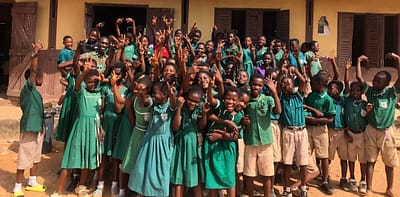
Students in Ghana champion sustainable waste management
A program for schools and youth empowers the next generation to be waste segregation champions and participate in innovative waste

Explainer: Microplastics
Microplastics have infiltrated what people breathe, eat and drink. What does this mean for water?
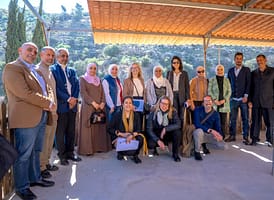
Pilot site in Jordan demonstrates nature-based solutions for UK delegation
The community of Wadi Al-Seer showcased resilient water solutions including canal restoration, spring rehabilitation, agroecology and climate-smart agriculture.

Protecting glaciers for water resilience
The Himalayan glaciers are melting and we need to slow this crisis to protect future generations.

The Legend of the River God
On World Water Day 2025, IWMI presents The Legend of the River God of Mankran, a powerful tale from Ghana

Africa’s leaders must protect water towers
As water degrade, the ripple effects are felt across borders, exacerbating droughts, water scarcity and food insecurity. What can we

On the edge: Africa’s water towers at risk—A call for collective action
Africa's high-altitude ecosystems that provide essential water resources for millions are at risk and we need collective action.

Lawmakers and experts unite to advance water governance reforms in Punjab and Khyber Pakhtunkhwa
IWMI convened a high-level session with lawmakers and experts in Punjab and Khyber Pakhtunkhwa to advance water governance reforms under
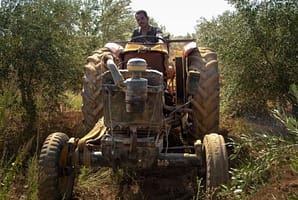
Does saving water really save water? We rethink water conservation in Jordan
Jordan looks at systems thinking for water conservation and the irrigation paradox.

Preserving Africa’s glaciers is protecting our future
Africa’s glaciers hold the future of water for millions and we must act this World Water Day before they vanish.

MENA’s Food Future Depends on Understanding Water, Land, and Climate as One
World Water Day emphasizes the need for an integrated approach in MENA to address the region’s worsening water crisis
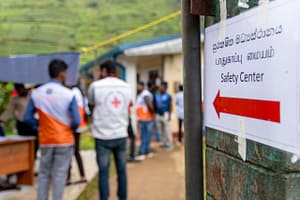
IWMI launches Eyes On The Storm – a global webinar series on advancing early warning for all
Join the world's top experts for 19 webinars throughout 2025 to gain insights and navigate the evolving landscape of disaster

Women leaders tackle South Africa’s growing water crisis
As South Africa's water crisis deepens, women are driving research, policy and community-based solutions for water resilience.
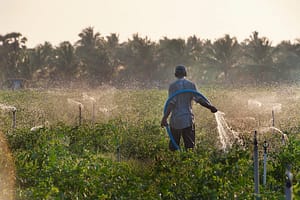
A BRIGHT future for food, water and energy security research in Sri Lanka
A new CGIAR-led national survey of Sri Lankan households links water to their well-being.

Partner collaboration on water resilience tool set to bridge science-to-policy interface
The Water Resilience Tracker will assist governments in Brazil, Egypt, Malawi and Nepal to strengthen national water governance and build

IWMI to host Secretariat of the Global Commission on the Economics of Water
International research and innovation institute will facilitate next stage of the Global Commission, as it shares its recommendations for action.
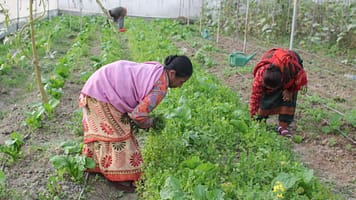
Women in Nepalese farming community take lead to tackle disaster-induced challenges
A women-led agricultural initiative in Lalitpur, Nepal uses solar irrigation technology to boost the resiliency of their community.

Challenges to and opportunities for women’s empowerment in building climate resilient communities in rural Ghana
Supporting women farmers and micro-entrepreneurs in Northwestern Ghana diversifies income sources and enhances their economic resilience.

Pakistan launches drought monitoring system to combat climate risks
IWMI and the Pakistan Meteorological Department have launched PakDMS, a real-time drought monitoring and early warning system designed to strengthen
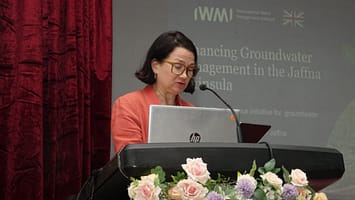
A collaborative approach strengthens Sri Lanka’s groundwater conservation
UK's Minister for Indo-Pacific launches citizen science element of Jaffna groundwater project.

Smart farming transforms agriculture in Sri Lanka
How the GeoGoviya platform is revolutionizing climate-smart agriculture.

IWMI installs flux tower in Chakwal to enhance agricultural data and climate resilience
IWMI has launched a cutting-edge Eddy Covariance Flux Tower at the Barani Agricultural Research Institute in Chakwal to generate real-time,
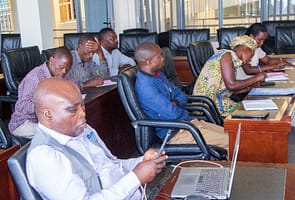
Rwandan communities embrace powerful vision to restore critical ecosystems
Community engagement and education drives meaningful change in environmental stewardship for healthier ecosystems and more resilient communities in Rwanda.

New Scaling Hub to drive agricultural solutions for Africa
IWMI’s Inga Jacobs-Mata commented on the launch of the Scaling for Impact Hub in Nairobi, aimed at transforming agriculture in
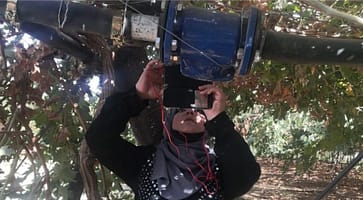
Women break barriers in Jordan’s water and agricultural future
Jordanian women are overcoming societal and professional barriers to lead in water science, engineering, and agriculture. Their work in research

IWMI Director General meets Sri Lanka’s Prime Minister to strengthen partnership on water management and sustainable development
Smith reinforced IWMI’s shared mission of building long-term resilience in Sri Lanka’s water resources.

Looking back, moving forward
As IWMI celebrates four decades of research and innovation, former director generals and board chairs share their reflections, learnings, and

Mapping climate vulnerability for inclusive action in Ghana
New tool will support informed decision-making to address the specific needs of diverse social groups.

Towards a new generation of wetland stewards
Behavioural changes through wetland conservation and education are urgently required to alter the human-wetlands relationship.

Water scarcity and its effects on socio economic activities in the upper west region, Ghana
IWMI research is generating evidence to support decision making on improving access to water for all social groups.

Social transformation in upper Wa West region, Ghana
IWMI-led social transformation analysis is helping to formulate and implement interventions to create resilient communities.

The impact of climate change on socioeconomic activities in upper Wa West region, Ghana
IWMI research looks at the effects of the changing climate on smallholder farming and identifies coping strategies to support resilience.

The impact of mixed farming systems in Nepal’s hill agriculture
Sustainable agriculture is diversifying risks, optimizing labor, and increasing productivity, while preserving the environment.

IWMI supports climate-smart agriculture in Ethiopia
Solar-powered irrigation is contributing to improved food security and incomes for farmers in the Oromia and Central Ethiopia regions.
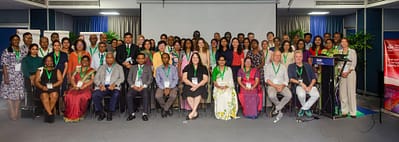
Pathways for promoting sustainable fruit & vegetable systems in Sri Lanka
Experts explored the challenges to and opportunities for healthier diets by strengthening fruit and vegetable value chains.

Data science helps to boost equitable access to water and sanitation
IWMI's work in two districts of Nepal assessed climate change vulnerability and risk to water and sanitation systems.

IWMI research offers a path to better river discharge estimation in Africa
The continent's ability to adapt to climate change depends, in part, on accurate river discharge estimation.

IWMI introduces sustainable water management to farming community in Pakistan
Women and girls are learning to conserve water and boost productivity while reducing water stress in Okara, Punjab.

Reflections on water in the hottest year (so far)
The NEXUS Gains Talks series concluded by examining critical connections between global heating and water.

New tools for transboundary water challenges in Central Asia
The Chirchik River Pywr model tracks current water management decisions, their impacts and benefits to evaluate future interventions.
