

In the morning, she rises before the sun and begins preparations for the day. She walks to the nearest water source, on average six kilometers from her house, to collect water for cooking, bathing and washing. She’ll be back for more later. She provides breakfast to her husband and children, preparing them for school if they can be spared from the farm. Then she goes to the field for weeding and planting, toiling until her back aches — and the sun is hotter than she remembers as a child. In moments in between, she takes the oxen to bathe and drink from the river.
When the day’s farm labor is done, the domestic work continues: dinner to be cooked, house to be cleaned, finances to be managed. If money is tight, she may stay up after dinner making handicrafts to sell at the local market for additional income. By the time her day is through, she’s worked 16 hours — not all of them recognized as real labor, but labor nonetheless.
This is a typical day in the life of many women, who comprise 43% of the global agricultural labor force. Despite their integral position in managing the double burden of agricultural and domestic labor, they are undervalued and excluded from water management decision-making. Women also face heightened risks from climate change because structural gender inequalities both increase their exposure to climate impacts and weaken their ability to respond, recover and adapt.
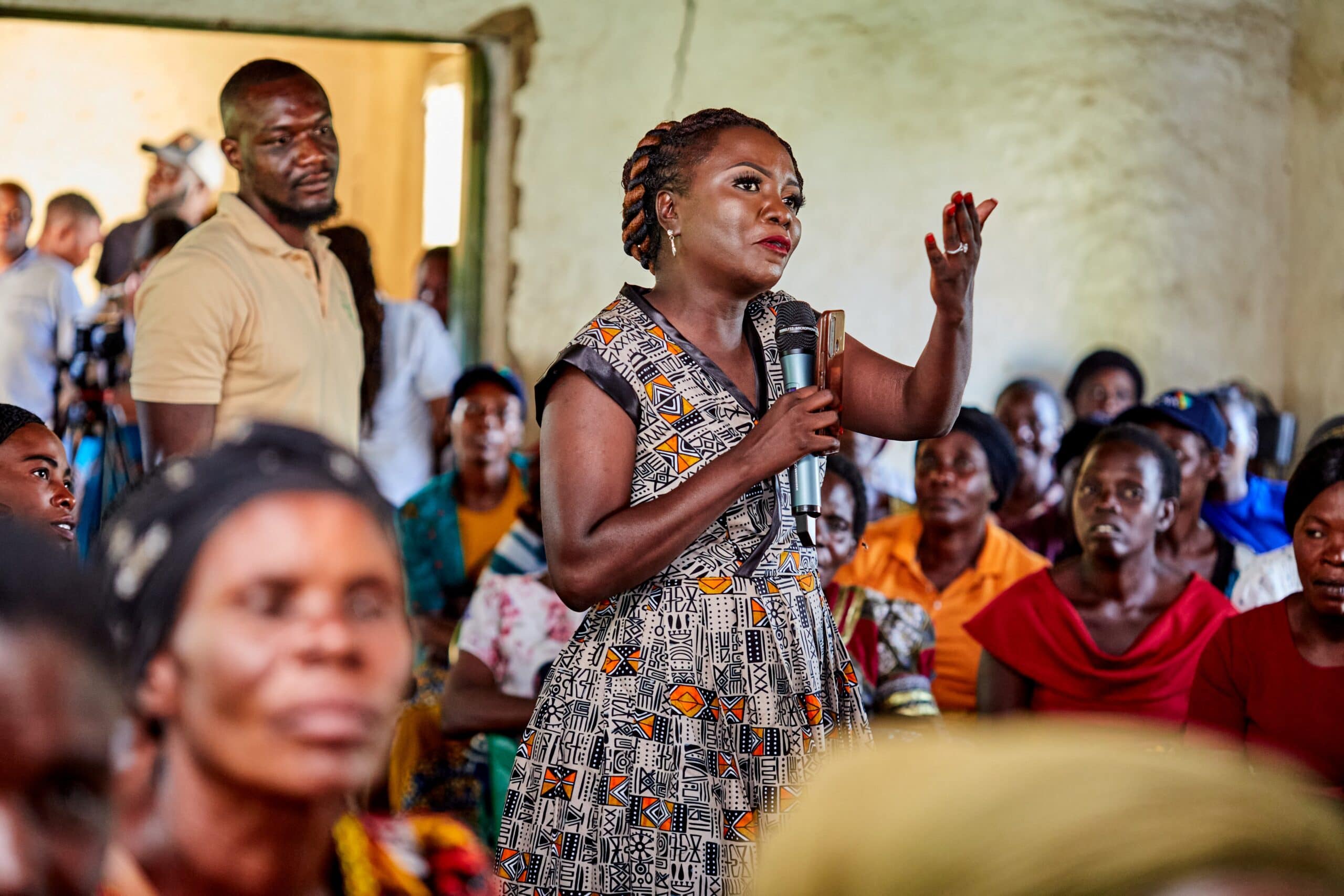
2026 has been declared the International Year of the Woman Farmer by the Food and Agriculture Organization of the United Nations (FAO) to promote gender equality and address existing gaps for women in agriculture.
Working closely with farming communities across the Global South, many led by women, the International Water Management Institute (IWMI) sees firsthand the role women play in safeguarding water, food and livelihoods. Through the Strong Roots, Inclusive Futures campaign, IWMI is marking this moment by celebrating their resilience and highlighting the need to ensure women have an equitable voice in ensuring water security for their communities.
Empowering women farmers and securing their legal parity is an essential step towards food security and climate resilience for all communities. Discriminatory laws and norms restrict their access to land ownership, credit, leadership positions and agricultural training, preventing women from investing in climate-resilient practices. Despite the challenges, women are at the forefront of adaptation to climate change in the agricultural sector.
IWMI is working to ensure access for women farmers to climate education, financing and technology, helping women get beyond barriers to water leadership. If women are better equipped to withstand climate shocks, their communities will be more secure.
A central step in improving agricultural resilience for women farmers is understanding how they experience water insecurity. In Bangladesh, IWMI has worked with coastal communities to design a tool to quantify the impacts of growing water inequality in relation to agrifood systems, called the Agriculture Water InSecurity (AgWISE) module. A set of 12 questions assesses not only physical challenges — how did water-related problems harm your crops? — but relational and psychosocial dimensions — how often did you worry about problems with water? How often did you experience harassment when collecting or using water?
AgWISE helps both male and female farmers, providing evidence that can shape policy and fiscal interventions for productive water use. It particularly gives voice to marginalized farmers, producing data that illustrates the glaring need to tackle the invisibility of women in agrifood system policies, interventions and innovations.
Beyond understanding and quantifying the issues women farmers face, IWMI is also actively engaged in technological and financial interventions that help women establish themselves as leaders in food and water resilience.
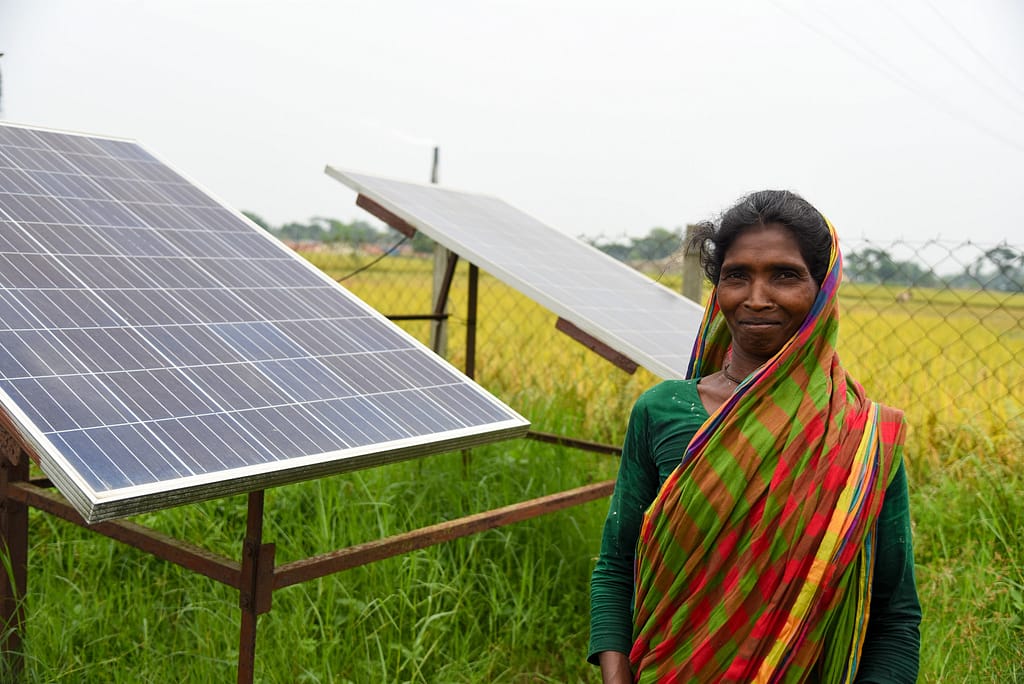
When women farmers cannot afford solar pumps, often because of credit barriers, their water access and productivity lags behind men. Through the Solar Energy for Agricultural Resilience (SoLAR) project, IWMI works across India, Bangladesh, Pakistan, Nepal, Ethiopia and Kenya to promote gender-sensitive policies and business models that ensure equitable access to solar irrigation pumps for women. Solar pumps can reduce the agricultural drudgery women face, give them additional time for economic pursuits, reduce reliance on non-renewable diesel for pumping and take on more leadership in irrigation decision-making.
By working together in women’s collectives, such as self-help groups and Water User Associations, women farmers can confront discrimination and roadblocks together — building confidence, swapping advice and even pooling finances to vault cost barriers involved with solar irrigation. IWMI has worked alongside the JEEViKA initiative in Bihar, India to mobilize rural women into collectives and access climate resilient technology through cost-sharing and soft loans.
Another IWMI Flagship project, Al Murunah+, aims to empower water-scarce rural communities in Egypt, Jordan, Lebanon and Palestine by advancing gender-transformative and nature-based water solutions. By positioning women as active decision-makers in sustainable water management — in contexts where they face entrenched gender norms — Al Murunah+ seeks to ensure equitable access to resources and opportunities for both women and men, ultimately strengthening community resilience.
Throughout the year ahead, IWMI will share more of our research and projects in gender equality and social inclusion, showcasing the women at the backbone of agricultural systems and international food security.
When she wakes again tomorrow to start her day of labor, perhaps she will be one step closer to having power over her farm, her water and her future.


