

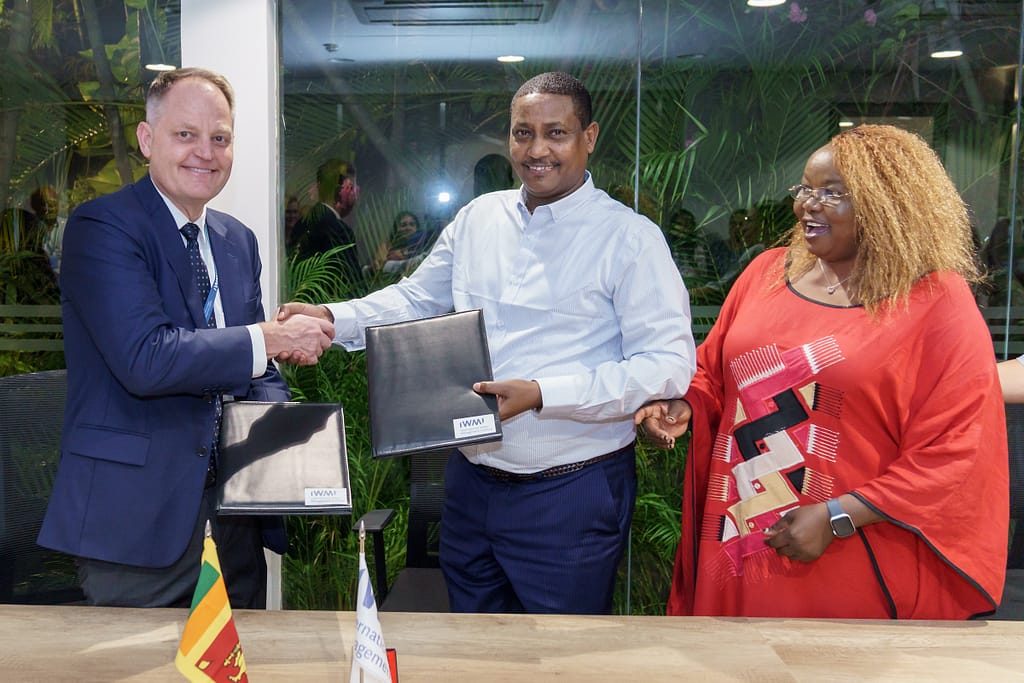
On January 8, the Kenyan National Environment Management Authority (NEMA) and the International Water Management Institute (IWMI) signed a memorandum of understanding (MoU) at IWMI headquarters in Sri Lanka to collaborate on climate-smart environmental governance in Kenya and the wider Eastern Africa region.
The MoU establishes a three-year partnership on the development of sustainable water and natural resources management, climate-smart agriculture, ecosystem restoration and environmental policy support in Kenya and Eastern Africa.
“Effective environmental management ultimately shows up in people’s lives — in safer communities, more resilient farms and healthier ecosystems,” said IWMI Director General, Mark Smith. “By combining IWMI’s research and digital innovation with NEMA’s regulatory leadership, we aim to support environmental governance that is not only climate-smart, but practical, inclusive and grounded in local realities.”
In Kenya, IWMI works with government agencies, donors and private-sector partners to push climate-resilient irrigation beyond pilot projects. In a country where fewer than a quarter of an estimated 1.3 million irrigable hectares are farmed using irrigation, IWMI’s support for solar-powered systems helped smallholder farmers cut fuel costs and emissions while raising productivity. IWMI has also paired the rapid spread of solar irrigation with safeguards to curb groundwater over-extraction.
Beyond the farm, IWMI’s research has shaped Kenya’s National Irrigation Sector Investment Plan, influencing how irrigation schemes are mapped, financed and governed. IWMI has also leveraged Earth observation data and machine learning tools to improve flood forecasting in vulnerable regions like Turkana County, turning climate data into earlier warnings and more resilient water management on the ground.
NEMA Director General Mamo B. Mamo reflected on the gravity of the joint effort, saying “the entire global community is being impacted by unprecedented climate change. By working together, engaging in environmental knowledge exchange and sharing digital resources, we can help ensure all citizens live in clean, healthy and safe environments.”
Alongside the MoU signing, IWMI hosted technical workshops and a South-to-South knowledge exchange between Sri Lankan government officials and NEMA, facilitating a discussion on shared environmental management challenges and potential areas of convergence. The workshops spotlighted IWMI projects on wetlands, waste management and digital innovation that could serve as blueprints for the partnership, such as Digital Innovations for Water Secure Africa and the Limpopo Basin Digital Twin.
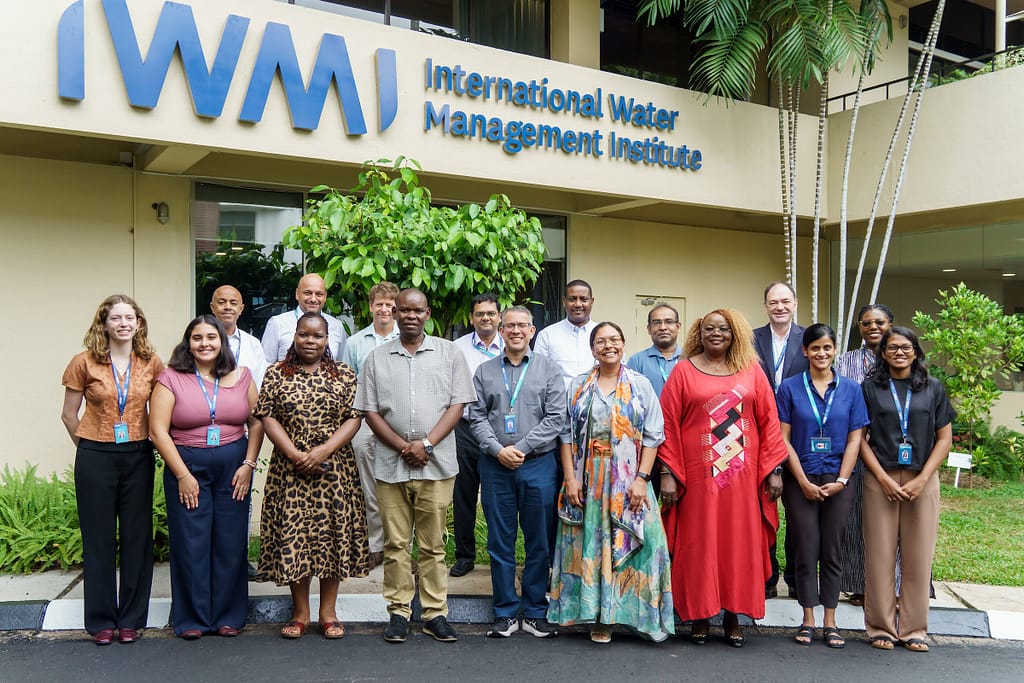
NEMA officials and IWMI staff also stepped beyond the conference room and explored the Diyasaru Wetland Park, as NEMA hopes to emulate Ramsar-aligned wetland conservation projects in Kenya — a key element of the MoU. A team of technical experts from both parties will continue to work between Kenya and Sri Lanka to develop project proposals.
With this partnership, IWMI is expanding its work on sustainable management of water and climate-conscious practices in Kenya and fostering cross-cutting research collaborations to usher in a water-secure future for Eastern Africa.


