

Wetlands quietly perform some of nature’s most essential tasks. Depending on their type and location, they can filter water, slow down floods, store carbon, and provide food and shelter for countless species, including people. Yet over the past century, many of these ecosystems have been drained, filled in or polluted. Their disappearance has rapidly eroded the natural systems that keep our water clean and our landscapes resilient. In the Mediterranean region alone, half of all wetlands have vanished in just the past 50 years.
As far back as the 1950s, scientists began experimenting with a low-tech solution to rising pollution and the high costs of conventional treatment plants: building artificial wetlands to treat wastewater.
In post-war Germany, botanist Dr. Käthe Seidel, nicknamed “Bulrush Käthe”, challenged the assumption that polluted water needed chemicals and machines to be cleaned. She planted Schoenoplectus lacustris, a common reed known as bulrush, into nutrient-rich wastewater. The results confirmed what she had intuited: the water emerged noticeably cleaner.
It turned out the plants were only part of the story. Microbial communities clinging to the roots were breaking down organic matter, absorbing nutrients and removing pathogens — all without the need for pumps or filters. Seidel’s unconventional trial laid the foundation for a new kind of wastewater treatment — one that borrowed nature’s logic, if not its exact blueprint.
Constructed wetlands today mainly take two different forms. In horizontal subsurface flowsystems, water moves slowly through a gravel bed just beneath the surface, where oxygen-starved microbes work to digest pollutants. Vertical flow wetlands, by contrast, receive water from above in timed doses, allowing air to refill the spaces between the gravel, creating more aerobic conditions.
The two systems are often combined into hybrids that can tackle a broader range of contaminants. Planted with reeds or grasses and designed with engineered slopes and flow paths, they may not look wild — but they carry out some of the same tasks that marshes once did, albeit in a condensed form.

Over the past few decades, most constructed wetlands have been built in Europe and North America, where wastewater regulations and financial incentives encouraged their adoption. However, the concept is spreading, particularly to areas where water stress, pollution and inadequate infrastructure intersect. In many countries across Africa, Asia and the Middle East, freshwater resources are under immense strain due to rapid population growth, urbanization, intensive farming and the climate crisis.
The Middle East and North Africa (MENA) region is among the most water-scarce areas globally; however, over 54% of its wastewater is not utilized productively. Constructed wetlands, when adequately designed for local conditions, can provide a low-cost, decentralized method for reclaiming water, particularly in areas where large-scale treatment plants are too expensive or too complex to operate.
Still, there are limitations. Constructed wetlands require space — something not always available in densely urbanized areas. Like natural systems, they are not designed to handle toxic industrial effluent and can be overloaded. And while constructed wetlands are simpler than mechanical plants, they still need some degree of oversight: sludge must be periodically removed, and inlets and outlets must remain unclogged. Most importantly, there must be people — trained or at least attentive — tasked with keeping the system running. When responsibility is unclear or interest fades, constructed wetlands can stagnate.
But when they work, they quietly transform the relationship between people and their wastewater. Instead of seeing sewage — or other polluted water — as something to be whisked away and forgotten, these systems keep it in view. They invite a slower, more deliberate approach to water management — one where nature is a collaborator, not a casualty. And their role extends beyond treating domestic wastewater: constructed wetlands are also used to clean up industrial runoff, such as acid mine drainage, and in some places they serve as multifunctional water bodies — storing water, supporting agriculture and shaping entire landscapes.
In southern Iraq, where decades of conflict, upstream diversions and prolonged drought have severely strained the Mesopotamian Marshes, declining water quality is threatening buffalo herds and the herders who rely on them. The International Water Management Institute (IWMI) is supporting a UN World Food Programme initiative to rehabilitate parts of the wetlands through nature-based solutions that restore ecological functions and help communities adapt to a fast-changing climate.
In Sri Lanka, IWMI and partners have developed an open-access solution to enhance biodiversity and rural incomes by constructing wetlands within hydropower reservoirs. By building small earth dykes that trap water as reservoir levels drop, shallow ponds are created where native plants and fish can thrive. This approach, supported by CGIAR, slightly reduces electricity generation but significantly improves local livelihoods and aquatic ecosystems — offering a nature-positive twist to energy infrastructure.
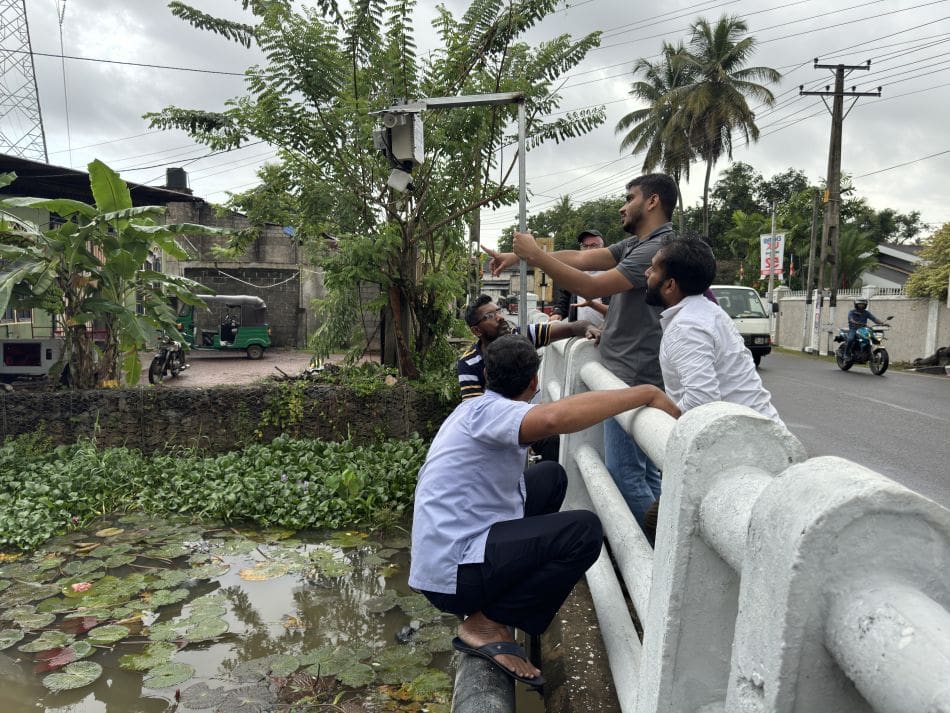
IWMI has also assessed the broader value of natural wetlands in Sri Lanka. In the Kalu Oya and Mudun Ela catchments, ecosystem services have been valued at between $13 million and $14.5 million, with the wetlands estimated to store nearly half a million tons of carbon.
This July, at the 15th meeting of the Ramsar Convention on Wetlands in Zimbabwe, governments revisit their commitments to protect the planet’s remaining wetlands and consider how to restore those that have been degraded. Adopted in 1971, the Ramsar Convention remains the only global treaty dedicated to the conservation and wise use of wetlands — both natural and human-made. But with more than 85% of the world’s wetlands already lost, protection alone is no longer enough.
Constructed wetlands will not bring back carbon-rich peat bogs, sweeping floodplains or once-thriving deltas. They cannot replace the complexity of the ecosystems that have been lost. But they offer a practical way to reintroduce some of their functions into the built environment, reminding us that water doesn’t have to be wasted. It can be slowed, filtered and returned with care. In some cases, they also create new habitats, supporting birds, insects and wetland plants. Thousands of constructed wetlands are now in operation around the world, quietly proving that even engineered systems can work with, rather than against, nature.


