

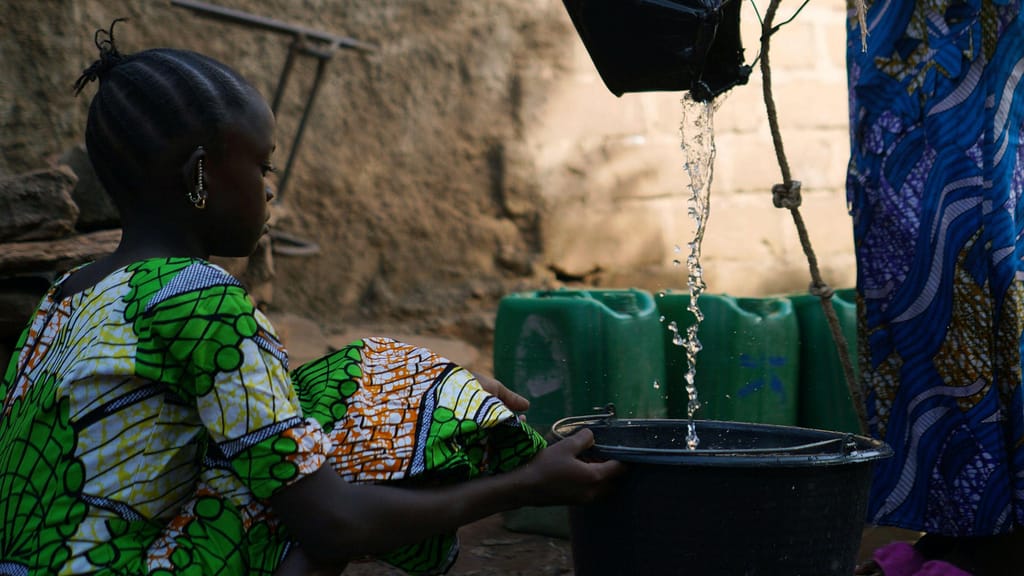
South Africa has long been scarred by femicide — the gender-related killing of women and girls.
The most recent national study, released in 2024, reveals just how deep the crisis runs. One in three South African women over the age of 18 has experienced physical violence in her lifetime. Behind this number are homes, workplaces and communities where safety is never guaranteed.
This pattern mirrors a global struggle. Nearly 50,000 women and girls were killed by intimate partners or family members in 2024 — an average of 137 every day. While no region is untouched, Africa bears the heaviest burden, both in the number of femicides and in the rate at which they occur.
In South Africa, public grief has steadily turned into public action. For months, women have marched, protested and staged nationwide “lie-downs,” honoring those killed and demanding the urgent protection owed to every woman and girl.
That collective outcry reached the highest levels of government. On November 20, during the G20 Summit in Johannesburg, President Cyril Ramaphosa declared gender-based violence and femicide (GBVF) a national crisis. A day later — amid mounting pressure and a formal reassessment by the National Disaster Management Centre — GBVF was officially classified as a national disaster.
As the world marks Human Rights Day, one question feels increasingly urgent: How can women shape decisions about vital resources — including water — when their most fundamental right to safety remains at risk?
Across the International Water Management Institute (IWMI), gender-based violence is a recognized barrier to women’s participation in water governance – one the organization addresses through research, engagement and gender-responsive approaches.
For IWMI, this reality surfaced sharply during a recent field visit to Uganda, where the Gender, Youth and Social Inclusion (GESI) team engaged with communities managing groundwater resources under the Groundwater for aDvancing Resilience in Africa (G4DR in Africa) project. During the visit, a representative from the Ministry of Water and Environment made a comment that was both revealing and unforgettable:
“It doesn’t matter how many women are in the decision-making room. If one of them was beaten the night before — and the whole village knows — will she raise her hand and speak?”
Violence silences women before they enter the room
Violence — whether emotional, physical, economic or digital — shatters women’s confidence long before they step into a water-user association meeting or a community forum. No quota or committee seat can counteract the silencing effect of fear and shame.
Across the Global South, women are central to water security. They collect it, store it, manage its use and keep households running through increasingly unpredictable climate cycles. Yet when the discussion turns to water allocation or governance, their voices often fade — not because they lack insight or expertise, but because the conditions surrounding their lives have narrowed their space to speak.
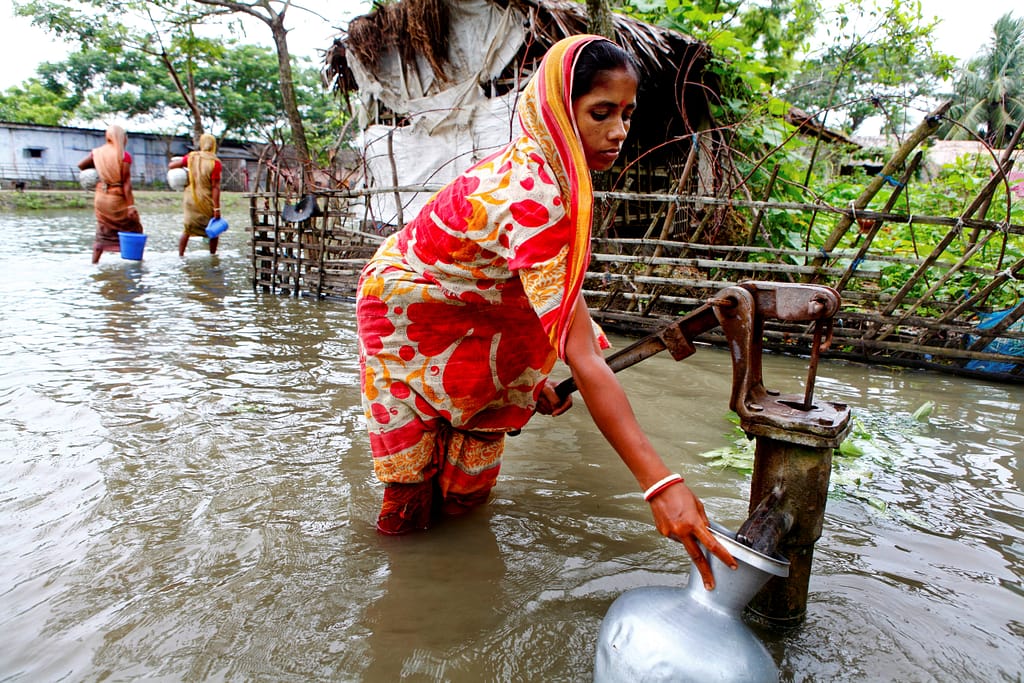
In Pakistan, during the devastating 2023 floods that affected 33 million people, displaced nearly eight million and destroyed two million homes, research led by IWMI Gender and Social Inclusion Specialist Kanwal Waqar revealed how digital exclusion became an unseen form of gendered harm. Because many Pakistani women don’t own mobile phones, are generally discouraged from using them, or rely on basic models that cannot receive alerts, they missed flood warnings as water levels rose. Forced to flee with little notice, they also faced heightened insecurity in temporary shelters. For these women, digital inequality became a direct pathway to personal risk.
In Bangladesh, findings from IWMI researcher Deepa Joshi reveal that illegal encroachment on freshwater canals has forced women to walk longer distances for water, often facing intimidation and threats along the way. It goes without saying that speaking out against the powerful actors controlling access involves real danger.
Water insecurity in these environments is not just a logistical issue — it reinforces existing hierarchies and increases gendered vulnerability.
Ensuring that digital transitions don’t reinforce inequality
The theme of this year’s 16 Days of Activism against Gender Based Violence — ending digital violence against women and girls — asks us to scrutinize not only how digital systems can protect women, but how they can unintentionally exclude them.
Digital innovation does not automatically produce equity. Without inclusive design and gender-responsive governance, new technologies can replicate the same barriers women already face offline. A smart interface for a solar pump, an early-warning disaster prevention app or a digital water-payment platform may strengthen service delivery — but only for those with the literacy, devices, connectivity and social permission to use them.
When women are excluded from these systems, digital progress risks becoming digital marginalization.
To ensure equitable access in water systems, collaboration between IWMI researchers from the Water Futures Data and Analytics team and the Gender Equality and Social Inclusion teams led to the development of the Multidimensional Digital Inclusiveness Index (MDII). Built around five dimensions — access, use, benefits, participation and safety — the index offers a practical framework to ensure that water-related digital transitions expand opportunities rather than narrow them. It helps research teams identify who is being left out, why and what safeguards or adjustments are required to ensure digital tools strengthen, rather than silence, women’s agency.
Why women’s digital agency is important for water security

patterns. Photo: Nabin Baral for IWMI
Across the regions where IWMI works, women bear the heaviest water burdens — yet their perspectives are too often absent from decisions that determine water access, quality and security. Ensuring they can participate safely and meaningfully is not an optional add-on to water governance; it is a precondition for systems to function.
If violence — whether at home, in public spaces or online — limits who can speak and who can be heard, then achieving equitable and climate-resilient water futures becomes impossible. For IWMI, the evidence is clear: strengthening water security requires strengthening women’s safety and agency, integrating gender-responsive approaches and embedding efforts to end violence within the systems we seek to improve.


