

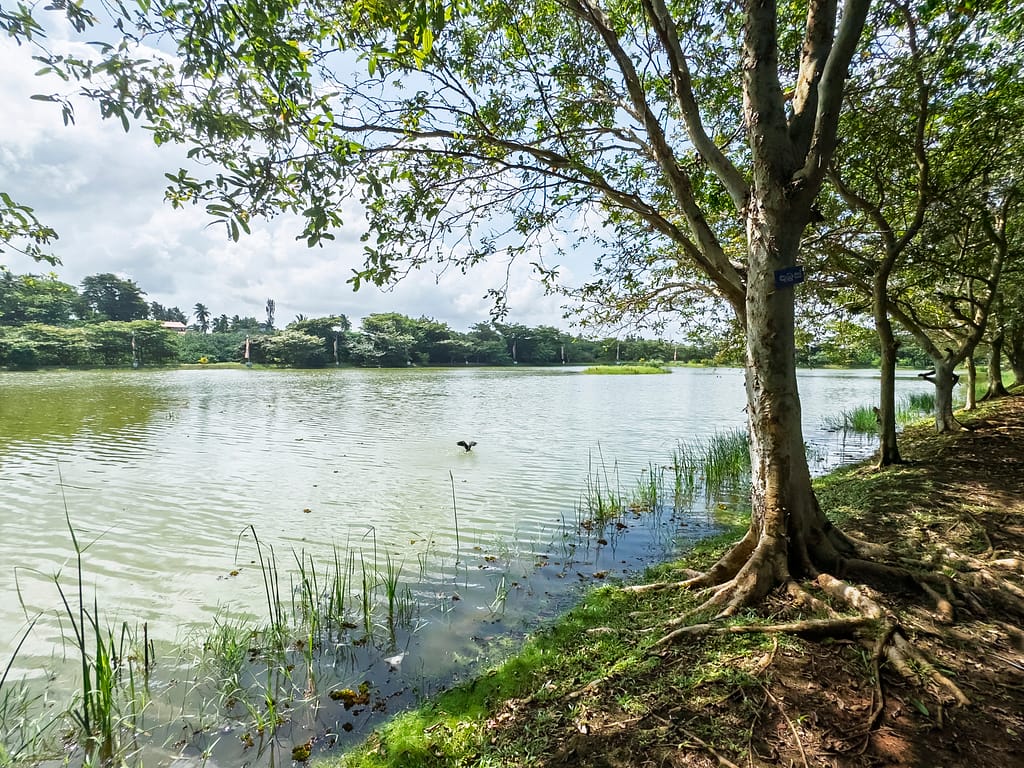
The Global Wetland Outlook 2025 says that “Valuing, conserving, restoring and financing wetlands is no longer optional — it is essential to securing the foundations of life on Earth.” And the reasons are very clear. Wetlands provide society with an estimated $39 trillion in benefits each year. They are habitats for many species of flora and fauna and can be classified into many different types, including rivers and streams, lakes, tidal flats, salt marshes, mangroves and peatlands. Wetlands are ecosystems with their own inherent value, and are a significant part of the larger global water cycle.
We are losing our wetlands, however, at a rate of 0.52% annually due to human-driven developmental activities and climate change impacts. An estimated 177 million hectares of inland marshes and swamps have been lost since the 1970s. Wetlands have been converted for human needs which has reduced their cover by 35% and resulted in an associated reduction of 85% in freshwater vertebrate populations. It is becoming evident that the human-nature relationship has been strained primarily because of humans dictating the way nature is exploited for their own benefit.
This rate of loss and degradation can only be addressed through transformational thinking and action that guide human-environment relations toward more sustainable management of these fragile ecosystems.
The paradigm shift
In the 1980s and 90s emphasis was placed on the ecosystem services of wetlands in the hope that wetlands would be conserved, restored and wisely used because of the benefits they provide to humans. Scientists and policymakers worked to understand, assess and assign economic value to services provided by various types of wetlands.
Unfortunately, the desired effects were not achieved and wetland loss continues today. There is hope, however. In a paradigm shift, people are beginning to change the way they think about wetland ecosystems, valuing them beyond purely monetary worth and seeing them broader than standalone entities. Today, wetlands are viewed as interconnected systems — part of the global hydrological cycle — while also increasingly being recognized for their intrinsic value.
Major multilateral environmental agreements are also reinforcing these transformative approaches, encouraging societies to embrace intrinsic and relational values of nature and thereby, recognize humanity’s potential to coexist harmoniously with the wider ecosphere.
This changes the outlook for wetlands and calls for action.
Ecocentrism and the Rights of Nature
At the very center of this new thinking is that humans are only one part of the wider ecosphere and therefore must establish mutually beneficial relationships with other components of nature. This is referred to as ecocentrism where living and non-living entities of nature are respected and cared for in equal measure.
Ecocentrism is an ethical, holistic approach that recognizes the interconnectedness within the wetland ecosystem advocating the preservation of integrity and sustainability of an ecosystem that is unique. Ecocentrism is not a new concept. It has been with humanity since evolution. Many local and indigenous cultures around the world speak of and show us how to live with nature. Ecocentrism highlights the need for environmental practices to go beyond human welfare.
The laws that have arisen from this thinking demand respect for nature. Customary laws and moral considerations govern human interactions with it, with some customs treating nature as a friend and thereby safeguarding it from human-inflicted harm.
Thus, the Rights of Nature in wetlands, or the Rights of Wetlands, can be considered an approach to cultivate a harmonious relationship with wetlands.
Implementing the Rights of Nature or of Wetlands does not deny humans the right to use nature or wetland resources. Healthy wetlands provide significant benefits that are vital for humans and therefore, building a harmonious relationship with nature will ensure the well-being of all those within the ecosphere, including our societies and economies that are grounded in nature.
The Ponca Nation’s customary Rights of Nature law of 2018, for example, states that nature’s right to life and to exist is, “subject to the traditional roles and ethical harvesting of plants and animals by humans for sustenance.” Similarly, Ecuador’s Constitutional Court has ruled that agriculture, animal husbandry, fishing, hunting, gathering and forestry, if carried out for the survival and advancement of the human species, are legitimate activities that do not violate animals’ or plants’ right to life but rather an integral part of species’ survival.
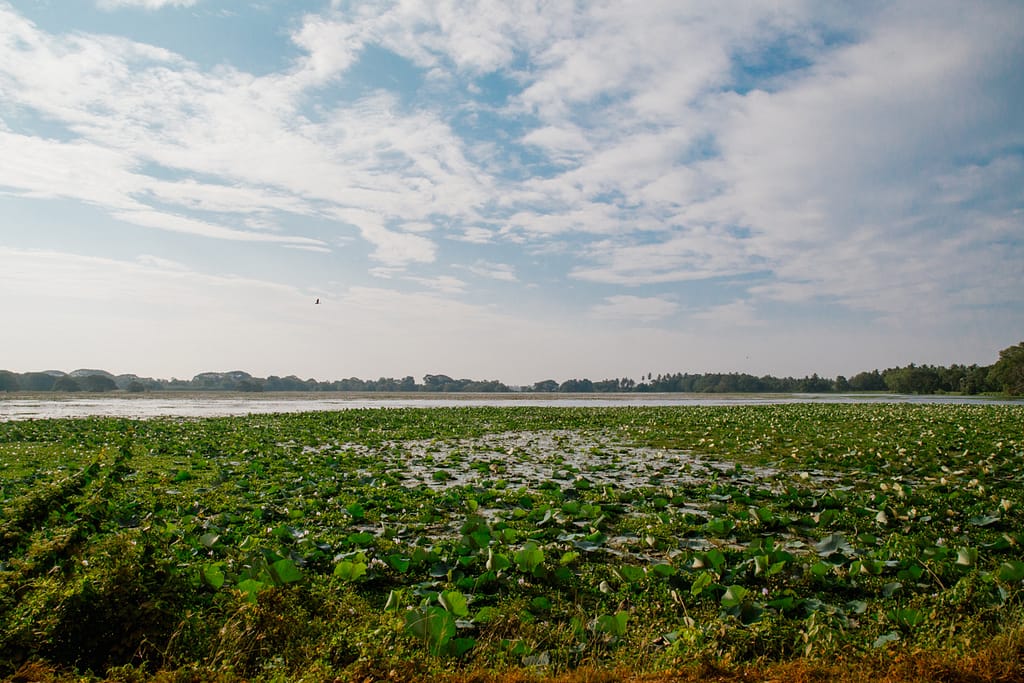
Exploring pathways for Rights of Nature in Sri Lanka
The International Water Management Institute (IWMI) is presently collaborating with Sri Lanka’s Ministry of Environment on the Rights of Wetlands Operationalisation for Biodiversity and Community Resilience project. Besides Sri Lanka, this initiative is carried out in Bolivia, Ecuador, Guyana and Kenya, with each country exploring different pathways to recognizing wetlands, not as mere resources to be exploited, but as living entities with inherent rights.
The project’s main mission is to discover how Rights of Wetlands can be woven into the fabric of legal frameworks, governance structures and public consciousness.
In Sri Lanka, a policy review revealed a complex web of over 30 laws and nearly 15 policies designed to protect natural resources and safeguard wetlands. Sri Lanka’s story, however, runs deeper than these policies and legislation.
The country has a rich history of treating the environment, especially water bodies, with gratitude and respect. These wetlands pulse with religious and cultural significance, forming sacred connections that naturally align with Rights of Nature principles. These vital relationships remain largely undocumented, hidden in the collective memory of communities rather than shared and celebrated widely.
The project envisions to shift humanity’s relationship with wetlands from one of exploitation, extraction and depletion to one of recognition, respect and reciprocity. When we acknowledge wetlands as living beings with inherent rights, these open pathways to conservation, restoration and wise-use practices that benefit both ecosystems and humans.


