

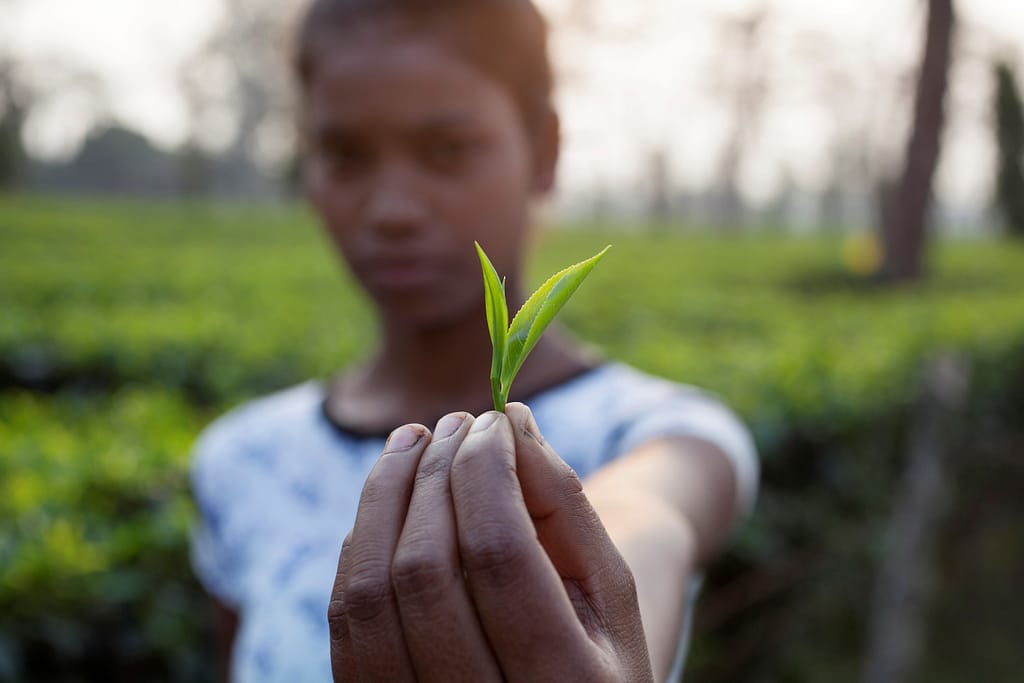
Tea production can support and conserve biodiversity through agroforestry. Historical evidence shows that the plant, Camellia sinensis, cultivated and consumed both as a beverage and food in highlands in China and Japan, was traditionally grown alongside other crops, in forests or grasslands.
The indigenous Bulang people in China’s Yunnan province — believed to be the earliest cultivators of tea — still manage ancient, biodiverse tea forests, a living model of tea production through co-conservation of forests and biodiversity. Recent studies show that these tea forests harbor 15 rare and endangered plant species and share 244 species of plants and 1,100 species of animals with nearby natural forests.
China’s Wuyishan Biosphere Reserve is another example; here, rainforests, tea and bamboo plantations co-exist. The UNESCO World Heritage site hosts 2,888 species of plants, 71 mammals, 256 birds, 73 reptiles, 35 amphibian and 40 fish species.
In contrast, the colonial expansion of tea offers quite the opposite story: one of systemic disruption of ancient biodiverse practices resulting in monocrop plantations that degrade environments and alter social structures.
The Food and Agriculture Organization of the United Nations (FAO) evaluates tea production systems at a current annual market value of $9.5 billion. An estimated 4.08 million hectares of tea plantations globally are monocrop systems — production systems that grow only tea — which have led to habitat destruction and biodiversity loss. In the Eastern Himalayas alone, this resulted in a reduction in forest cover by 69.5% between 1874 and 2010.
Monoculture plantations are not structurally complex systems, which are essential in supporting endemic species that exist nowhere else. This limits the availability of resources necessary for biodiversity. This lack of complexity has had severe consequences in Uganda’s commercial monoculture tea plantations, where only 10% of the original species remain. Over time, the soil in monocrop tea plantations is stripped of natural nutrients through widespread erosion and water run-off. In Sri Lanka, areas downstream of tea plantations experience 15-20 tonnes of soil loss per hectare each year due to erosion, impacting agrifood systems. Monocrop systems are highly vulnerable to climate impacts, with plants predisposed to various diseases, fungi and pests.
The challenge at hand is to restore biodiversity in tea plantations
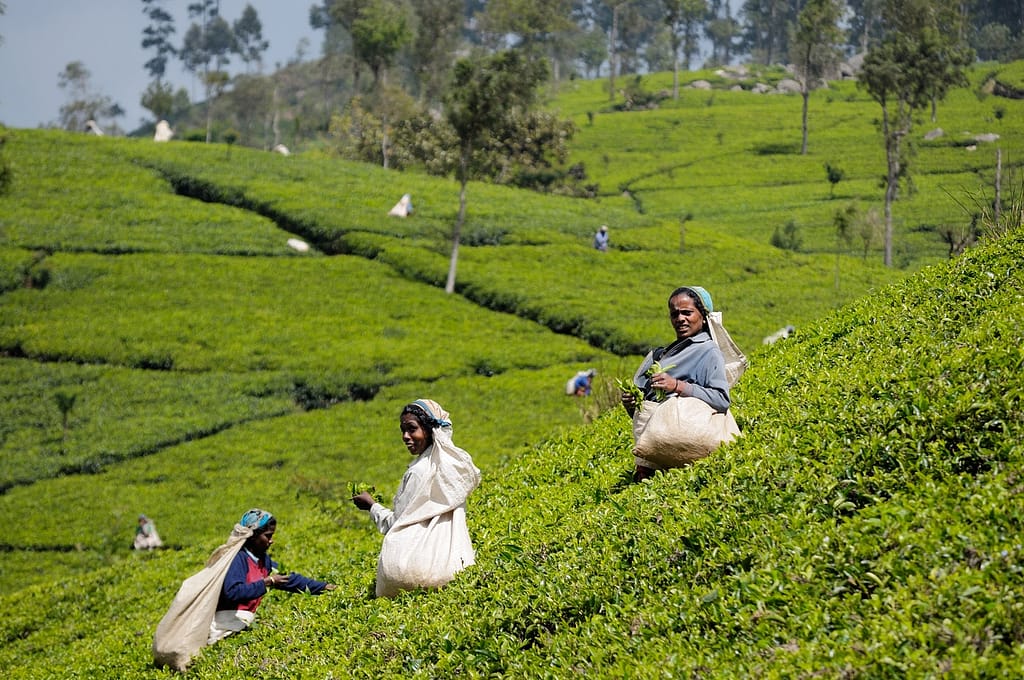
Evidence from a review of published and grey literature of how tea is grown in 25 countries shows that tea monocultures can be incrementally “nudged” to maintain habitat diversity and complexity. Introducing more complex systems or multiple sub-habitats in monoculture plantations can add layers of spatial heterogeneity — from varied vegetation to diversified soils and micro-ecological features — supporting a greater diversity of species.
For example, a higher density of shade from Grevillea robusta trees — commonly known as the Silk Oak — in Indian monoculture plantations draws in animals that feed on fruit from surrounding forests, enabling seed dispersal. This increases species richness to three times that of shadeless plantations.
In Sri Lanka, tea plantation communities that grow wild fruits, vegetables, timber and fodder have resulted in fringe agroecological landscapes. Agroecology essentially mimics the natural environment that existed before the land was converted into agricultural or production-based landscapes.
Beyond providing outputs for communities, these forests host endemic trees and support rare animal species. In Vietnam, agroecological practices in tea plantations improved soil health by increasing soil carbon and pH levels, as well as increasing macrofauna and mesofauna populations which are important for nutrient cycling. This means the number of small animals and insects in the soil grows, which helps recycle nutrients to keep the soil rich. Similarly, abandoned Sri Lankan tea plantations that were no longer economically viable provided a conservation opportunity for ecosystems to be self-restored. This demonstrates that tea-growing landscapes can be “nudged” to become complementary spaces for conservation and maintaining habitat diversity.
Biodiversity and just working conditions go hand in hand
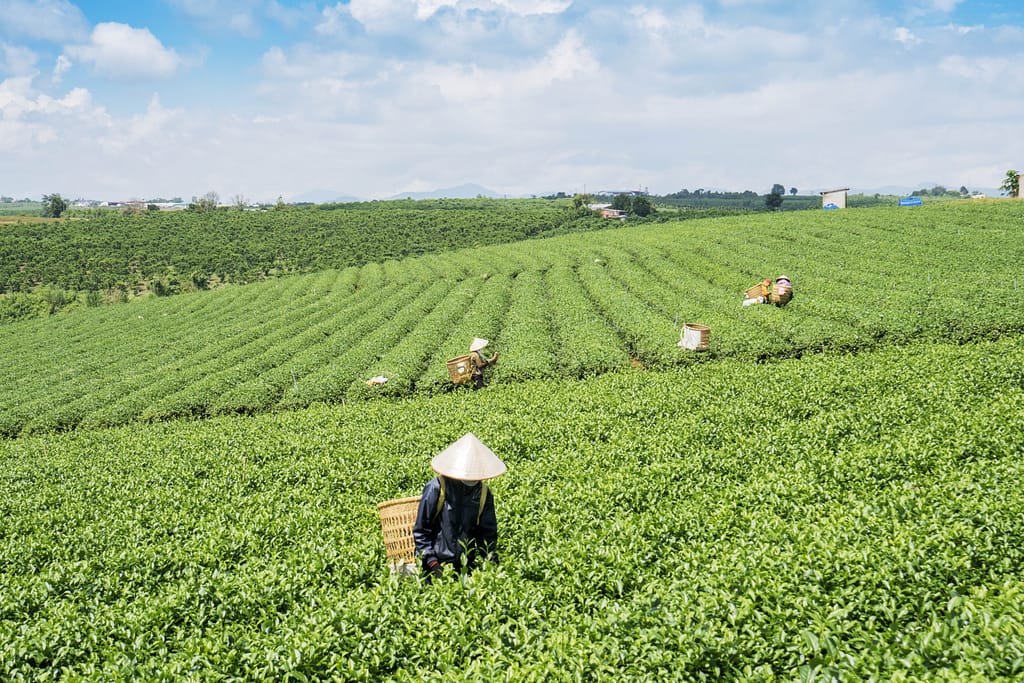
A biodiversity shift for the tea industry would impact 32 countries and over 2.5 million hectares and significantly contribute to the 2030 Global Biodiversity Framework Targets. These changes would also work in tandem with CGIAR environmental health and biodiversity impact targets. Additionally, the CGIAR focus is centred around the meeting point between healthy landscapes, livelihoods and diverse stakeholders. This helps draw attention to the fact that biodiversity initiatives often do not account for socially just transitions.
The world’s current tea production system — which generates around $17 billion in annual revenue — was established by European colonization, through large-scale land expropriation and indentured migrant labour tied to very little pay and limitations on workers’ freedoms.
The millions of landless plantation workers servicing the industry today trace their ancestry to forced labor migrations. These exploitative work conditions are gradually changing, but too slowly to ensure just work in the foreseeable future.
Women, who make up the largest portion of the tea industry workforce, experience heavy workloads, informal employment, unequal wages, and limited access to health care and social protections — while also managing domestic care.
Ensuring fair wages for plantation workers continues to be a challenge. The 2026 budget in Sri Lanka proposed increasing the daily wage for plantation workers to Rs 1,550 ($5.02) with an additional daily attendance incentive of Rs 200 ($0.65), potentially bringing the total daily earnings to Rs 1750 ($5.66). It is not yet clear whether this change has been fully implemented on the ground, and debates continue on practical rollout. Even if realized, the increase is modest, highlighting the persistent difficulties in providing living wages and decent working conditions for plantation workers.
The International Labour Organization’s (ILO) decent work guidelines underscore that biodiversity and just working conditions go hand in hand. They call for interlinkages between decent work — living wages, occupational safety, gender equality, social dialogue and environmental sustainability — and environmental sustainability.
In sum, the viability of agroecological nudges in tea plantations and the design and scaling out of just transitions, particularly for the women, will require political economy in the global political economy of tea. Until these challenges are addressed, your cup of tea holds far more than just the beverage.


