

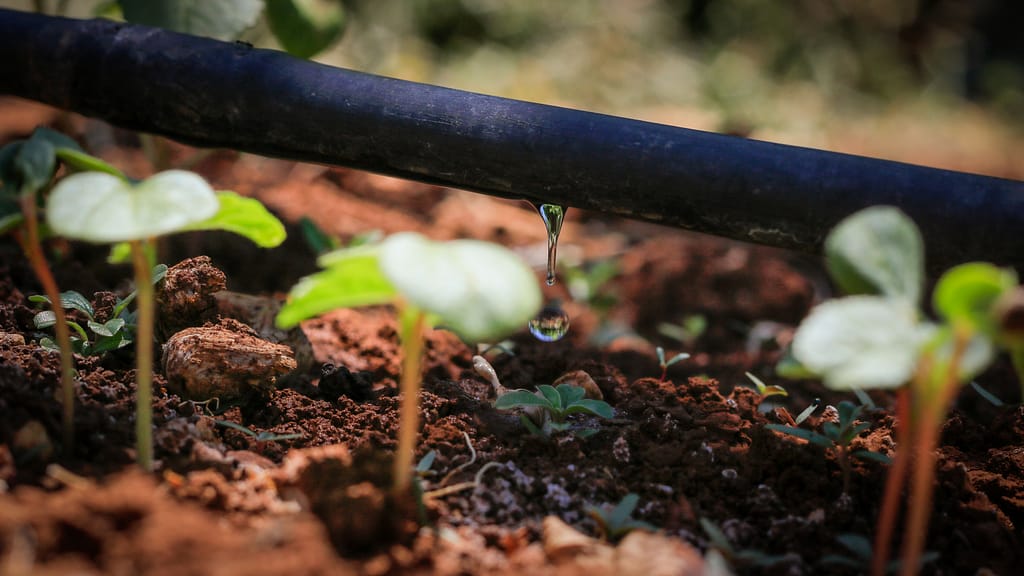
“Sometimes we wait six days for water. By then, crops are wilting, canals leak, the flumes are broken, and half the water disappears before reaching our fields,” said Nurmat, a farmer from Taraz, Kazakhstan. Droughts in Kazakhstan have nearly doubled over recent decades, while water scarcity across the country’s southern and western regions threatens both food security and rural livelihoods.
The Chu-Talas Basin, shared between Kazakhstan and Kyrgyzstan, illustrates this crisis vividly. Here, farmers contend with water supply delays, cracked canals and prolonged heat. In parts of the Chu-Talas Basin, up to 50% of irrigation water is lost through leaking canals and evaporation. Twenty percent of farmland lies abandoned, fueling migration to urban areas.
“Families leave for cities because farming no longer provides enough. Drip irrigation is the only way to survive, but it costs more than our income. Without support, the land dries and so do our communities,” says Shirin Badalov, a farmer from the Merke District.
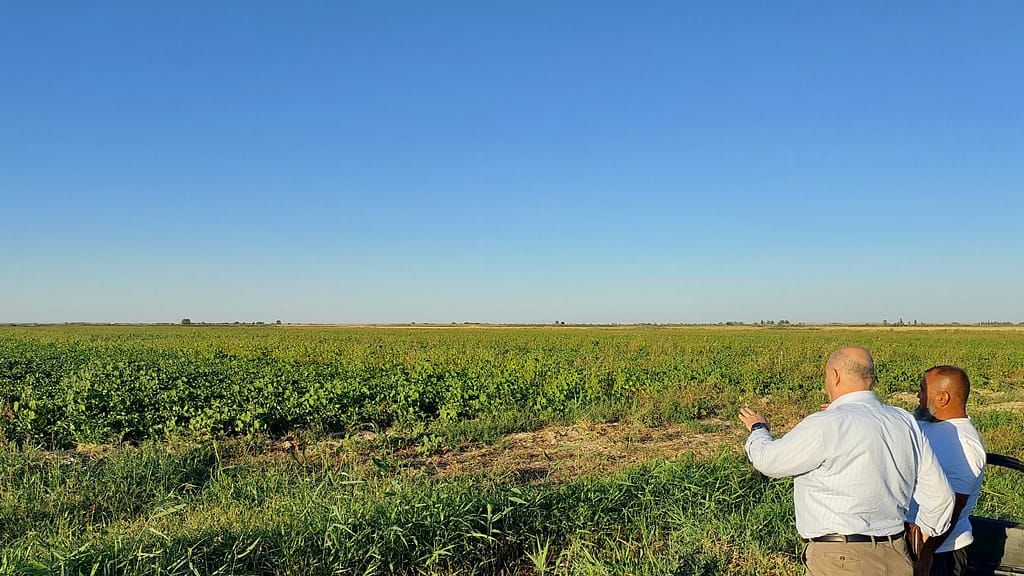
In August 2025, the International Water Management Institute (IWMI) visited the Chu-Talas Basin to kick off its first project in the area. Implemented in partnership with the World Bank, the Rapid Drought Risk and Resilience Assessment (DRRA) project is the first to have an exclusive focus on drought. Central to the project is connecting scientific research with farmers’ knowledge to better anticipate and withstand droughts. The project aims to map drought frequency and intensity, identify the most vulnerable farming systems, and pilot efficient irrigation and early-warning tools.
Reform and regional action to address water scarcity
In June 2025, Kazakhstan adopted a new water code. Serving as the primary legislative act governing the regulation of water resources, the revisions introduce the principle of water security, prioritizing the country’s water potential and recognizing the economic value of water. The law also codifies basin-level drought plans and ecological flow standards.
Kazakhstan’s newly established Ministry of Water Resources and Irrigation now leads efforts, with Kazhydromet — the national hydrometeorological service — providing early warnings. In Chu-Talas, authorities are lining canals and recommending drip and sprinkler systems to curb water losses. These measures are targeted to help farmers, as they reduce irrigation costs, improve water reliability during dry periods and protect crop yields against climate-related risks. But for farmers to reap the benefits of drip and sprinkler systems, these water-saving technologies must be made financially accessible.
Beyond national reforms, transboundary dynamics shape water governance in the Chu-Talas Basin. Eighty percent of the basin crosses national boundaries, relying on flows from Kyrgyzstan. The Chu-Talas Water Commission enables Kazakhstan to co-finance Kyrgyz dam and canal maintenance. However, data exchange between the two countries is limited, leaving downstream farmers uncertain about water availability. Strengthening the Commission’s role in transparent data sharing and joint planning is essential for resilience.
“We don’t know the real inflows. Information from upstream is not shared, so farmers are left guessing,” said Kazhimukan Abenov, a hydro technician from Kazakhastan’s Jambyl region. “At the same time, there are very few young specialists. Without training and modern systems, we are losing both people and knowledge.”
Water-saving technology that works for farmers
Emerging research finds that water-saving technologies like drip irrigation and sprinkler systems can cut water use by up to 30% while increasing yields. Research institutes are testing less water-intensive crop varieties, proving that targeted interventions work when scaled and supported. However, without sustained investment, droughts will continue to force families out of their lands and erode local knowledge essential to surviving water crises water crises.
Farmers are open to adopting water-saving technology like drip irrigation, but stress that costs remain out of reach. In Kazakhstan, the DRRA project is capturing these concerns by assessing drought challenges and reviewing current efforts to improve water use. Rather than proposing specific interventions, IWMI focuses on understanding stakeholder perspectives to inform future, context-appropriate resilience strategies.
The Chu-Talas Basin shows that science and farmer engagement must go hand in hand. Farmers need early warnings, affordable technologies and reliable data. National reforms like the adaption of water codes and increased infrastructure rehabilitation are promising, but regional basin-level cooperation is equally important.
Through the DRRA project, IWMI is helping to map individual struggles and collective strategies to overcome negative consequences of droughts. The future of food security and rural stability in Central Asia depends on scaling these efforts before today’s drought emergency deepens into tomorrow’s crises.


