All Categories News (383) Explainers (10) Features (217) In the media (294) Press releases (80) Publications (39) Specials (0) Annual reports (7) Blogs (374) From the DG (8) Multimedia (0) Infographics (4) Photos (7) Podcasts (10) Videos (88)
All Locations Africa (596) Algeria (3) Angola (2) Benin (5) Botswana (22) Burkina Faso (12) Burundi (1) Chad (1) Côte d’Ivoire (5) Democratic Republic of the Congo (3) Egypt (59) Eswatini (1) Ethiopia (127) Gambia (1) Ghana (107) Kenya (45) Lesotho (1) Libya (5) Madagascar (1) Malawi (15) Mali (10) Morocco (24) Mozambique (24) Namibia (6) Niger (1) Nigeria (31) Rwanda (5) Senegal (6) Sierra Leone (1) South Africa (58) South Sudan (2) Sudan (8) Togo (4) Tunisia (10) Uganda (13) United Republic of Tanzania (14) Zambia (46) Zimbabwe (32) Americas (30) Brazil (5) Colombia (6) Ecuador (2) Mexico (5) Nicaragua (1) Paraguay (1) Peru (2) United States of America (4) Asia (764) Afghanistan (9) Azerbaijan (3) Bangladesh (53) Bhutan (3) Cambodia (8) China (18) India (164) Indonesia (2) Iran (2) Iraq (9) Japan (3) Jordan (49) Kazakhstan (9) Kyrgyzstan (10) Lao PDR (25) Lebanon (26) Malaysia (1) Maldives (1) Myanmar (15) Nepal (118) Pakistan (123) Philippines (1) Saudi Arabia (9) Sri Lanka (181) State of Palestine (7) Syrian Arab Republic (3) Tajikistan (13) Thailand (2) Turkmenistan (6) United Arab Emirates (20) Uzbekistan (26) Viet Nam (5) Yemen (5) Europe (10) Germany (1) Italy (1) Netherlands (1) Spain (2) Sweden (1) Ukraine (1) United Kingdom of Great Britain and Northern Ireland (1) Global (216) Oceania (9) Australia (4) Fiji (1) New Zealand (1) Tonga (1) Vanuatu (1)
All Research Non-research (11) Water data science (272) Water data for climate resilience (34) Water data science for action (104) Water futures data and analytics (62) Water, climate change and resilience (564) Climate mitigation and adaptation pathways (313) Climate policies, finance and processes (50) Fragility, conflict, livelihoods and water (33) Water, food and ecosystems (487) Agricultural water management transformations (57) Integrated basin and aquifer management (32) Next generation irrigation systems (127) Sustainable water infrastructure and ecosystems (114) Water, food, energy nexus (98) Water, growth and inclusion (438) Economics and impact assessment (34) Gender equality and social inclusion (187) Integrated circular economy transformations (61) Water governance and political economy (55)
All Funders & Partners Africa Group of Negotiators Expert Support (AGNES) (1) African Development Bank (AfDB) (2) African Drone Academy (1) African Ministers’ Council on Water (AMCOW) (2) African Union (2) African Union Commission (1) Agricultural Sector Policy and Institutional Reform Strengthening (ASPIRES) (3) Agriculture And Climate Risk Enterprise (ACRE Africa) (1) Alliance for a Green Revolution in Africa (AGRA) (4) Alliance for Global Water Adaptation (AGWA) (7) Amazon Web Services (2) Aquaporo (2) Arab Water Council (2) Arup (4) Asian Development Bank (ADB) (5) Association of International Research and Development Centers for Agriculture (AIRCA) (6) Centre for Agriculture and Bioscience International (CABI) (1) International Center for Biosaline Agriculture (ICBA) (1) International Centre for Integrated Mountain Development (ICIMOD) (4) Australia’s Department of Foreign Affairs and Trade (DFAT) (10) Water for Women Fund (3) Australian Centre for International Agricultural Research (ACIAR) (11) Australian Water Partnership (AWP) (5) Bagmati Welfare Society (1) BAIF Development Research Foundation (1) Bangladesh’s Ministry of Agriculture (1) Bangladesh Agricultural Research Council (BARC) (1) BRAC (1) CARE (1) Center for Environment and Development for the Arab Region and Europe (CEDARE) (6) Centre for Poverty Analysis (CEPA) (2) Cewas (1) CGIAR (562) Alliance of Bioversity International and CIAT (18) Center for International Forestry Research and World Agroforestry (CIFOR-ICRAF) (3) International Center for Agricultural Research in the Dry Areas (ICARDA) (5) International Crops Research Institute for the Semi-Arid Tropics (ICRISAT) (2) International Food Policy Research Institute (IFPRI) (20) International Institute of Tropical Agriculture (IITA) (1) International Livestock Research Institute (ILRI) (5) International Maize and Wheat Improvement Center (CIMMYT) (10) International Potato Center (CIP) (2) International Rice Research Institute (IRRI) (15) WorldFish (12) Chrysalis (2) Cobra Collective CIC (1) Columbia University (1) Cornell University (1) Council on Energy, Environment and Water (CEEW) (1) Deltares (4) Deutsche Gesellschaft fuer Internationale Zusammenarbeit (GIZ) GmbH (12) Digital Earth Africa (16) Economic Community of West African States (ECOWAS) (1) Ethiopia’s Ministry of Agriculture (1) Ethiopian Solar Energy Development Association (2) European Union (EU) (24) European Commission (11) Everest Club (2) Expertise France (1) Farm Africa (3) Farmerline Ltd. (6) Field Ornithology Group of Sri Lanka (FoGSL) (1) Gates Foundation (10) Germany’s Federal Ministry for Economic Cooperation and Development (BMZ) (10) Ghana’s Ministry of Environment, Science, Technology and Innovation (3) Ghana’s Council for Scientific and Industrial Research (CSIR) (3) Ghana’s Ministry of Food and Agriculture (MoFA) (2) Ghana Irrigation Development Authority (GIDA) (1) Global Affairs Canada (3) International Development Research Centre (IDRC) (2) Global Center on Adaptation (GCA) (1) Global Commission on the Economics of Water (2) Global Commission on the Economics of Water (GCEW) (4) Global Environment Facility (GEF) (6) Global Green Growth Institute (GGGI) (1) Global Institute for Interdisciplinary Studies (1) Global Resilience Partnership (GRP) (1) Global Water Partnership (GWP) (24) Google.org (13) Government of Belgium (7) Enabel (7) Government of Iraq (1) Government of Netherlands (1) Government of New Zealand (4) Government of Tanzania (2) Tanzania’s Ministry of Agriculture (2) Green Climate Fund (GCF) (2) GroundTruth (7) Hawassa University (6) Helmsley Charitable Trust (33) iDE (1) IHE Delft Institute for Water Education (8) India’s Ministry of Agriculture and Farmers Welfare (13) Indian Council of Agricultural Research (ICAR) (14) Borlaug Institute for South Asia (BISA) (1) Central Arid Zone Research Institute (CAZRI) (1) Central Research Institute for Dryland Agriculture (CRIDA) (1) India’s Ministry of Jal Shakti (1) Innovative Engineering Services (IES) (1) Inter-American Development Bank (IDB) (1) International Affairs Office at the Presidential Court of the United Arab Emirates (1) International Commission on Irrigation and Drainage (1) International Dryland Development Commission (IDDC) (1) International Federation of Red Cross and Red Crescent Societies (IFRC) (4) International Fund for Agricultural Development (IFAD) (8) International Institute for Applied Systems Analysis (IIASA) (2) International Union for Conservation of Nature (IUCN) (11) International Water Association (IWA) (3) International Water Resources Association (IWRA) (1) Interstate Commission for Water Coordination of Central Asia (ICWC) (1) Scientific-Information Center (SIC) (1) Japan’s Ministry of Agriculture, Forestry and Fisheries (MAFF) (11) Jordan’s Ministry of Agriculture (3) National Agriculture Research Center (2) Kenya Agricultural & Livestock Research Organization (KALRO) (1) Kwame Nkrumah University of Science and Technology (2) League of Arab States (1) Arab Organization for Agricultural Development (AOAD) (1) Limpopo Watercourse Commission (LIMCOM) (14) McGill University (1) Mercy Corps (2) Michigan State University (1) Microsoft Corporation (6) National Aeronautics and Space Administration (NASA) (1) National Association for Rural Municipalities in Nepal (1) NDC Partnership (1) Nepal Water Conservation Foundation (NWCF) (1) Nepal’s Ministry of Energy, Water Resources and Irrigation (3) Nepal’s Department of Hydrology and Meteorology (DHM) (1) Netherlands Food Partnership (NFP) (1) Netherlands Water Partnership (NWP) (1) Netherlands’ Ministry of Economic Affairs and Climate Policy (4) Netherlands Enterprise Agency (RVO) (1) Netherlands’ Ministry of Foreign Affairs (3) Netherlands Directorate-General for International Cooperation (DGIS) (1) Nigeria’s Federal Ministry of Water Resources (FMWR) (1) Norwegian Agency for Development Cooperation (NORAD) (5) Office du Niger (1) Organisation for Economic Co-operation and Development (OECD) (1) Oxfam International (3) Pakistan Council of Research in Water Resources (PCRWR) (4) Pakistan Ministry of Climate Change and Environmental Coordination (MOCC) (1) Regional Environmental Centre for Central Asia (CAREC) (3) Resurgence (2) Schlumberger Faculty for the Future Stitching Fund (1) Secretariat for the Climate and Environment Charter for Humanitarian Organizations (1) Sierra Leone’s Ministry of Water Resources (1) National Water Resources Management Agency (NWRMA) (1) SNV Netherlands Development Organisation (6) South Asian Association for Regional Cooperation (SAARC) (2) South China Agricultural University (SCAU) (1) Southern African Development Community (SADC) (1) Groundwater Management Institute (SADC-GMI) (1) Sri Lanka’s Ministry of Agriculture (6) Sri Lanka’s Department of Agrarian Development (4) Sri Lanka’s Ministry of Defence (7) Sri Lanka’s Disaster Management Division (5) Sri Lanka’s Disaster Management Centre (5) Sri Lanka’s Ministry of Environment (3) Sri Lanka’s Ministry of Finance, Planning and Economic Development (1) Sri Lanka’s Department of National Planning (1) Sri Lanka’s Ministry of Irrigation (3) Sri Lanka’s Ministry of Mahaweli Development and Environment (1) Sri Lanka’s Ministry of Technology (4) Arthur C. Clarke Institute for Modern Technologies (ACCIMT) (1) National Research Council of Sri Lanka (NRC) (2) Stockholm Environment Institute (SEI) (3) Stockholm International Water Institute (SIWI) (4) SunCulture (1) Swedish International Development Cooperation Agency (Sida) (12) Swedish University of Agricultural Sciences (SLU) (1) Swiss Agency for Development and Cooperation (SDC) (32) Tata Trusts (26) Total LandCare (1) Tribhuvan University (1) UK Research and Innovation (UKRI) (4) Natural Environment Research Council (NERC) (1) UK’s Department for Environment Food & Rural Affairs (DEFRA) (1) UK’s Department for Science, Innovation and Technology (2) Met Office (2) UK’s Foreign, Commonwealth & Development Office (FCDO) (79) United Nations (UN) (103) Food and Agriculture Organization of the United Nations (FAO) (34) Intergovernmental Panel on Climate Change (IPCC) (4) Intergovernmental Science-Policy Platform on Biodiversity and Ecosystem Services (IPBES) (1) International Organization for Migration (IOM) (3) International Telecommunication Union (ITU) (1) Office of the High Commissioner for Refugees (UNHCR) (4) Risk-informed Early Action Partnership (REAP) (1) UN Environment Programme (UNEP) (6) UN-Habitat (1) UN-Water (3) United Nations Children’s Fund (UNICEF) (12) United Nations Convention to Combat Desertification (UNCCD) (1) International Drought Resilience Alliance (IDRA) (2) United Nations Development Programme (UNDP) (3) United Nations Economic and Social Commission for Asia and the Pacific (1) United Nations Economic and Social Commission for Western Asia (ESCWA) (1) United Nations Educational, Scientific and Cultural Organization (UNESCO) (1) United Nations Framework Convention on Climate Change (UNFCCC) (8) United Nations Office for Disaster Risk Reduction (UNDRR) (1) Coalition for Disaster Resilient Infrastructure (CDRI) (1) United Nations Office for Outer Space Affairs (UNOOSA) (3) United Nations Office for the Coordination of Humanitarian Affairs (UN OCHA) (2) United Nations Population Fund (UNFPA) (1) World Food Programme (WFP) (19) World Meteorological Organization (WMO) (3) United States Agency for International Development (USAID) (65) Feed the Future (2) United States Department of State (1) University of Aberdeen (6) University of California, Berkeley (1) University of London (1) School of Oriental and African Studies (SOAS) (1) University of Manchester (2) University of Nebraska (13) Daugherty Water for Food Global Institute (14) University of Oxford (2) WASHNote (1) Water Aid (2) Water Research Commission (WRC) of South Africa (1) Wellcome Trust (2) World Bank (96) International Development Association (IDA) (1) International Finance Corporation (IFC) (1) World Economic Forum (2) World Farmers’ Organization (WFO) (1) World Vision (6) Zambia Institute of Mass Communications (ZAMCOM) (1) Bangladesh Water Development Board (BWDB) (1) Department of Water Resources (DWR) (2) Indian Space Research Organisation (ISRO) (1) National Oceanic and Atmospheric Administration (NOAA) (1)
Sort by date Newest first Oldest first
July 6, 2026
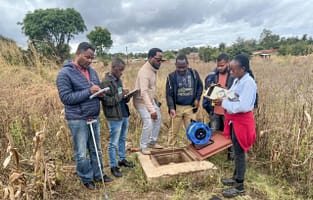
Researchers are combining continental insights with local fieldwork to ensure groundwater is used sustainably and equitably.
July 3, 2026
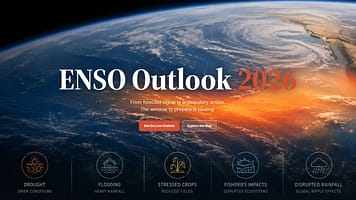
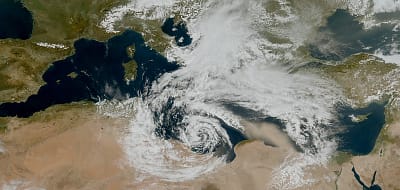
As the 2026 El Niño develops, the newly launched ENSO Outlook links climate data to floods, droughts and water risks, enabling early action and disaster mitigation.
July 2, 2026
The co-sponsored meeting will help shape the evidence for IPCC’s Seventh Assessment Report by spotlighting water’s role in climate adaptation, resilience and risk.
July 1, 2026
The world's destabilizing water cycle is becoming a defining economic risk for governments, industries and investors.
June 30, 2026
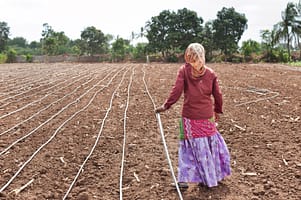
Unconditional cash transfers to women can strengthen economic empowerment if paired with broader gender-responsive agrifood interventions.
June 29, 2026
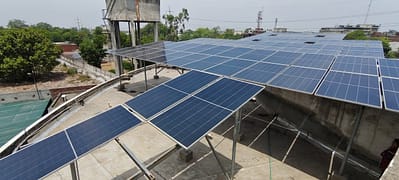
At IWMI’s Pakistan office, practical initiatives — from solar energy to rainwater harvesting — demonstrate how organizations can reduce their environmental footprint.
June 26, 2026
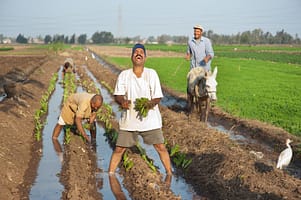
With women’s earnings up 50%, lower salinity levels and nearly 500 villagers managing water systems, Egypt’s results point to scalable solutions for the MENA region.
June 25, 2026
Communities in Izbat Al Hamra are gaining the tools, knowledge, and opportunities needed to adapt to a changing climate.
June 25, 2026
The Al Murunah team convened stakeholders in Egypt to replicate and scale the project's nature-based solutions approach in other communities.
June 25, 2026
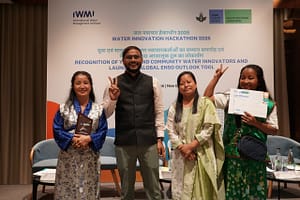
IWMI announces winners of National Water Innovation Hackathon.
June 24, 2026
IWMI invites partners to jointly accelerate action across water intelligence, the food nexus and governance.
June 23, 2026
From India’s agriculture fields to its parliament, the IWMI-Tata Water Policy Research Program continues to shape programs and policies.
June 23, 2026
IWMI's Davy Vanham argues that Africa can meet its growing energy needs while protecting scarce water resources by investing in renewable energy.
June 22, 2026
Government officials, researchers and farmers are coming together to inform sustainable smallholder irrigation systems in the Meki River watershed.
June 22, 2026
IWMI's Anurag Banerjee, Darshini Ravindranath and Tanmoy Bhaduri argue that India’s energy transition will be judged not by installed gigawatts alone, but by whether the farmer in Mandla or the
June 22, 2026
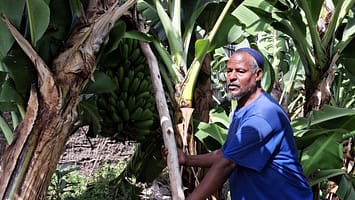
IWMI's Girma Yimer Ebrahim explores how countries can protect and manage groundwater for the long term and ensure it remains a reliable source of water for rural communities facing climate
June 19, 2026
Emergent properties are our biggest climate threat, yet could also be the key to making significant progress against climate change.
June 18, 2026
On World Day to Combat Desertification and Drought, find out how India's first anticipatory AI-powered drought advisory is turning early warning into early action.
June 17, 2026
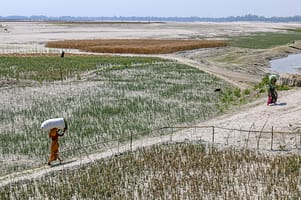
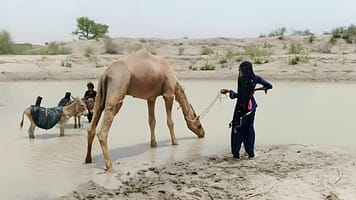
The invisible burden of water scarcity shaping the daily lives of women in Pakistan’s Tharparkar district.
June 16, 2026
The IWMI-led Global Environment Flows Platform brings together open-access tools to estimate environmental flows and track progress towards diminishing water stress.
June 16, 2026
Through e-ReWater, IWMI and partners use AI, remote sensing and water demand analysis to support safe water reuse.
June 15, 2026
A new book by IWMI researchers sets out institutional reforms needed to manage water, amid worsening floods and droughts.
June 12, 2026
A new study covering 121 countries shows that improving access to safe drinking water is critical to tackling food insecurity in both low- and high-income countries.
June 11, 2026
When climate forecasts and agricultural advice reached farmers in a Sri Lankan village, they rewrote the rules of climate risk.