All Categories News (388) Explainers (10) Features (222) In the media (301) Press releases (80) Publications (40) Specials (0) Annual reports (7) Blogs (387) From the DG (9) Multimedia (0) Infographics (4) Photos (7) Podcasts (10) Videos (90)
All Locations Africa (611) Algeria (3) Angola (2) Benin (5) Botswana (22) Burkina Faso (12) Burundi (1) Cameroon (1) Central African Republic (1) Chad (2) Côte d’Ivoire (5) Democratic Republic of the Congo (3) Egypt (60) Eswatini (1) Ethiopia (130) Gambia (1) Ghana (110) Kenya (47) Lesotho (1) Libya (6) Madagascar (1) Malawi (16) Mali (10) Morocco (24) Mozambique (24) Namibia (6) Niger (2) Nigeria (32) Rwanda (5) Senegal (6) Sierra Leone (1) South Africa (61) South Sudan (2) Sudan (8) Togo (4) Tunisia (10) Uganda (13) United Republic of Tanzania (14) Zambia (46) Zimbabwe (33) Americas (31) Brazil (5) Colombia (6) Ecuador (2) Mexico (5) Nicaragua (1) Paraguay (1) Peru (2) United States of America (4) Asia (783) Afghanistan (9) Azerbaijan (4) Bangladesh (55) Bhutan (3) Cambodia (8) China (18) India (169) Indonesia (2) Iran (2) Iraq (12) Japan (3) Jordan (51) Kazakhstan (11) Kyrgyzstan (12) Lao PDR (25) Lebanon (27) Malaysia (1) Maldives (1) Myanmar (15) Nepal (120) Pakistan (124) Philippines (1) Saudi Arabia (9) Sri Lanka (181) State of Palestine (8) Syrian Arab Republic (3) Tajikistan (15) Thailand (2) Turkmenistan (8) United Arab Emirates (20) Uzbekistan (28) Viet Nam (6) Yemen (5) Europe (11) Germany (1) Italy (1) Netherlands (1) Spain (2) Sweden (1) Ukraine (1) United Kingdom of Great Britain and Northern Ireland (1) Global (223) Oceania (10) Australia (4) Fiji (1) New Zealand (1) Tonga (1) Vanuatu (1)
All Research Non-research (11) Water data science (278) Water data for climate resilience (36) Water data science for action (106) Water futures data and analytics (62) Water, climate change and resilience (579) Climate mitigation and adaptation pathways (318) Climate policies, finance and processes (51) Fragility, conflict, livelihoods and water (35) Water, food and ecosystems (498) Agricultural water management transformations (60) Integrated basin and aquifer management (33) Next generation irrigation systems (130) Sustainable water infrastructure and ecosystems (117) Water, food, energy nexus (98) Water, growth and inclusion (449) Economics and impact assessment (34) Gender equality and social inclusion (190) Integrated circular economy transformations (62) Water governance and political economy (56)
All Funders & Partners Africa Group of Negotiators Expert Support (AGNES) (1) African Development Bank (AfDB) (2) African Drone Academy (1) African Ministers’ Council on Water (AMCOW) (2) African Union (2) African Union Commission (1) Agricultural Sector Policy and Institutional Reform Strengthening (ASPIRES) (3) Agriculture And Climate Risk Enterprise (ACRE Africa) (1) Alliance for a Green Revolution in Africa (AGRA) (4) Alliance for Global Water Adaptation (AGWA) (7) Amazon Web Services (2) Aquaporo (2) Arab Water Council (2) Arup (4) Asian Development Bank (ADB) (5) Association of International Research and Development Centers for Agriculture (AIRCA) (7) Centre for Agriculture and Bioscience International (CABI) (1) International Center for Biosaline Agriculture (ICBA) (2) International Centre for Integrated Mountain Development (ICIMOD) (4) Australia’s Department of Foreign Affairs and Trade (DFAT) (10) Water for Women Fund (3) Australian Centre for International Agricultural Research (ACIAR) (11) Australian Water Partnership (AWP) (5) Bagmati Welfare Society (1) BAIF Development Research Foundation (1) Bangladesh’s Ministry of Agriculture (1) Bangladesh Agricultural Research Council (BARC) (1) BRAC (1) CARE (1) Center for Environment and Development for the Arab Region and Europe (CEDARE) (6) Centre for Poverty Analysis (CEPA) (2) Cewas (1) CGIAR (580) Alliance of Bioversity International and CIAT (19) Center for International Forestry Research and World Agroforestry (CIFOR-ICRAF) (3) International Center for Agricultural Research in the Dry Areas (ICARDA) (5) International Crops Research Institute for the Semi-Arid Tropics (ICRISAT) (2) International Food Policy Research Institute (IFPRI) (20) International Institute of Tropical Agriculture (IITA) (1) International Livestock Research Institute (ILRI) (5) International Maize and Wheat Improvement Center (CIMMYT) (10) International Potato Center (CIP) (2) International Rice Research Institute (IRRI) (15) WorldFish (12) Chrysalis (2) Cobra Collective CIC (1) Columbia University (1) Cornell University (1) Council on Energy, Environment and Water (CEEW) (1) Deltares (4) Deutsche Gesellschaft fuer Internationale Zusammenarbeit (GIZ) GmbH (13) Digital Earth Africa (16) Economic Community of West African States (ECOWAS) (1) Ethiopia’s Ministry of Agriculture (1) Ethiopian Solar Energy Development Association (2) European Union (EU) (26) European Commission (11) Everest Club (2) Expertise France (1) Farm Africa (3) Farmerline Ltd. (7) Field Ornithology Group of Sri Lanka (FoGSL) (1) Gates Foundation (10) Germany’s Federal Ministry for Economic Cooperation and Development (BMZ) (10) Germany’s Federal Ministry for the Environment, Nature Conservation and Nuclear Safety (BMUV) (1) Ghana’s Ministry of Environment, Science, Technology and Innovation (3) Ghana’s Council for Scientific and Industrial Research (CSIR) (3) Ghana’s Ministry of Food and Agriculture (MoFA) (2) Ghana Irrigation Development Authority (GIDA) (1) Global Affairs Canada (3) International Development Research Centre (IDRC) (2) Global Center on Adaptation (GCA) (1) Global Commission on the Economics of Water (2) Global Commission on the Economics of Water (GCEW) (5) Global Environment Facility (GEF) (6) Global Green Growth Institute (GGGI) (1) Global Institute for Interdisciplinary Studies (1) Global Resilience Partnership (GRP) (1) Global Water Partnership (GWP) (24) Google.org (13) Government of Belgium (7) Enabel (7) Government of Iraq (2) Government of Netherlands (1) Government of New Zealand (4) Government of Tanzania (2) Tanzania’s Ministry of Agriculture (2) Green Climate Fund (GCF) (2) GroundTruth (7) Hawassa University (7) Helmsley Charitable Trust (33) iDE (1) IHE Delft Institute for Water Education (8) India’s Ministry of Agriculture and Farmers Welfare (13) Indian Council of Agricultural Research (ICAR) (14) Borlaug Institute for South Asia (BISA) (1) Central Arid Zone Research Institute (CAZRI) (1) Central Research Institute for Dryland Agriculture (CRIDA) (1) India’s Ministry of Jal Shakti (1) Innovative Engineering Services (IES) (1) Inter-American Development Bank (IDB) (1) International Affairs Office at the Presidential Court of the United Arab Emirates (1) International Commission on Irrigation and Drainage (1) International Dryland Development Commission (IDDC) (1) International Federation of Red Cross and Red Crescent Societies (IFRC) (4) International Fund for Agricultural Development (IFAD) (8) International Institute for Applied Systems Analysis (IIASA) (2) International Union for Conservation of Nature (IUCN) (14) International Water Association (IWA) (3) International Water Resources Association (IWRA) (1) Interstate Commission for Water Coordination of Central Asia (ICWC) (1) Scientific-Information Center (SIC) (1) Japan’s Ministry of Agriculture, Forestry and Fisheries (MAFF) (11) Jordan’s Ministry of Agriculture (3) National Agriculture Research Center (2) Kenya Agricultural & Livestock Research Organization (KALRO) (1) Kwame Nkrumah University of Science and Technology (2) Lake Chad Basin Commission (1) League of Arab States (1) Arab Organization for Agricultural Development (AOAD) (1) Limpopo Watercourse Commission (LIMCOM) (14) McGill University (1) Mercy Corps (2) Michigan State University (1) Microsoft Corporation (6) National Aeronautics and Space Administration (NASA) (1) National Association for Rural Municipalities in Nepal (1) NDC Partnership (1) Nepal Water Conservation Foundation (NWCF) (1) Nepal’s Ministry of Energy, Water Resources and Irrigation (3) Nepal’s Department of Hydrology and Meteorology (DHM) (1) Netherlands Food Partnership (NFP) (1) Netherlands Water Partnership (NWP) (1) Netherlands’ Ministry of Economic Affairs and Climate Policy (4) Netherlands Enterprise Agency (RVO) (1) Netherlands’ Ministry of Foreign Affairs (3) Netherlands Directorate-General for International Cooperation (DGIS) (1) Nigeria’s Federal Ministry of Water Resources (FMWR) (1) Norwegian Agency for Development Cooperation (NORAD) (5) Office du Niger (1) Organisation for Economic Co-operation and Development (OECD) (1) Oxfam International (3) Pakistan Council of Research in Water Resources (PCRWR) (4) Pakistan Ministry of Climate Change and Environmental Coordination (MOCC) (1) Pumptech (1) Regional Environmental Centre for Central Asia (CAREC) (3) Resurgence (2) Schlumberger Faculty for the Future Stitching Fund (1) Secretariat for the Climate and Environment Charter for Humanitarian Organizations (1) Sierra Leone’s Ministry of Water Resources (1) National Water Resources Management Agency (NWRMA) (1) SNV Netherlands Development Organisation (6) South Asian Association for Regional Cooperation (SAARC) (2) South China Agricultural University (SCAU) (1) Southern African Development Community (SADC) (1) Groundwater Management Institute (SADC-GMI) (1) Sri Lanka’s Ministry of Agriculture (6) Sri Lanka’s Department of Agrarian Development (4) Sri Lanka’s Ministry of Defence (7) Sri Lanka’s Disaster Management Division (5) Sri Lanka’s Disaster Management Centre (5) Sri Lanka’s Ministry of Environment (3) Sri Lanka’s Ministry of Finance, Planning and Economic Development (1) Sri Lanka’s Department of National Planning (1) Sri Lanka’s Ministry of Irrigation (3) Sri Lanka’s Ministry of Mahaweli Development and Environment (1) Sri Lanka’s Ministry of Technology (4) Arthur C. Clarke Institute for Modern Technologies (ACCIMT) (1) National Research Council of Sri Lanka (NRC) (2) Stockholm Environment Institute (SEI) (3) Stockholm International Water Institute (SIWI) (4) Strathmore Energy Research Centre (SERC) (1) SunCulture (1) Swedish International Development Cooperation Agency (Sida) (12) Swedish University of Agricultural Sciences (SLU) (1) Swiss Agency for Development and Cooperation (SDC) (35) Tata Trusts (26) Total LandCare (1) Tribhuvan University (1) UK Research and Innovation (UKRI) (5) Natural Environment Research Council (NERC) (2) UK’s Department for Environment Food & Rural Affairs (DEFRA) (1) UK’s Department for Science, Innovation and Technology (2) Met Office (2) UK’s Foreign, Commonwealth & Development Office (FCDO) (83) United Nations (UN) (106) Food and Agriculture Organization of the United Nations (FAO) (35) Intergovernmental Panel on Climate Change (IPCC) (4) Intergovernmental Science-Policy Platform on Biodiversity and Ecosystem Services (IPBES) (1) International Organization for Migration (IOM) (3) International Telecommunication Union (ITU) (1) Office of the High Commissioner for Refugees (UNHCR) (4) Risk-informed Early Action Partnership (REAP) (1) UN Environment Programme (UNEP) (6) UN-Habitat (2) UN-Water (3) United Nations Children’s Fund (UNICEF) (12) United Nations Convention to Combat Desertification (UNCCD) (1) International Drought Resilience Alliance (IDRA) (2) United Nations Development Programme (UNDP) (3) United Nations Economic and Social Commission for Asia and the Pacific (1) United Nations Economic and Social Commission for Western Asia (ESCWA) (1) United Nations Educational, Scientific and Cultural Organization (UNESCO) (1) United Nations Framework Convention on Climate Change (UNFCCC) (8) United Nations Office for Disaster Risk Reduction (UNDRR) (1) Coalition for Disaster Resilient Infrastructure (CDRI) (1) United Nations Office for Outer Space Affairs (UNOOSA) (3) United Nations Office for the Coordination of Humanitarian Affairs (UN OCHA) (2) United Nations Population Fund (UNFPA) (1) World Food Programme (WFP) (19) World Meteorological Organization (WMO) (3) United States Agency for International Development (USAID) (65) Feed the Future (2) United States Department of State (1) University of Aberdeen (7) University of California, Berkeley (1) University of London (1) School of Oriental and African Studies (SOAS) (1) University of Manchester (2) University of Nebraska (13) Daugherty Water for Food Global Institute (14) University of Oxford (2) WASHNote (1) Water Aid (2) Water Research Commission (WRC) of South Africa (2) Wellcome Trust (2) Western Highlands Agriculture and Forestry Science Institute (WASI) (1) World Bank (99) Cooperation in International Waters in Africa (CIWA) (1) International Development Association (IDA) (2) International Finance Corporation (IFC) (1) World Economic Forum (2) World Farmers’ Organization (WFO) (1) World Vision (6) Zambia Institute of Mass Communications (ZAMCOM) (1) Bangladesh Water Development Board (BWDB) (1) Department of Water Resources (DWR) (2) Indian Space Research Organisation (ISRO) (1) National Oceanic and Atmospheric Administration (NOAA) (1)
Sort by date Newest first Oldest first
August 12, 2026
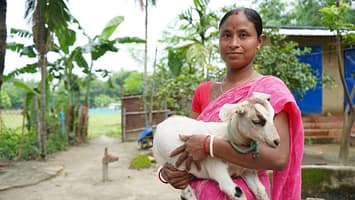
A GIS-powered decision support tool helps livelihood officials in India target livestock investments where they can have the greatest impact.
August 11, 2026
IWMI researchers translate responsible scaling principles into practice by embedding inclusive innovation pathways in food systems.
August 10, 2026
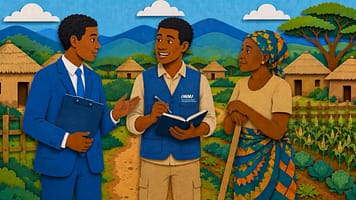
The final blog in this series explores how AI was used to capture deeper community feedback in India and how those insights can influence decision-making.
August 7, 2026
IWMI's Muluken Elias Adamseged shares how Africa’s true irrigation potential will be unlocked by an innovative and coherent investment framework that connects water, energy, markets and finance into functional, sustainable
August 7, 2026
The second blog in this three-part series explores the motivations of community volunteers in India and the challenges they face.
August 6, 2026
In conversation with IWMI, Sabina Shonhiwa says reliable access to water could transform her community far beyond agricultural gains alone.
August 5, 2026
The first blog in this three-part series explores why lived experience should be at the heart of designing and improving water interventions in India.
August 4, 2026
Countries can make progress on SDG 6 by integrating groundwater into water planning, policy and investment.
August 3, 2026
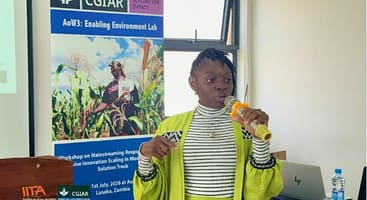
How a gender-transformative methodology applied in Malawi evolved into a research tool for inclusive innovation adoption and responsible scaling.
July 31, 2026
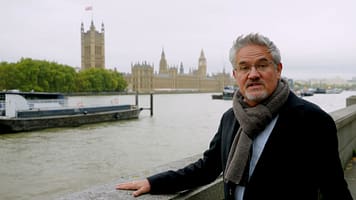
A short film exploring flood risks through expert insights and guidance on preparing for extreme weather events.
July 30, 2026
The Water Governance Accelerator supports countries in meeting international commitments through evidence-based solutions grounded in IWMI's scientific expertise.
July 29, 2026
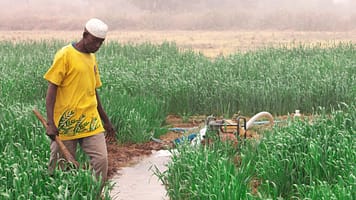
IWMI estimates targeted irrigation investments around a recovering Lake Chad, could feed more than 12 million people and unlock billions in economic gains.
July 29, 2026
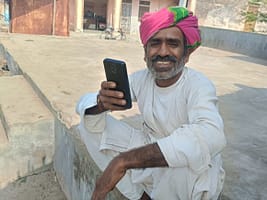
IWMI's Sanju Koirala explains why connectivity alone is not enough for digital agriculture to succeed.
July 28, 2026
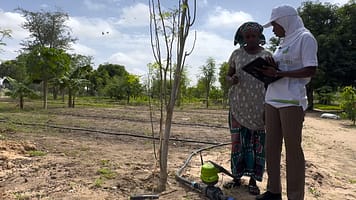
AI-enabled irrigation systems are reducing water use on farms by as much as 55% in West and Central Africa.
July 27, 2026
The IRRILINE advisory service, co-created by IWMI and Farmerline, is live in Ghana and starts just by dialling 399.
July 27, 2026
Bangladesh is racing to expand renewable energy, but one question continues to challenge policymakers: where will all the new solar panels go?
July 24, 2026
How FCDO and IWMI are turning pilots into investment opportunities with international financial institutions in fragile contexts.
July 23, 2026
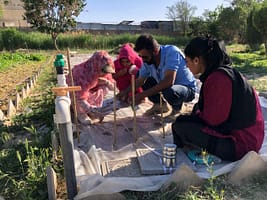
Climate-smart kitchen gardens are an avenue for women and youth to improve food security and conserve water in Pakistan.
July 22, 2026
The reliability of modern climate predictions presents a window of opportunity in which to act to prevent the worst impacts from the phenomenon.
July 21, 2026
In South Africa, strong community and municipal collaboration keeps water services reliable beyond construction and opening ceremonies.
July 21, 2026
Water scarcity in Bangladesh's Barind shows that the real challenge lies not only in conserving water, but also in governing it as a shared resource.
July 20, 2026
Community-led restoration shows landscape recovery starts with local ownership.
July 18, 2026
IWMI’s Giriraj Amarnath explains how early guidance for farmers can turn a looming dry spell from a potential disaster into a manageable risk.
July 18, 2026
The rehabilitation covered 650 metres of the canal under Al Murunah, a project funded by the UK's Foreign Commonwealth and Development Office and implemented by the International Water Management Institute