

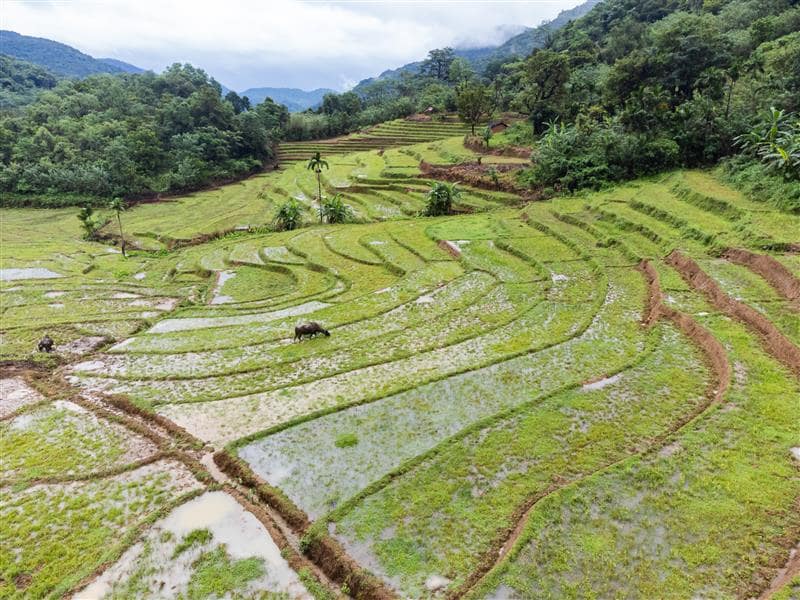
Rising above Sri Lanka’s Central Highlands, the Knuckles Mountain Range is a place where history, folklore and natural wonders intertwine. Named ‘Knuckles’ by British surveyors during colonial times for its peaks that resemble a clenched fist, the range has long been known to local communities as “Dumbara Kanduvetiya” meaning ‘misty mountains’ in Sinhala.
Spanning around 21,000 hectares across Kandy and Matale districts and straddling the boundary between Sri Lanka’s wet and dry climate zones, the mountain range functions as a “climatic microcosm” of the island, exhibiting conditions found across almost all climatic zones in the country. This unique and complex environment supports a significant proportion of Sri Lanka’s endemic plants and animals. Recognizing its exceptional biodiversity and ecological importance, the region was inscribed as a UNESCO World Heritage Site in 2010.
A lesser-known fact about the mountain range is that it serves as a vital watershed, providing an essential lifeline for both communities and agriculture in the region. Approximately 1.3 million people — particularly subsistence farmers and agricultural plantation communities in the surrounding areas and downstream from the mountains — depend on this water.
Climate change has not spared this mountain range, and the communities that depend on its resources are increasingly experiencing flash floods, droughts, soil erosion, landslides and shrinking water resources. The recent Cyclone Ditwah also significantly affected villages, such as Meemure in Ududumbara bordering the mountain range, disrupting local livelihoods, displacing thousands and causing extensive crop losses, highlighting the vulnerability of these communities to natural disasters.
The “Strengthening Climate Resilience of Subsistence Farmers and Agricultural Plantation Communities of the Knuckles Mountain Range” project, implemented by the Ministry of Agriculture, Livestock, Land and Irrigation in partnership with Mahaweli Consultancy Bureau (MCB) and funded by the Green Climate Fund (GCF), is a critical initiative in safeguarding livelihoods and strengthening climate resilience across this vital landscape.
The project’s goal is to enhance the climate resilience of subsistence farmers and agricultural plantation communities residing in both the upstream catchment area of the mountain range and the downstream irrigated area, by improving the quality and availability of water for irrigation and drinking, promoting climate-resilient farming, enhancing land management practices and conserving vital ecosystem services.
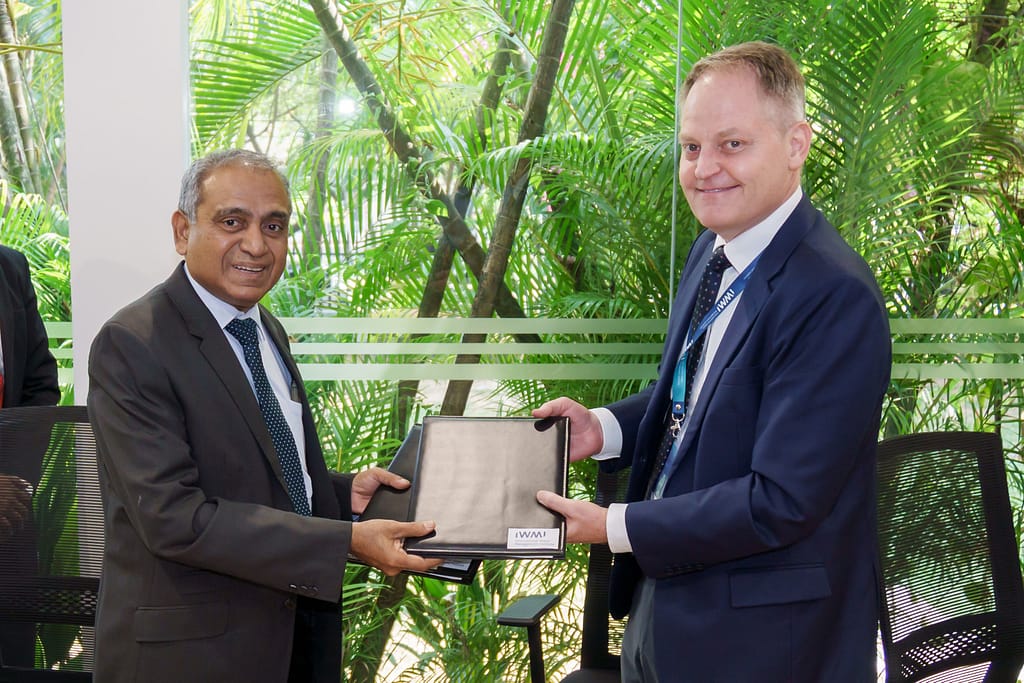
In line with this goal, the MCB partnered with the International Water Management Institute (IWMI) to contribute to the hydrology component of the project. This partnership was formally entered into on March 4, at IWMI Headquarters in Colombo. At the event, Chandana Edirisooriya, chief executive officer of the MCB, underscored IWMI’s strong technical expertise, long-standing national presence, and trusted partnerships, highlighting its critical role in providing robust scientific support for the ongoing GCF-funded Knuckles Project.
The IWMI researchers through the hydrology component will generate scientific knowledge on baseline conditions including surface and groundwater resources, hydrological connectivity, soil erosion rates and the status of water infrastructure. It will also generate science-based recommendations for soil erosion reduction, improved infiltration, safeguarding water infrastructure, climate smart agriculture and forest mosaic restoration in the Knuckles Range. These interventions will support dependable water supplies, resilient human livelihoods and healthy ecosystems, leading to a resilient system of watersheds.
IWMI will also use an integrated capacity development approach to strengthen professional skills of leading water management agencies in the country. Through advanced technical training, knowledge sharing, and preparation of guidelines and manuals, the project aims to enhance main stakeholder agencies’ ability to conduct and sustain hydrological assessments. IWMI will focus on building hydrological modelling capacity among key stakeholders, while assisting the MCB in field-level community training through the development of guidelines and manuals. Continuous engagement and institutional strengthening will support ownership, sustainability and long-term impact of project outcomes.
“The Knuckles Mountain Range exemplifies how environment, climate, economy and community well-being are all interconnected. This project is critical to safeguarding livelihoods and strengthening climate resilience across the region — and science plays a vital role,” said IWMI’s Director General, Mark Smith at the launch event. “Drawing on decades of Sri Lanka-focused research, we look forward to delivering measurable, lasting improvements in water security, climate resilience and community well-being.”


