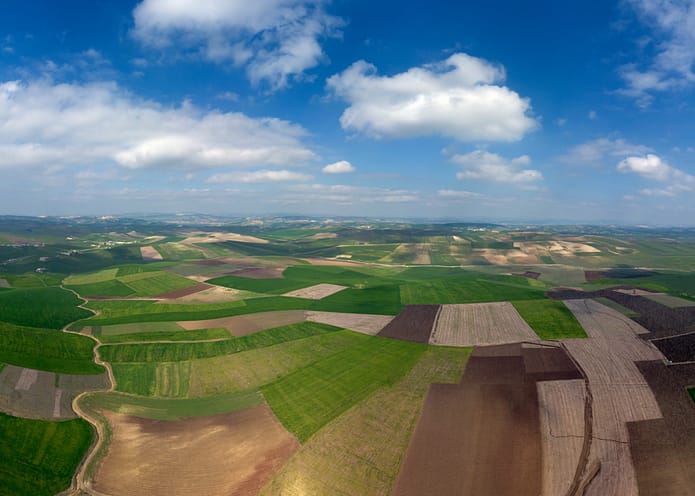

Agriculture is more than an economic sector in Ethiopia — it is the lifeline of the country. More than 15 million smallholder farmers produce close to 95% of the country’s agricultural output. Their work sustains national food security, supports rural incomes and contributes significantly to economic stability.
However, these farmers work against increasingly unforgiving odds. They work with minimal resources, relying on rain-fed systems and traditional tools, resulting in meagre harvests that leave them highly exposed to droughts, floods and unpredictable weather.
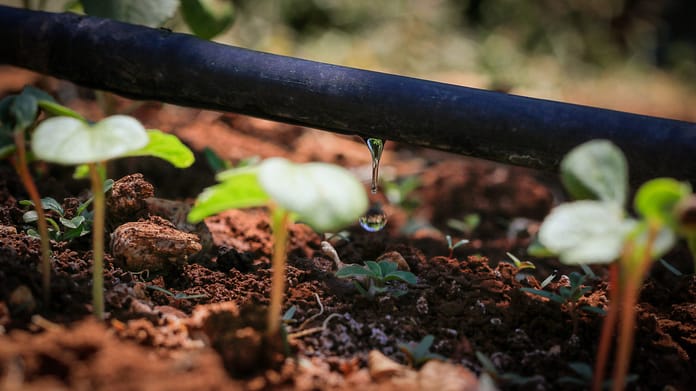
To strengthen the sector, the government of Ethiopia, with the assistance of development partners, adopted a multi-pronged strategy. Central to this effort is the shift from rain-fed to irrigated agriculture. Over the past two decades, the country has expanded its irrigated agriculture with encouraging results. But as climate pressures intensify, modernizing and further expanding irrigation systems has become an urgent necessity.
Solar irrigation is gaining traction among smallholder farmers
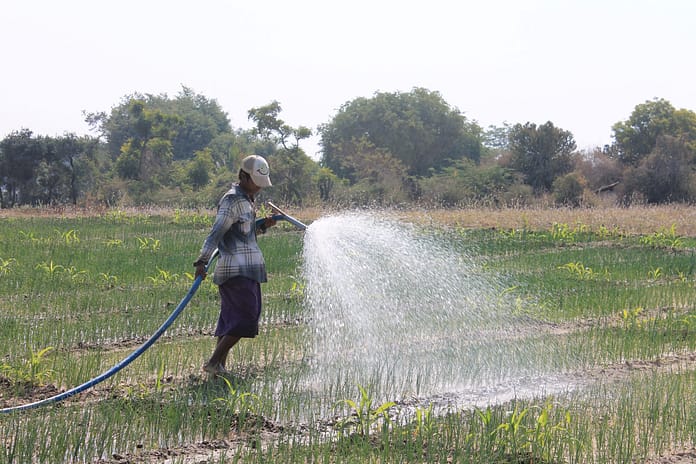
Studies show that smallholder farmers in Ethiopia depend heavily on diesel-powered pumps for irrigation. While this has helped expand access to irrigation, rising fuel prices, adulterated and unreliable fuel supplies are creating new challenges in rural areas. Farmers also face higher costs due to frequent maintenance. In some regions, unregulated water abstraction is placing additional pressure on fragile ecosystems, including lakes. These challenges have accelerated the interest and demand for cleaner, more reliable and climate-smart alternatives.

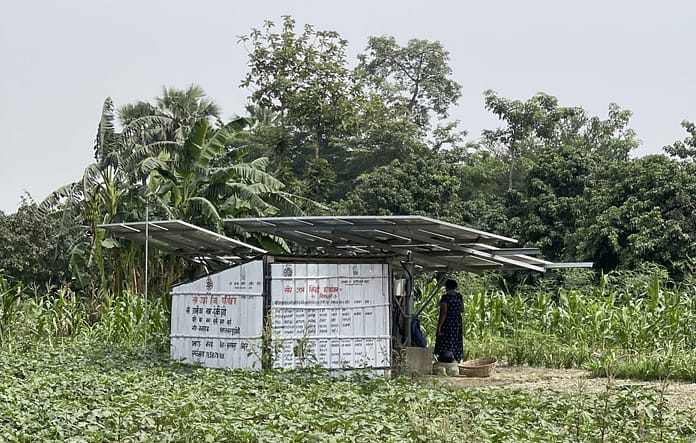
Solar irrigation is emerging as a promising and transformative technology. With the country’s high solar potential, farmers can access clean and cost-effective energy for year-round irrigation.
Pilot-scale solar irrigation initiatives led by the International Water Management Institute (IWMI), SNV Netherlands Development Organization, the Agricultural Transformation Institute and Farm Africa have shown strong results across several regions in Ethiopia. Solar irrigation was introduced in the Sidama region in the south, eastern parts of the Oromia region, Central Rift Valley and the northern regions of Amhara and Tigray. Farmers adopting solar irrigation in these regions reported higher yields, better water use efficiency, improved food security and rising household incomes.
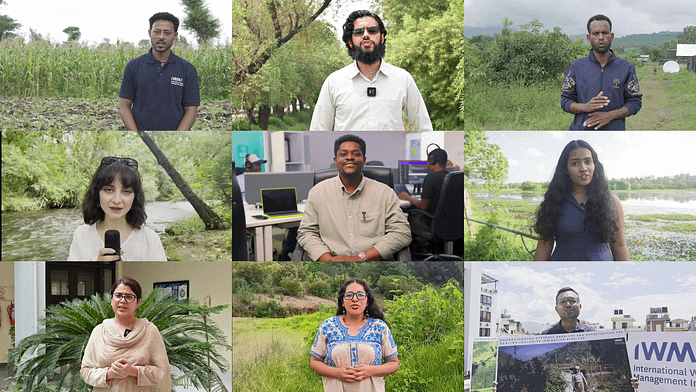
Despite these gains, scaling solar irrigation remains challenging. “The absence of bundling solar pump technologies with complementary innovations and services such as inputs, market access, water optimization, farmer training, maintenance and financing options for the high upfront costs remains a major obstacle. Without these, even the best technology stalls before it can scale,” said Amare Haileselassie, principal researcher at IWMI, underscoring how integrated support could help solar irrigation transform Ethiopian agriculture.
Pathway to inclusive and responsible scaling
IWMI research highlights that responsible solar irrigation scaling has a bundled approach that brings together six key elements. These are enabling policies, accessible financing, reliable technologies, capacity building, sustainable water management practices and robust market linkages.
With support from the Swedish International Development Agency, IWMI and partners have identified seven potential scaling pathways and four stand out as most suitable for Ethiopia. “Scaling pathways for solar irrigation systems outline how these technologies can move from pilot projects to widespread, long-term adoption,” explains Wolde Mekuria, senior researcher at IWMI.
The first pathway focuses on access to individual smallholder farmers operating plots of less than two hectares. The second involves cooperative-owned systems, where farmers jointly invest in and manage solar assets. A third pathway is the shared large-panel systems that enable groups of up to ten farmers to use a single high-capacity pump, reducing individual costs while increasing overall efficiency. The fourth pathway focuses on irrigation or water service providers — private companies, farmers groups or cooperatives — who invest in solar infrastructure and sell irrigation water to smallholders.
Together, these pathways offer adaptable options for the diverse needs and capacities of smallholder farmers across the country.
Financing models for solar irrigation
Financing remains one of the major bottlenecks to adoption. As Zeleke Agide, associate professor at Addis Ababa University emphasizes, “The initial investment in solar systems is often out of reach for most smallholders.”
To address this gap, IWMI and partners identified several financing models suitable for Ethiopia.
Farmers can make a direct purchase if they have sufficient resources. They can also access loans from microfinance institutions or banks, which provide flexible repayment terms. Farmers can further explore group investment models, where they pool resources and share ownership. In addition, government or donor-supported revolving funds can provide low-interest initial capital and recycle repayments to support more farmers over time. Finally, contract arrangements that link farmers with buyers also offer market security, boosting their confidence to invest in new technologies.
A pathway within reach for smallholder farmers
Solar irrigation can reach tens of thousands of smallholder farmers within a relatively short period, significantly improving productivity, strengthening resilience and enhancing rural livelihoods. Realizing this potential requires coordinated, long-term commitment across institutions and sectors.
To achieve this, as a first step, Ethiopia needs to develop and implement a national Solar-in-Agriculture Strategy that clearly defines targets, incentives, financing, implementation mechanisms and monitoring frameworks. Second, solar irrigation should be integrated into agricultural extension services to enhance awareness among farmers and encourage adoption. Third, a national certification program for solar energy professionals and technicians should be established to ensure proper standards in design, implementation, operation and maintenance.
With the right policy environment, accessible financial options and institutional support, Ethiopia can scale solar irrigation responsibly — and in doing so, transform its agricultural sector to secure a more resilient future for millions of farming households.