

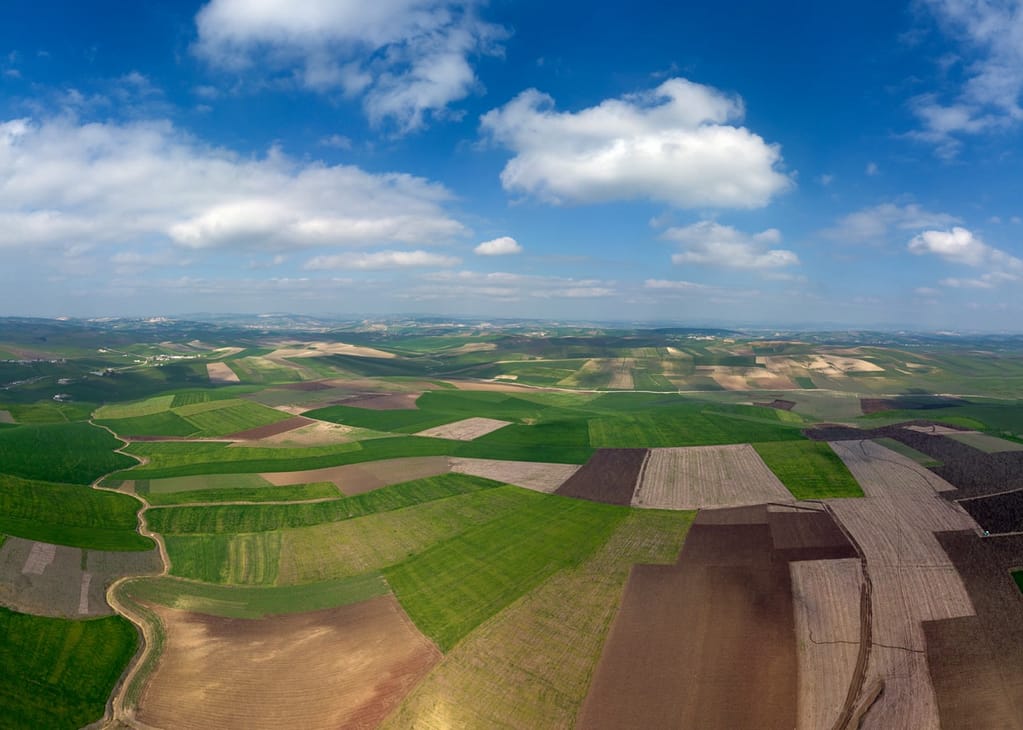
Morocco is reshaping its agriculture in response to the pressure of climate extremes. Years of drought and growing water scarcity have exposed the sector’s vulnerabilities, but they have also prompted bold action, innovation and stronger collaboration. At the heart of this transformation is a strengthened model of cooperation.
In April 2025, Morocco’s Ministry of Water and the Ministry of Agriculture, Maritime Fisheries, Rural Development and Forests convened a joint conference at the Salon International de l’Agriculture au Maroc (SIAM) agricultural fair in Meknes, which drew over a million visitors. The two ministries signed cooperation agreements on water reuse, drought preparedness and knowledge sharing during the forum. This sent a strong message that food and water security are inseparable. It underscored the political will to integrate strategies and pool expertise to tackle the country’s climate and economic challenges.
Morocco’s agri-food sector is vital at every level. It sustains rural livelihoods, providing the backbone of employment and income, while also contributing approximately 16% of Gross Domestic Product (GDP) and employing about 36% of the national workforce. Beyond its borders, Morocco is a major exporter of fruits and vegetables to Europe and global markets, with citrus, tomatoes and berries among its most emblematic products. Safeguarding the resilience of agriculture is therefore essential not only for Morocco’s economy, but also for its social fabric and international standing.
Agriculture modernization from drip irrigation to conservation agriculture
The country has a track record of agricultural modernization. The Plan Maroc Vert, launched in 2008, spearheaded a massive conversion to drip irrigation, reaching over half a million hectares and drastically improving water efficiency. Today, Morocco’s Generation Green 2020–2030 strategy builds on this progress with an even bolder vision: advancing conservation agriculture, embracing precision farming and empowering youth and women to take leading roles in the sector.
As part of this, Morocco has already converted 160,000 hectares of cereal land into direct seeding since 2021, intending to reach one million hectares by 2030, thereby positioning itself as the leader in conservation agriculture in the MENA region. In parallel, the government is increasingly engaging local entrepreneurs, start-ups and small and medium enterprises to co-develop innovative solutions for agriculture and water, ensuring that fresh ideas and technologies are embedded into national strategies.
Tapping into non-conventional water sources for agriculture
The government is also investing in new water sources to safeguard farming against prolonged drought. Large-scale desalination plants, such as the hybrid Chtouka station, are providing water for both municipal and agricultural needs. Inter-basin water transfers, such as the one linking the Sebou and Bouregreg basins, are helping to stabilize supplies where shortages are most severe. Treated wastewater reuse is gaining ground, with more than 180 treatment plants already operational and dozens more under construction. These projects reflect Morocco’s determination to diversify its water portfolio and maximize every drop’s value.
SIAM 2025 also showcased the spirit of innovation driving these efforts. Technologies presented during the exhibition ranged from ultra-low energy drip irrigation and vertical hydroponics to faba bean varieties resistant to Orobanche, a parasitic weed that has long undermined yields. These innovations are already reshaping Moroccan farming and offering models for others in the region.
International partnerships are an equally important part of this story. From France, the guest of honor at SIAM 2025, to the European Union, the United States and new financial partners such as the Asian Development Bank and Denmark, Morocco is broadening its network of allies. By sharing technical expertise, mobilizing resources and co-developing solutions, Morocco is positioning itself as a reference point for countries facing similar climate and water challenges.
The message from Meknes was clear: Morocco’s agriculture is pivoting toward a more technological, water-efficient, environmentally responsible and inclusive model. Through stronger coordination between ministries, bold partnerships with the private sector and international community, and a determination to embed innovation at every level, the country is laying the foundation for a resilient sector — well-positioned to withstand climate and market uncertainties while sharing its innovations internationally.
Imane Louati is the head of the cooperation division at the Ministry of Agriculture, Maritime Fisheries, Rural Development and Water and Forests in Morocco.


