
Across Ethiopia, soil and water conservation (SWC) has long relied on experience, local knowledge and community effort. While these foundations remain strong, experts and practitioners in agriculture, forestry and watershed management struggle to effectively translate data for appropriate soil and water conservation measures across varied landscapes. As a result, conservation structures are sometimes poorly matched to local conditions, leading to limited effectiveness and higher costs when interventions fail to deliver expected benefits.
To address this gap, the International Water Management Institute (IWMI), in partnership with Ethiopia’s Ministry of Agriculture (MoA) and with support from the CGIAR Scaling for Impact program and the Swedish Development Cooperation Agency (Sida) Nature-based Solutions for Sustainable and Inclusive Development project, developed eLandCare, a mobile phone application that supports practical, site-specific conservation decisions. Launched on November 17, 2025, the tool brings field observations, national guidelines and digital data together to help users plan soil and water conservation measures more effectively.
What the eLandCare app offers
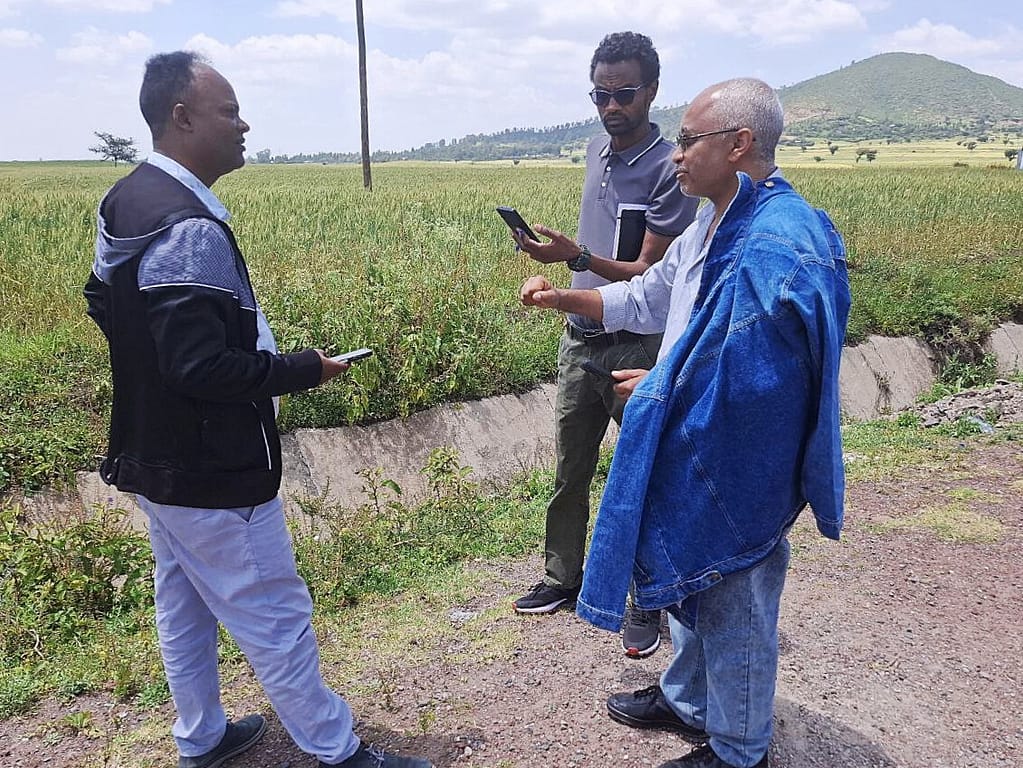
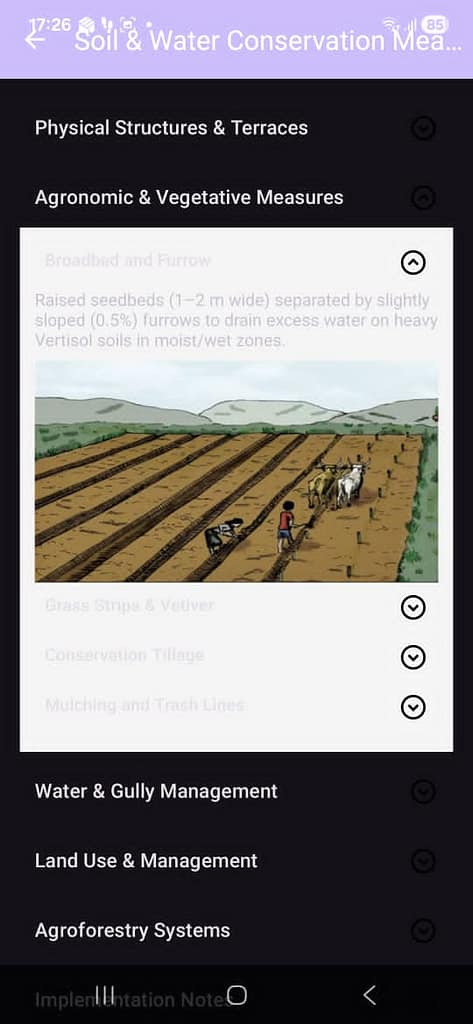
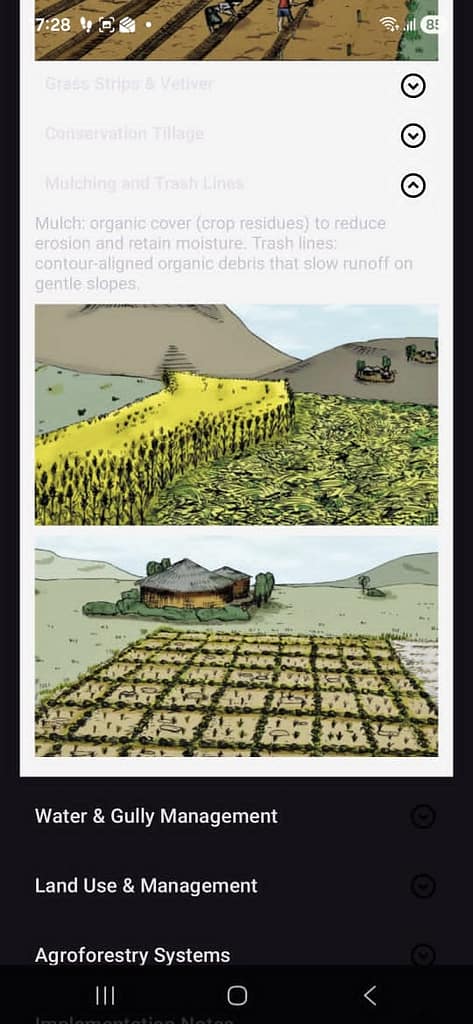
The eLandCare app is built for agricultural extension agents, land managers and development practitioners working in diverse and often remote settings. The application supports quick field data collection, identifies local ecological zones and provides tailored conservation recommendations aligned with Ethiopia’s soil and water conservation standards. Importantly, it functions fully offline and ensures usability where connectivity is limited.
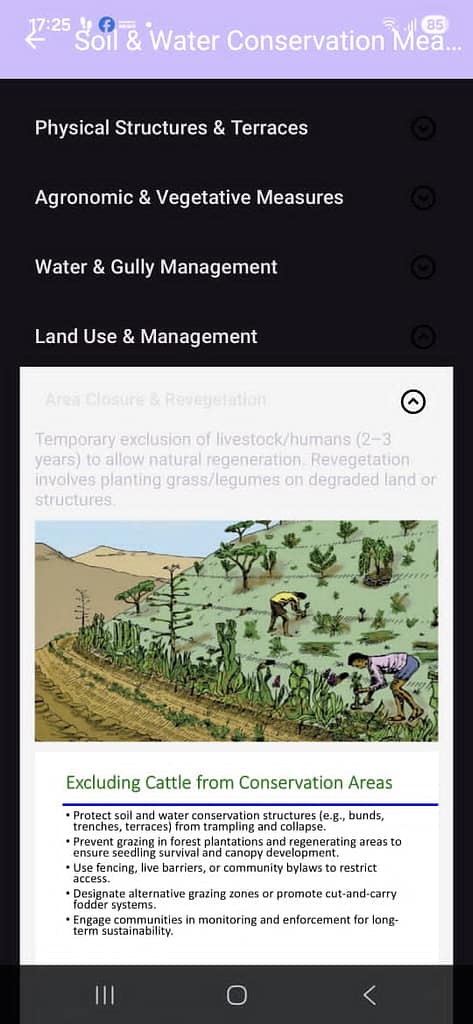
Unlike many digital decision-support tools that require reliable internet access or advanced technical skills, eLandCare is designed for day-to-day field use. It embeds Ethiopia’s national soil and water conservation guidelines directly into a simple workflow and allows users to move seamlessly from observation and assessment to recommendation without leaving the field.
Kefyalew Sahile, the app’s developer and a senior lecturer and researcher at Wondo Genet College of Forestry and Natural Resource in Hawassa University, notes that the eLandCare app serves a wide range of users — from development agents and planners to researchers, students and policymakers. “The app helps users identify appropriate conservation measures, compare existing practices with recommended options and work with farmers to improve productivity while protecting natural resources,” explains Sahile.
Pilot testing of the application and practical training for more than 30 government experts was carried out in Southern (Oromia, Afar, Sidama and South) and Central Ethiopia regions. eLandCare represents an important shift in how conservation planning is done as it translates field observations into practical guidance, assisting users to move from assessment to action with greater confidence.
Early feedback from trainees indicates that the app improves confidence in recommending conservation measures, particularly in unfamiliar landscapes, and reduces the time required to assess sites. For example, during field visits, agriculture extension agents assess the soil types, slopes and erosion risks in an area. Thereafter, based on the data fed into the app, they receive bundled recommendations on suitable conservation practices. Agents then consult with farmers before providing recommendations. Farmers benefit from clear, site-specific advice such as where to build terraces, how to manage runoff or which practices improve soil moisture. This detailed advisory support helps them protect their land, improve yield and build resilience against droughts and erratic rainfall.
Beyond individual sites, the app supports broader planning efforts. It helps users understand unfamiliar landscapes, compare existing conservation practices with recommended options, and plan land restoration and climate-resilient interventions more systematically.
Ethiopia’s soil and water conservation experience underpins the tool
The development of eLandCare builds on decades of SWC efforts in Ethiopia, where agriculture remains predominantly rain-fed and based on mixed crop-livestock systems. Farmers widely use indigenous practices, such as intercropping, contour farming and stem soil erosion to enhance productivity and reduce vulnerability to climate shocks.
Over time, Ethiopia has combined these indigenous practices with introduced measures such as terraces, stone and soil bunds, check dams, crop rotation, mulching and agroforestry. National initiatives such as the Climate Adaptation through Landscape Management program and the Green Legacy Initiative have mobilized communities at scale, leading to reduced soil loss and improved crop yields in many areas.
As these programs mature, national priorities have shifted toward enhancing the design, placement and cost-effectiveness of conservation measures to create a clear role for digital support tools.
Digital agriculture gains momentum
Ethiopia’s move toward digital agriculture is guided by the Digital Ethiopia 2030 strategy and a dedicated digital agriculture roadmap. Within this framework, digital tools are increasingly used to support soil and water conservation planning and decision-making.
Fekade Adane, a soil and water conservation expert at the MoA, emphasizes that Ethiopia is actively developing its digital agriculture sector to support soil and water conservation. “Our focus is on digital tools that deliver real value to practitioners on the ground. “The eLandCare app can significantly accelerate the uptake of improved practices across the country by equipping users with practical, timely guidance. The initial trainings have been empowering, laying a strong foundation for rapid adoption and effective use of this digital solution,” said Adane.
Through initiatives on digital innovations and nature-based solutions, IWMI is also working with the MoA to apply satellite data for mapping irrigated land, monitoring seasonal changes and identifying drought-prone areas. These efforts help fill information gaps and strengthen water and land management at national and local levels.
eLandCare and its user manual have been formally handed over to the Ethiopian Ministry of Agriculture. IWMI will continue to create awareness and train agriculture officers and field workers and development agents to realize its wider use and implementation.
Looking ahead, eLandCare is expected to contribute to Ethiopia’s broader ambitions for climate-resilient agriculture by standardizing soil and water conservation planning across regions while remaining responsive to local conditions. As adoption grows, the tool has the potential to strengthen our understanding of which conservation practices work best, delivering insights at the granular level across location and climate conditions.