When Sri Lanka’s economic crisis captured global attention in 2022, images of fuel queues and nationwide power cuts became symbols of the country’s hardship. Poverty rates were estimated to have tripled after real wages fell by 30% due to rampant inflation, while child malnutrition also increased dramatically.
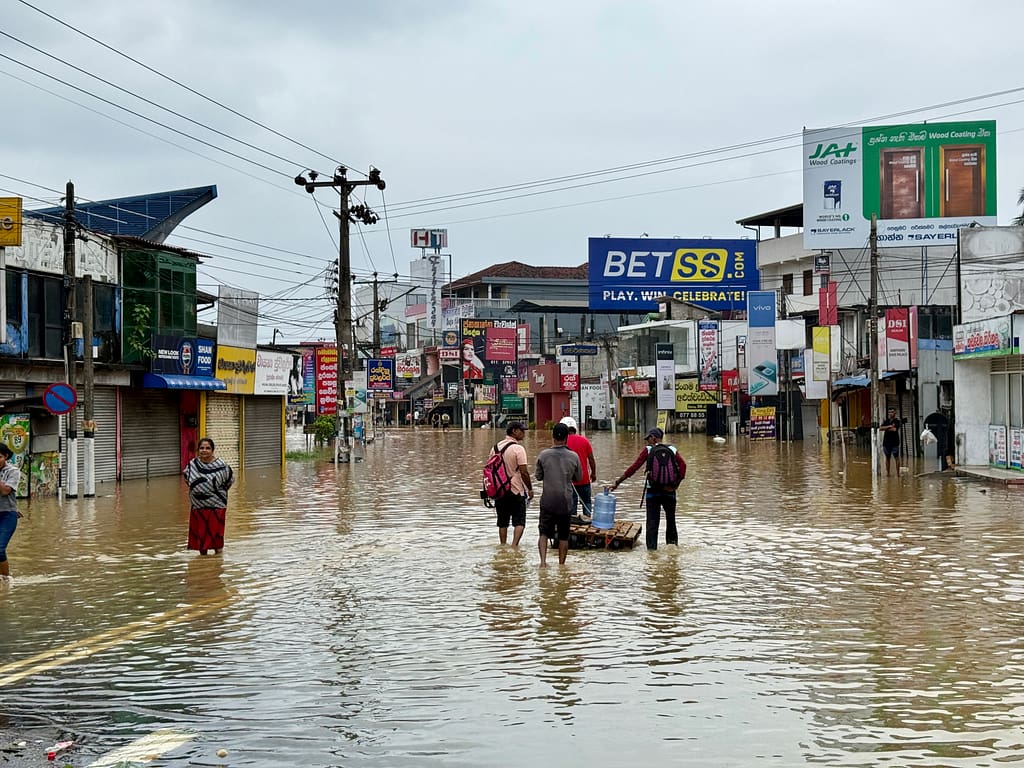
In November 2025, Sri Lanka again found itself in the headlines, this time for the destruction caused by Cyclone Ditwah, the Island’s most severe natural disaster since the 2006 Boxing Day tsunami. So far, more than 600 lives have been lost, and 2 million individuals (10% of the population) have been affected by severe damages to homes, crops, food supplies and critical infrastructure – including 500,000 children. Entire communities have been left isolated or without basic services, and over 200,000 people were displaced from their homes.
Against this backdrop, researchers from the International Food Policy Research Institute (IFPRI) and the International Water Management Institute (IWMI) designed and implemented Sri Lanka’s first ever nationally representative multi-thematic survey. The Building Resilience, Inclusive Growth and Holistic Transformation (BRIGHT) survey interviewed 6,850 households between November 2024 and March 2025. Covering every district and province, BRIGHT collects detailed information on income, livelihoods, agricultural production, food and water security, exposure to climate shocks, access to government programs, nutrition knowledge and nutrition outcomes like child stunting. The dataset offers a rare view into the everyday conditions that define the well-being of households and can provide the evidence needed to guide recovery efforts in the months ahead.
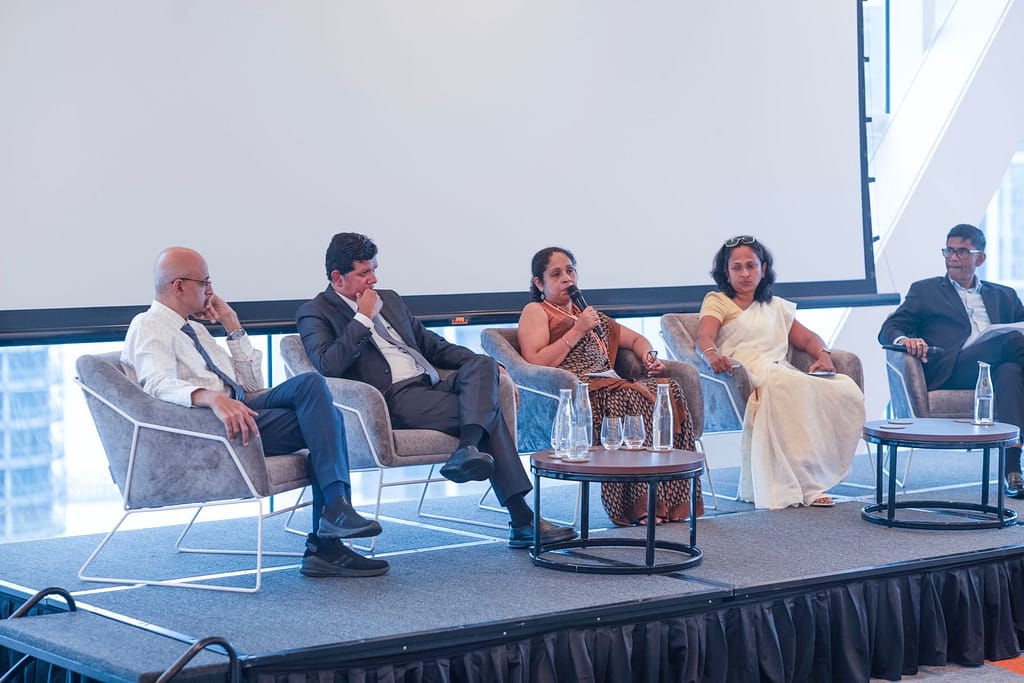
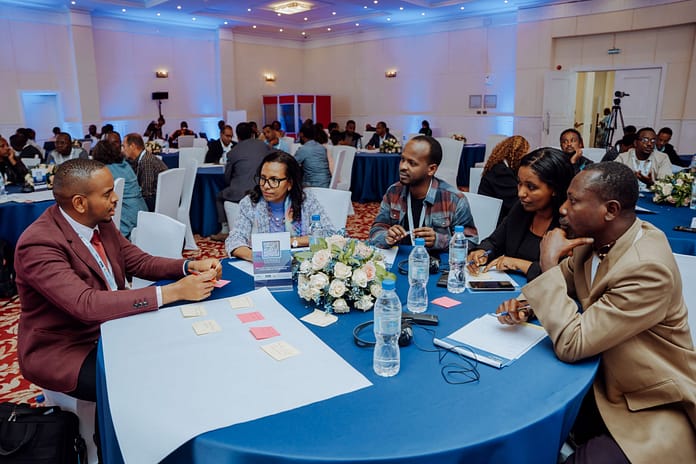
To mark the release of the open-source data and share preliminary findings, IFPRI and IWMI brought together partners from the Ministry of Health, the Welfare Benefits Board, the Institute of Policy Studies, the University of Peradeniya, Wayamba University of Sri Lanka, development agencies such as the World Bank, the World Food Programme and UNICEF, and bilateral partners.
Overlapping insecurities create entrenched vulnerabilities for households across Sri Lanka
BRIGHT results show Sri Lankan households have been facing multiple, overlapping forms of insecurity that vary markedly across urban, rural and estate sectors (e.g. tea plantation), underscoring the need to understand vulnerabilities across multiple dimensions.
| National | Urban | Rural | Estate | |
| Monetarily poor | 18% | 15% | 18% | 33% |
| Multidimensional poor | 27% | 19% | 26% | 67% |
| Food-insecure (FIES) | 33% | 35% | 31% | 55% |
| Water insecure | 10% | 9% | 10% | 9% |
| With debt | 42% | 37% | 42% | 50% |
Around 18% of Sri Lankans were monetarily poor based on district-level expenditure-based poverty lines set by the Department of Census and Statistics. However, monetary poverty only captures part of the picture, as 25% of households were multidimensionally poor, meaning they experienced several simultaneous deprivations such as low living standards, limited education or health constraints. Experience-based food insecurity was even more prevalent, with roughly 33% of households reporting moderate or severe insecurity. The coexistence of these disadvantages shows that financial hardship often coincides with other forms of vulnerability.
Though not surprising, a striking finding from the BRIGHT survey is that estate populations were the most economically and socially disadvantaged group across almost all indicators. Although about one-third of estate households fell below the monetary poverty line, two-thirds were multidimensionally poor, and more than half were food insecure. This indicates that monetary poverty alone significantly understates deprivation in the estate sector. Estate households also faced higher levels of malnutrition, water and energy insecurity, and indebtedness, demonstrating the depth and persistence of their disadvantages.
Another striking finding from BRIGHT reveals a dramatic increase in food insecurity and poverty in urban areas: food insecurity increased more than fivefold from 2019 to 2025, while rates of monetary poverty tripled over the same period.
These findings are particularly concerning given that Cyclone Ditwah has undoubtedly hit many of Sri Lanka’s most vulnerable households particularly hard. Moreover, the ability of poorer households to cope with the Cyclone’s impacts is limited. For example, the BRIGHT survey reveals that over 40% of households reported being in debt, with many households indicating that repayment would be difficult.
Water security was strong in 2024-2025, but there will be important water vulnerabilities to address especially after the cyclone
Water security was a central component of the survey because of its connection to household well-being. Based on the Household Water Insecurity Experience Scale, roughly 90% of Sri Lankan households were classified as water-secure at the time of data collection. However, the situation has changed sharply since Cyclone Ditwah hit Sri Lanka in late November 2025.
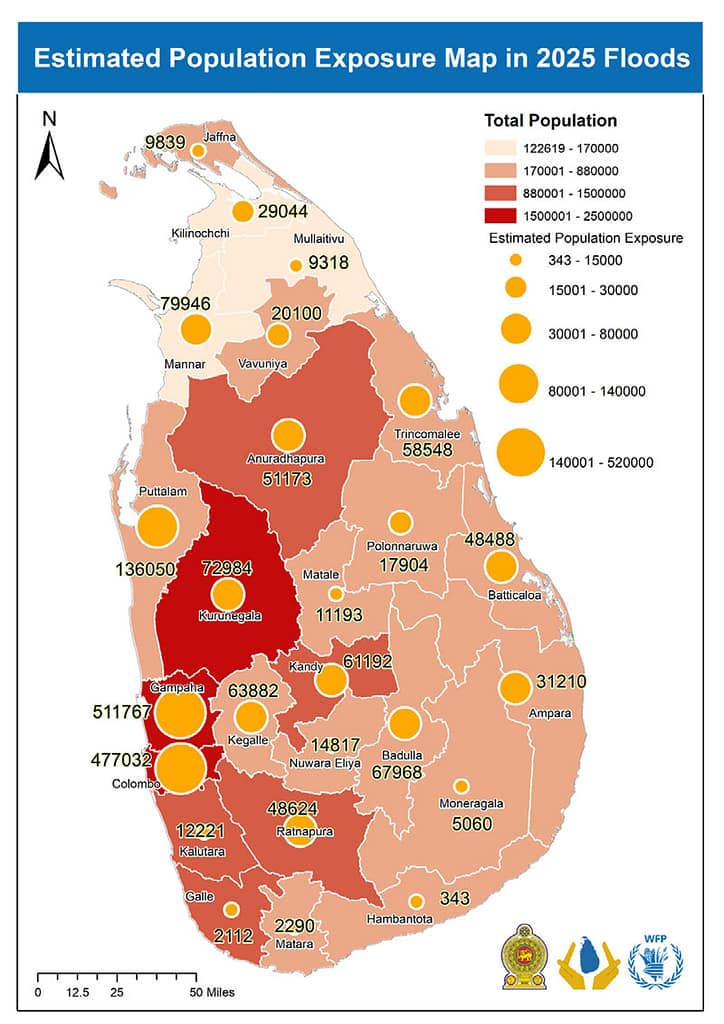
As of November, several districts, including Colombo, Gampaha and Puttalam, have more than 140,000 people exposed to severe flooding. In the hill country, landslides have caused high mortality due to homes being buried on steep slopes and due to the difficulty of conducting search and rescue. In the north and east, widespread flooding and destroyed bridges have left many communities isolated.
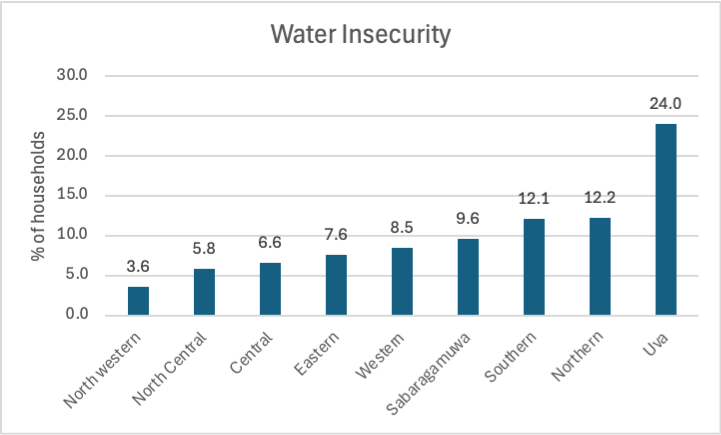
Even before the cyclone, the seemingly low national rate of water insecurity masked significant variation. Uva Province stood out, with 24% of households experiencing water insecurity, which is twice the level of the Northern Province— the next most affected province and six times higher than the least affected. Household wealth also shaped exposure. 14% of households in the lowest asset quintile were water insecure, a rate double that of better-off households. These underlying vulnerabilities create the conditions for more severe impacts during extreme events such as the recent flooding and landslides.
BRIGHT survey insights on the reach and effectiveness of national social protection schemes
The BRIGHT survey was designed to measure recovery in household welfare, as well as the policies being implemented to improve the well-being of ordinary Sri Lankans. The main policy instrument for protecting the poor is the Aswesuma cash transfer program, launched in December 2022, a replacement to Sri Lanka’s earlier social protection scheme, Samurdhi. However, until the 2024-2025 BRIGHT survey, the effectiveness of programs like Aswesuma was unknown.
IFPRI Senior Research Fellow and BRIGHT project leader, Derek Headey, said, “While Samurdhi only reached 19% of the population a decade ago, Aswesuma had already reached 29% of the total population by the time of the BRIGHT survey, including 48% of the poorest households.” While this is positive news, BRIGHT researchers believe Aswesuma still needs to be adjusted to reduce malnutrition.
“The crisis led to an immediate and sharp increase in child malnutrition, and the BRIGHT survey shows nutritional knowledge is very limited among the poor,” observed BRIGHT researcher Renuka Silva Professor of Nutrition at Wayamba University of Sri Lanka.
Recovery and modernization of the agricultural sector
The BRIGHT survey also points to persistent challenges in Sri Lanka’s agricultural economy, long present even before Cyclone Ditwah’s impact on farming. Co-leader of the project, Joanna van Asselt, research fellow at IFPRI, noted that “both the macro and the micro data on agriculture are telling the same story where agriculture is struggling, with low adoption of modern technology and limited access to agricultural advisory services that could improve production and profitability.”
BRIGHT collaborator Dilini Hemachandra, senior lecturer at University of Peradeniya, also worried that “relatively few Sri Lankan farmers have adopted or sustained climate-smart agricultural practices, even though it’s critical they do so as the Island’s climate gets hotter and more unpredictable.”
The importance of BRIGHT for evidence-based policymaking and accountability
Shanta Devarajan, Professor of the Practice of International Development at Georgetown University, neatly summed up the importance of the project to Sri Lanka. “BRIGHT will be a wonderful evidence base for policymakers, but I also hope BRIGHT serves as a powerful resource for civil society, for the media and for the Sri Lankan public, to ensure that Sri Lankan leaders remain accountable to the public, and that pro-poor policies are not only adopted, but continuously improved and sustained over the longer run.”
Ultimately, BRIGHT equips Sri Lanka with the evidence needed to track economic and social recovery, adjust support programs and plan for future climate shocks. By grounding cyclone response in rich household-level data, the survey has huge potential to strengthen decision-making and ensure that assistance reaches the most vulnerable and crisis-hit communities most affected.