



Three tools, one river basin and a question every digital project should ask
IWMI applies an equitability framework to ask whether three digital tools in the Limpopo River Basin serve all users, and what it takes to close the gap.

The coming food crisis in South Asia
IWMI's Santosh Nepal highlights how oil disruptions are cascading into fertilizer markets, weakening agriculture and putting South Asia’s food security at risk.

Limpopo River Basin water managers get AI-powered Digital Twin and WaterCopilot to strengthen water security
LIMCOM and IWMI capacitate officials from Botswana, Mozambique, South Africa and Zimbabwe to use digital tools for monitoring, forecasting and scenario planning.

Landless Bangladeshi farmers suffer as paddy fades in Barind
In response to water scarcity, agriculture in north-western Bangladesh is transitioning – but leaving landless communities behind.

Colombo’s wetlands find new defenders in stories, histories and heritage
IWMI partners with universities in the UK and Sri Lanka to place community memory and cultural identity at the center of wetland conservation.

Can rainwater ever be a reliable resource for drylands?
From rain-dependent farming to reliable harvests, nature-based solutions are helping smallholder farmers take control of water in Chakwal, Pakistan.

To solve the water crisis, countries must start with data and work together
At the World Governments Summit 2026, Mark Smith, director general of IWMI, explored strategies for advancing sustainable solutions for water governance.

Ethiopia plans to scale solar irrigation with public and private sector momentum
The transition from subsidy to sustainable financing for solar-powered irrigation is through institutional coordination and technical assistance.

IWMI strengthens activities in Nigeria with two senior appointments
New leadership boosts partnerships and drives scalable, evidence-based solutions for water and irrigation systems.
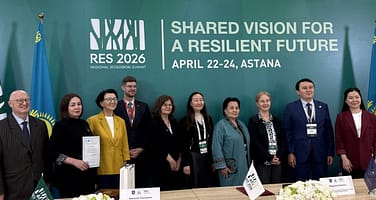
Central Asian universities and IWMI sign MoU to advance water diplomacy education
IWMI is partnering with regional universities to launch a joint master’s program aimed at strengthening expertise and expanding knowledge in water management.

How AI helped promote community-led development in Rajasthan, India
Suchiradipta Bhattacharjee and Alan Nicol share insights on how an IWMI project to improve water resilience in two districts strengthened existing government efforts by using AI to improve last-mile responsiveness.
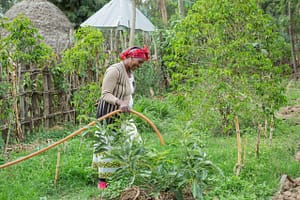
Solar irrigation initiative launched with Ethiopian solar energy association
The collaboration aims to improve the conditions for solar-powered irrigation as Ethiopia works to build agricultural resilience.

Climate change is raising the stakes for water security in the Indo-Pacific
A regional discussion highlighted how Australia and partners can turn water and climate commitments into real-world progress across the region.

From dust to resilience in Iraq’s Dhi Qar through nature-based solutions
IWMI’s Wiqaya project combines science, field action and community knowledge to implement nature-based water solutions that reduce sand and dust storm risks in Iraq.

Hull university to lead Sri Lanka wetlands project with IWMI
Professors from the University of Hull together with IWMI researchers will undertake fieldwork in Colombo, Sri Lanka, to help improve the management of its wetlands.

Iraq’s Wiqaya initiative and the promise of nature-based solutions
Wiqaya is an IWMI-led initiative with Iraq’s government and local partners to address sand and dust storms through science and community action.

Field innovations draw attention at the national farmers’ fair in India
At the Unnat Krishi Mahotsav exhibition, IWMI showcased agroecological, biochar and solar farming models to boost farmer incomes and resilience.

Welfare and water security go hand in hand in India
India’s national rural employment guarantee scheme is advancing water availability and climate adaptation.

India has built an extraordinary foundation of groundwater recharge infrastructure over the past 20 years. The task now is to make it work
IWMI's Mohammad Faiz Alam shares insights on how India can move beyond counting what is constructed to measuring what actually replenishes the country's aquifers.

Lessons from the shoreline
A walk along Chhatiwan Lake in Nepal reveals the intricate connections that sustain life, pointing towards an integrated way of managing natural resources.

How to value Pakistan’s water in a changing climate
A new decision support system serves as a virtual laboratory for determining the economic value of water.

Bangladeshi farmers test solar irrigation as fuel costs bite
In Bangladesh’s farm belt, solar-powered irrigation pumps are promoted as a way to cut diesel use, lower irrigation costs and when pumps are idle, generate extra income for farmers who
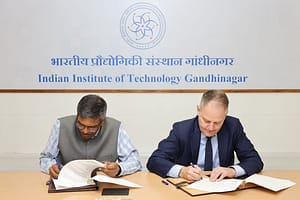
The Indian Institute of Technology Gandhinagar and IWMI partner on water policy research
The collaboration will advance policy research to deliver innovative, sustainable and equitable solutions in response to climate challenges in India.
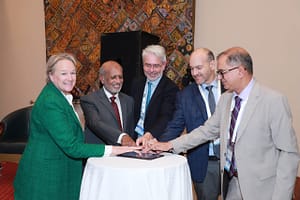
From silos to synergy in Pakistan’s water management
A data-driven model for the Indus Basin connects the traditional world of water allocation planning with new frontiers of artificial intelligence and human cooperation.
