
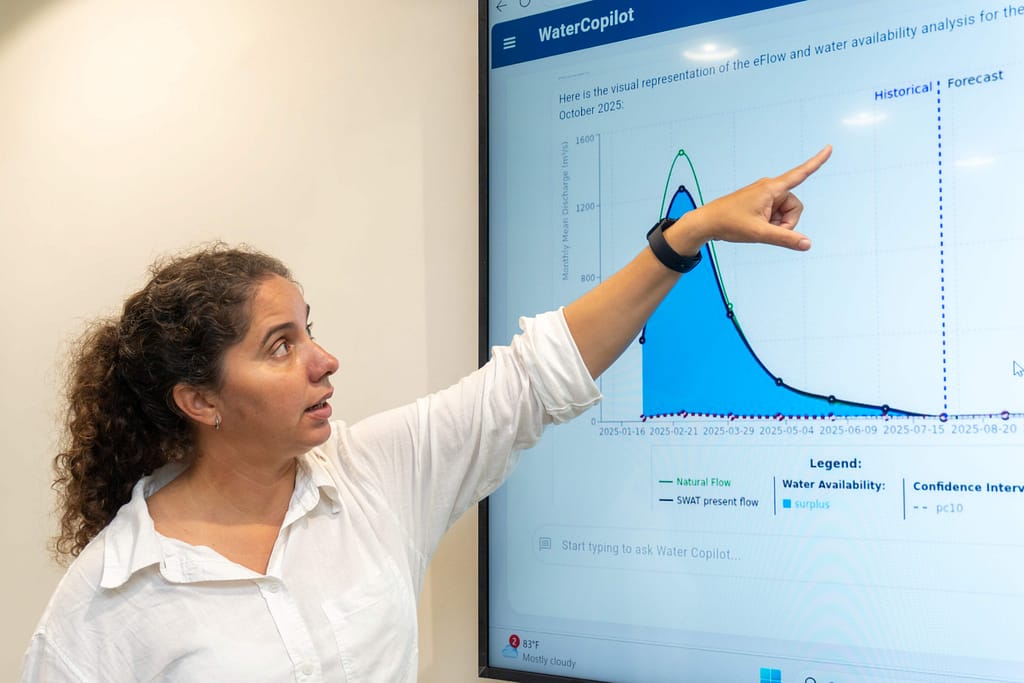
The International Water Management Institute (IWMI) and Microsoft have joined forces to create an AI agent for the Limpopo River Basin in southern Africa. This AI agent, named ‘Limpopo Water Copilot’, draws from real data on river systems to deliver reliable and scientific insights for water managers in the region.
The Limpopo Water Copilot is the first real-world application of IWMI and Microsoft’s collaboration to create AI agents for water management.
“It is a paradigm shift in what is possible for water resources management, where AI can assist both skilled and unskilled users to understand in their own language the intricacies of water resources management,” said Mariangel Garcia Andarcia, research group leader for Water Futures Data and Analytics at IWMI and lead of this project. “It brings the most complex data into the hands of water managers, saving hours of their time writing reports and analysis data, allowing them to focus on responding timely to the challenges of the basin.”
The Limpopo Water Copilot is the result of a year-long collaboration between IWMI and Microsoft through the FarmVibes project, adapting their cutting-edge tools to transform water management advisory systems. The result is southern Africa’s first AI-driven water management tool for the river basin, recognized by the World Economic Forum as a forward-thinking approach to sustainable water management.
As part of the support, Microsoft is providing a direct grant, solution architecture, AI optimization and cloud infrastructure. The grant is supporting the development of an enhanced AI assistant. This AI water agent comes with new features such as a mobile app, adding the ability to quantify and visualize irrigation water use at multiple scales and integrate water accounting information for the users.
How does the Limpopo River Basin AI water agent work?
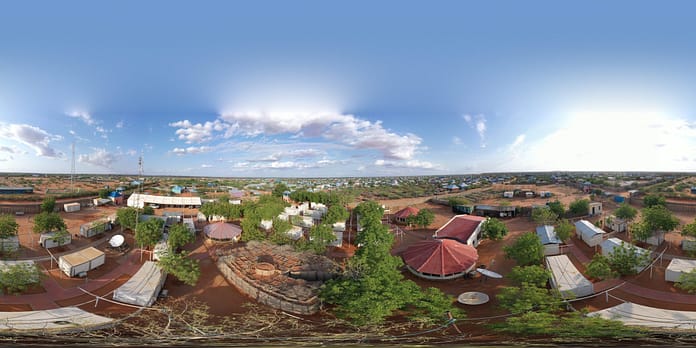
The Limpopo River Basin is a complex transboundary system spanning four countries in southern Africa and serving 18 million people. The Limpopo Watercourse Commission (LIMCOM) coordinates efforts across member states Botswana, Mozambique, South Africa and Zimbabwe to preserve this river system amid challenges such as drought, overuse and pollution.
As part of LIMCOM’s data strategy, IWMI and LIMCOM signed a memorandum of understanding to develop a digital twin, a virtual representation of the Limpopo River Basin that gives water managers insights into factors such as water availability and use. It brings together continuously updated river data from monitoring stations, historical data satellite imagery, remote sensing and modelling to fill in data gaps and create a functional model of the basin.
The Limpopo Water Copilot contains a chatbot interface that is integrated with the digital twin. When asked a question, it decides which tools and datasets from the digital twin are relevant, and then uses generative AI to summarize an answer in the user’s language, accompanied by visualizations such as maps. This approach democratizes access to water management data by generating science-based analyses that can be used immediately by decision-makers.
Because the AI water agent uses only real data and robust scientific models, it reduces the risk of hallucinations or accuracy issues associated with general-purpose AI tools. It will enable water managers in the basin to make evidence-based decisions that impact the lives and livelihoods of millions of people, sustaining the basin for future generations and reacting intelligently to threats such as droughts or flooding.
The Limpopo Water Copilot already exists as a proof-of-concept. It is an AI agent that provides information on water availability, environmental flow conditions, seasonal forecasts, drought monitoring and major dams in the basin. It also offers access to important basin documents and has already been demonstrated to stakeholders.
In the coming months, IWMI will upgrade the Limpopo Water Copilot to a mobile app with real-time features and improved development, focusing on user needs in the Limpopo River Basin. The app will launch at the 26th WaterNet/WARFSA/GWP-SA Symposium in Zambia in October.
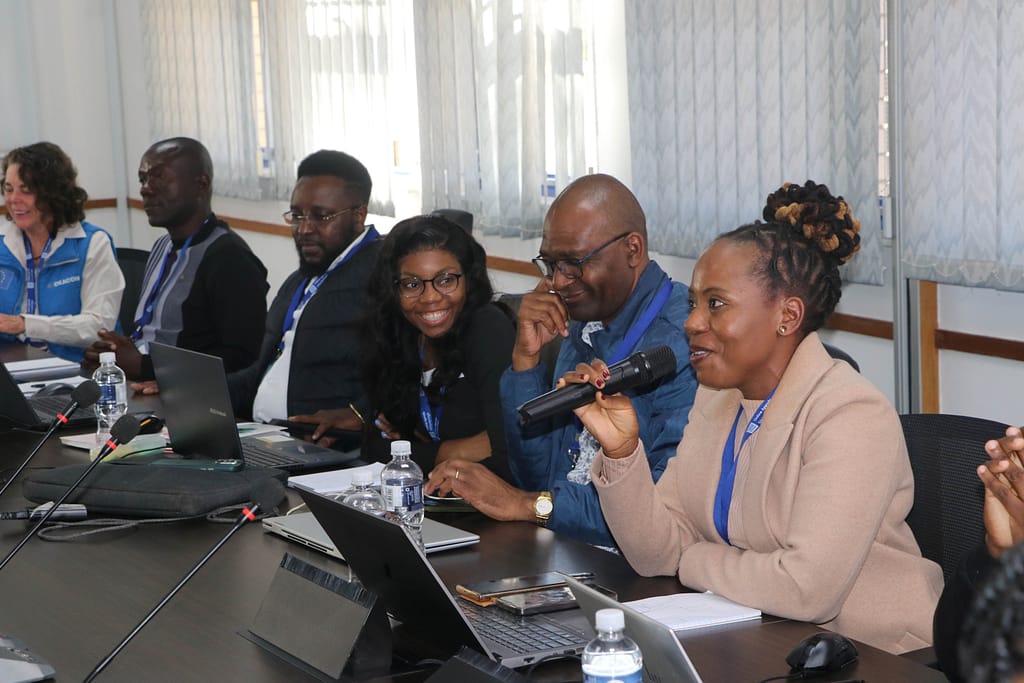
“There is a huge advantage in using these tools,” said Thulandi Sibanda, a Member State representative from Zimbabwe. “It is becoming more efficient to generate good reports and analyses for policymakers. These tools are necessary for us as a country and us as an organization.”
The global potential of a platform of AI water agents
As part of IWMI’s vision to scale AI-driven water management across regions, including the Middle East and North Africa and South Asia, IWMI envisions bringing together all its AI-based water agents in one platform. This will ensure broad accessibility, enable collaboration across the water management community, and accelerate the delivery of scientific evidence at an unprecedented scale.
Microsoft joins IWMI as a technological partner and funder in line with their commitment to “Accelerating Sustainability with AI.” The collaboration provides the technological foundation to expand IWMI’s digital water solutions, creating new opportunities for data-driven investment and decision-making in water management. The collaboration demonstrates IWMI’s commitment to strategic partnerships with private sector tech players that address evolving water challenges through innovative technology and evidence-based solutions.